Many spa and wellness brands promise calm, care, and premium experience, but their scent system is often inconsistent: one generic diffuser in reception, a different room spray in treatment rooms, and no sellable product line for retail shelves or distributors. For global B2B buyers, that gap can weaken brand identity and make the spa experience harder to repeat across branches, salons, retailers, or export markets. At Jasmine, we treat spa scenting fragrance as a product strategy, not a random fragrance choice.
This guide explains how spa scenting fragrance can be planned for global wellness brands, importers, spa suppliers, distributors, salon chains, and wellness retailers. You will learn how to choose scent families by spa area, select product formats such as reed diffusers, room sprays, mini sprays, air freshener formats, and gift sets, prepare a private label brief, and discuss quality, documentation, packaging, and export-aware planning with Jasmine before requesting samples.
What is spa scenting fragrance?
Spa scenting fragrance is the planned use of fragrance to support the atmosphere, brand identity, and product experience of spa and wellness environments. It is different from generic air freshening because it considers space function, scent intensity, guest flow, brand mood, product format, packaging, and repeatability.
A spa may use fragrance in reception areas, treatment rooms, relaxation lounges, changing rooms, freshness zones, retail corners, and gift products. Each area has a different role. Reception may need a refined first impression. Treatment rooms need a softer profile that does not compete with oils, towels, skincare products, or the treatment experience. Retail corners need shelf-ready spa fragrance products that buyers can understand quickly.
For owners, spa scenting fragrance should go beyond a “nice smell.” A distributor, wellness brand, or spa supplier should ask whether the scent can become a repeatable product line, whether it can be sampled clearly, whether packaging communicates the right brand mood, and whether the format can be explained to spa owners, wellness buyers, and specialty retailers.
Why does spa scenting fragrance matter for global B2B buyers?
Spa fragrance matters because wellness businesses sell an experience as much as a product. Scent can support atmosphere consistency, brand memory, perceived care, and product differentiation across physical spaces and retail items. For distributors, it creates a category that can be presented to spa chains, beauty salons, wellness boutiques, hotel spas, fitness-wellness spaces, and spa suppliers.
The right spa scenting fragrance should match the positioning of the brand and the expectations of the target market. A minimalist wellness studio may need clean tea, aloe, or soft citrus directions. A luxury spa may prefer warm woods, amber, musk, or refined florals. A resort-style spa may lean toward tropical, herbal, marine, or botanical profiles. A clinical-clean wellness brand may choose fresh, neutral, and calm scent directions.
For global buyers, geography should be part of the brief. A scent direction that feels premium in the GCC may need a lighter profile for some European boutique retailers, while a clean botanical range may need different label language, packaging style, or documentation planning for Africa, Asia, North America, or the Middle East.
Best spa scenting fragrance families by wellness space
Spa scenting should not use one fragrance everywhere by default. Each spa area has a different purpose, airflow, dwell time, and customer expectation. The strongest approach is to choose scent families by space while keeping one coherent brand identity across the full spa fragrance product line. The scent examples below are commercial directions, not medical, therapeutic, or guaranteed relaxation claims.
Reception and first-impression areas
Reception areas introduce the spa brand before a treatment begins. The spa scenting fragrance here should feel welcoming, polished, and memorable without becoming heavy.
Useful directions may include green tea, white tea, bergamot, soft citrus, aloe-style fresh notes, light florals, gentle musk, or botanical accords. These profiles can communicate freshness and care while remaining subtle enough for public-facing spaces.
For scent marketing for spas, reception is where brand recognition can begin. A signature scent in this area may later be extended into reed diffusers, room sprays, mini sprays, or retail products.
Treatment rooms and massage spaces
Treatment rooms need more restraint than reception areas. A spa fragrance for massage or treatment spaces should support the environment without competing with oils, towels, skincare products, or the natural scent of the room.
Soft floral, lavender-style, chamomile-style, sandalwood, clean musk, powdery, and warm woody profiles may fit this space when used with gentle intensity. The goal is controlled atmosphere, not overpowering scent.
For private label spa fragrance projects, this section matters because many buyers approve a strong scent in a sample, then discover that it feels too intense in a smaller treatment room. Sampling should therefore consider the real use case, not only the fragrance impression in a bottle.
Relaxation lounges, waiting areas, and retail corners
Relaxation lounges and waiting areas often have longer dwell time. Guests may sit, read, drink tea, wait between treatments, or browse nearby retail shelves. The fragrance should remain comfortable over time.
Warm woods, tea notes, soft amber, light musk, gentle botanical notes, and subtle fresh accords can work well. A lounge scent can also create a retail bridge: the same fragrance may appear in a reed diffuser, room spray, mini spray, or gift set.
For retail corners, the product must be easy to understand. Clear scent names, calm packaging, and format consistency help spa buyers and wellness retailers explain the range to their own customers.
Freshness zones and wet-area adjacent spaces
Changing rooms, restrooms, and sauna or steam-adjacent zones require careful product planning. Eucalyptus, mint, pine, herbal, marine, and neutral-fresh directions are common market associations, but buyers should not assume that every product is suitable for direct use inside sauna or steam systems.
Each format must be used according to its intended application. A room spray, reed diffuser, or air freshener product may have specific use guidance, labeling requirements, and safety considerations. For B2B buyers, this means discussing the exact product type, use environment, and destination-market expectations before production.
For freshness zones, describe the product as supporting freshness unless the product is specifically designed, tested, and documented for stronger odor-control claims.
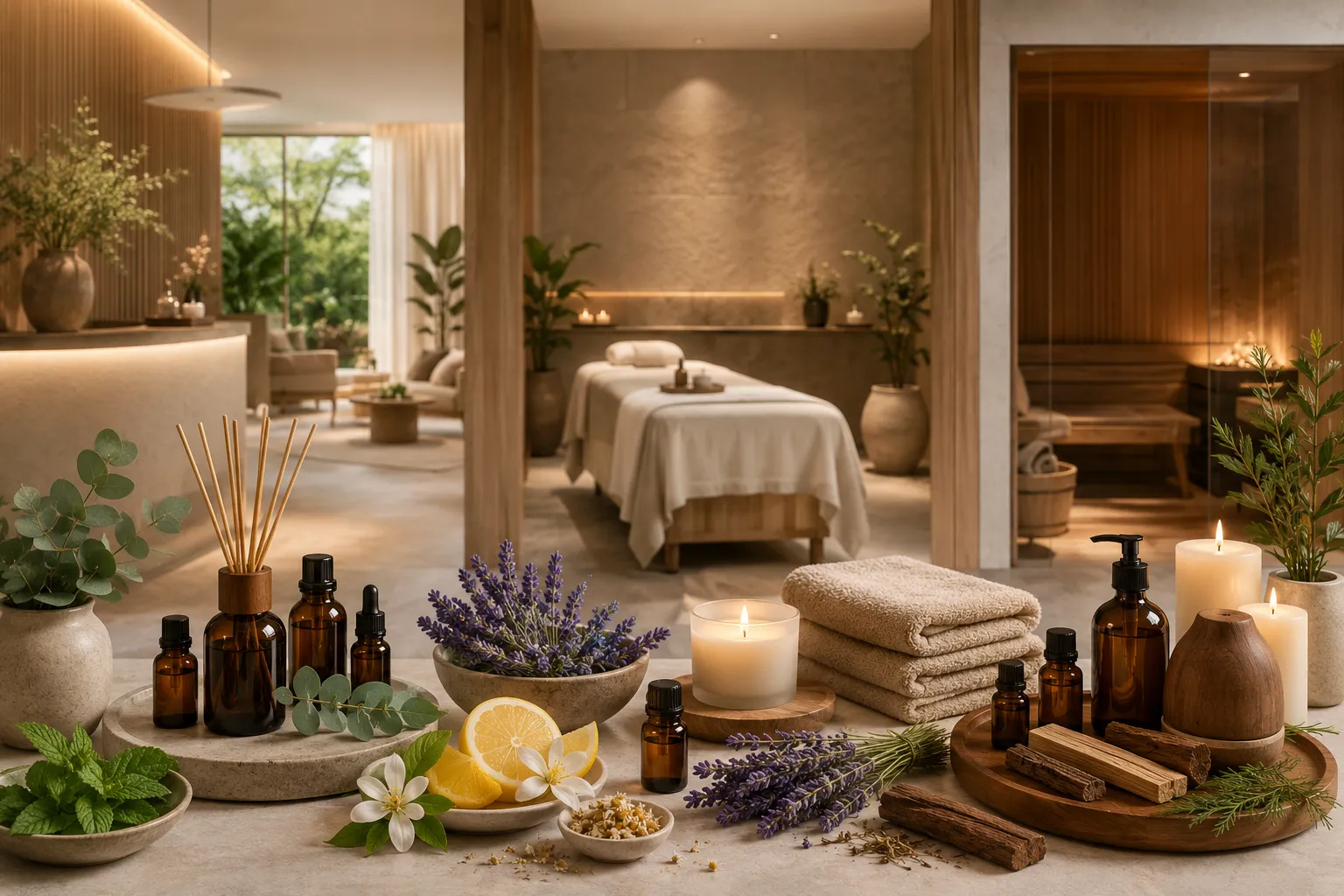
Spa scent product formats Jasmine can support
A spa fragrance concept becomes commercially stronger when it turns into a product system. Jasmine can support B2B buyers through fragrance-led formats such as private label reed diffusers, private label room sprays, mini sprays, air freshener formats, and gift-ready items, depending on the project brief and available options.
A spa reed diffuser may fit reception areas, lounges, boutique shelves, and premium gifting. A spa room spray may work as a retail add-on, treatment-room product, or wellness-brand item. Mini sprays can support trial sets, guest gifts, and checkout displays. Gift sets can help premium wellness brands create a stronger retail presentation.
| Product format | Best spa use | Buyer fit | Customization focus | Questions to ask |
| Reed diffuser | Reception, lounge, boutique shelf | Spa chains, wellness retailers, gift distributors | Scent, bottle, reeds, label, box | Ask about leakage protection, labeling, carton protection, and handling needs. |
| Room spray | Treatment rooms, retail add-on, linen-adjacent use | Wellness brands, spa chains, salons | Scent, bottle, trigger or cap, label | Ask about formula type, usage label, shipment needs, and destination rules. |
| Mini spray | Guest gift, trial product, checkout display | Distributors and spa suppliers | Scent, bottle size, branding | Ask about carton count, label space, sample planning, and retail display. |
| Gift set | Retail shelf, membership gifts, VIP packages | Premium wellness brands and spa groups | Mix of formats, box, insert card | Ask about assembly, outer packaging, inserts, and carton durability. |
| Air freshener format | Freshness zones and broader air-care line | Wholesale and import buyers | Scent, label, packaging | Ask about destination-market requirements and labeling expectations. |
For a stronger start, request Jasmine catalogs and review product families before narrowing the spa range. This connects the fragrance concept with realistic product formats and packaging options.
How to build a private label spa fragrance line With Jasmine
A private label spa fragrance line should begin with a clear commercial plan. The strongest projects usually combine scent direction, product format, packaging, quality expectations, and distribution logic before samples are requested. Review our private label fragrance manufacturing path if your goal is to place your own brand on spa fragrance products.
Step 1: Define the wellness brand concept
Start by defining the brand mood, buyer type, sales channel, and spa positioning. Is the product for a luxury spa, resort spa, medical spa, yoga studio, beauty salon chain, wellness retailer, or spa supplier? The concept should explain who will buy the product, where it will be displayed, and whether the range is intended for retail shelves, spa operations, guest gifts, wholesale, or distributor sales.
Step 2: Choose the scent direction
Select two to four scent families for initial sampling. A focused start is better than testing too many unrelated fragrances. A clean herbal direction may suit treatment spaces. A white tea or bergamot direction may suit reception and boutique shelves. A warm woody or amber direction may support a premium lounge atmosphere.
Step 3: Select product formats
A first launch does not need too many SKUs. A practical spa scent product line may begin with a reed diffuser, room spray, and mini spray in one or two connected fragrance families. The formats should strengthen the spa identity rather than dilute it.
Step 4: Align packaging with spa positioning
Packaging should reflect the spa brand’s promise. Bottle shape, label design, cap choice, box style, insert card, and carton durability all matter. A boutique spa line may need calm colors, clean typography, and premium finishing. A wholesale spa range may need clear scent names, readable labels, and practical cartons.
Step 5: Request samples and approve details
Samples should be evaluated in a structured way. Buyers should review scent, bottle, cap or trigger, label, box, carton, and documentation expectations. Written approvals are important before production so the final scent direction, artwork, product format, label language, and destination-market requirements are clear.
Step 6: Prepare the wholesale, distribution, or export plan
Before placing a larger order, buyers should clarify target country, sales channel, label language, carton handling, reorder expectations, and documentation needs. An export-ready spa fragrance project depends on packaging strength, clear communication, shipment preparation, and market-specific requirements.
Want to compare scent directions and packaging options before production? Contact us to discuss sample planning, product formats, and private label details for your target market.
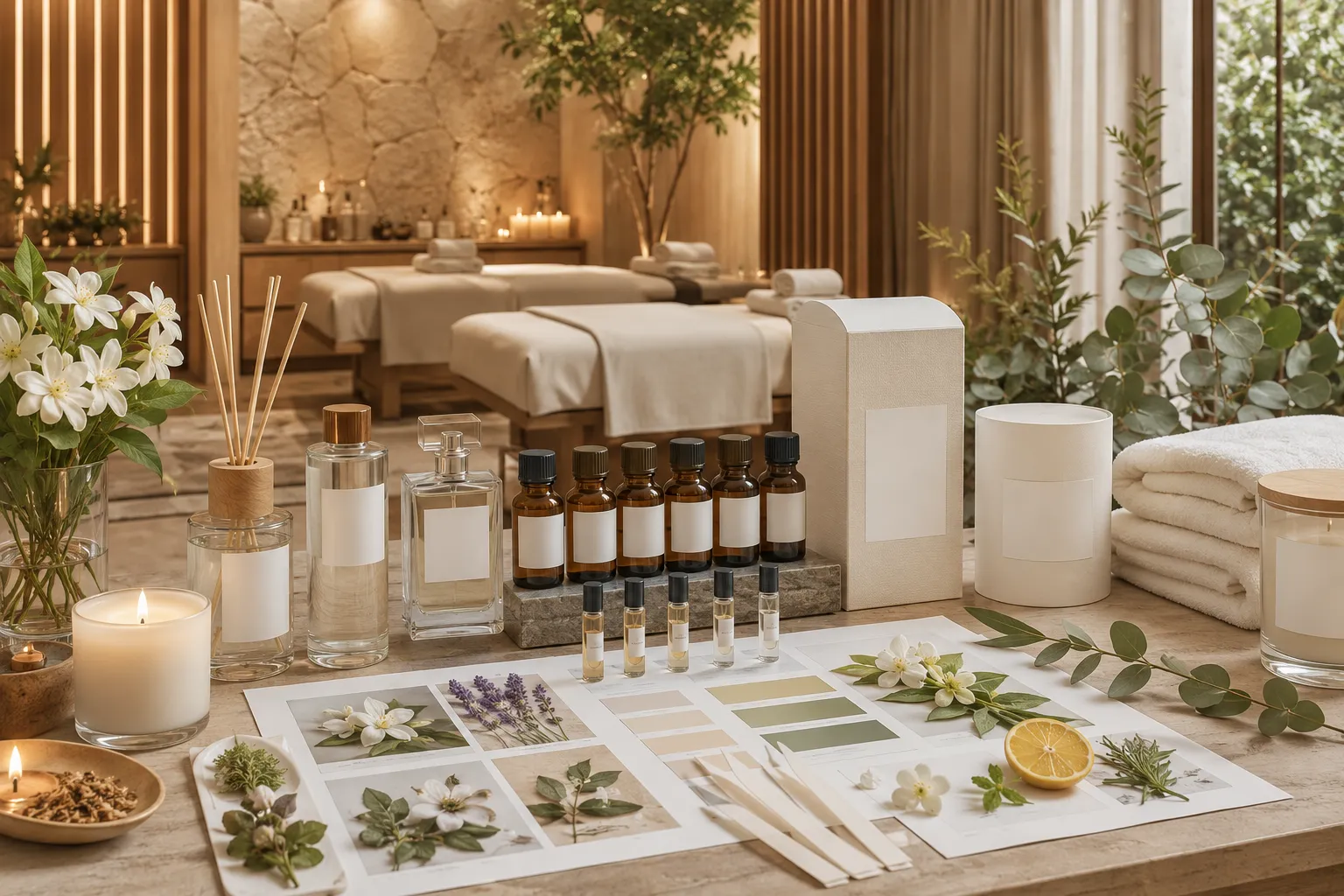
Spa fragrance brief checklist for global buyers
A clear brief helps a spa fragrance manufacturer understand the project and recommend more relevant options. Before contacting Jasmine, prepare the following information:
- Target country and sales channel
- Buyer type: spa brand, distributor, retailer, wellness supplier, or salon chain
- Preferred product formats
- Scent families or fragrance references
- Brand mood and visual direction
- Packaging level: simple, premium, gift-ready, or boutique
- Expected SKU count
- Label language needs
- Documentation or destination-market expectations
- Reorder and distribution plan
- Launch timing, without assuming fixed production or shipping dates
Quality, safety, and documentation for spa scenting fragrance
Quality, safety, and documentation are essential for spa scenting fragrance because these products may be used in professional wellness environments, retail settings, and cross-border distribution.
B2B buyers should ask about quality checks, scent consistency, filling, sealing, leakage resistance, label accuracy, packaging durability, and carton preparation. The goal is to reduce risk before products reach spas, retailers, or import channels.
Fragrance safety should be discussed carefully. IFRA-related standards are widely used as a risk-management framework for fragrance ingredient use, but final compliance still depends on product type, destination-market regulations, labeling rules, and local requirements. Buyers should verify what applies to their country and sales channel.
For air-care formats that sit beside spa fragrance products, buyers can also review our air freshener manufacturer blog to understand how fragrance-led products connect to manufacturing, packaging, and distribution discussions.
What B2B buyers should ask before ordering
- What documents may be needed for this product type and destination?
- How are scent, filling, sealing, labeling, and packing checked?
- How are approved samples compared with production units?
- How is packaging prepared for international handling?
- What label information should be confirmed before production?
- Are there market-specific requirements for the destination country?
- What should be approved in writing before bulk production?
- How should the buyer prepare artwork, scent references, and packaging notes?
If documentation, packaging, or destination-market rules are part of your concern, contact us before finalizing your spa fragrance order so the project can be reviewed from product and export perspectives.
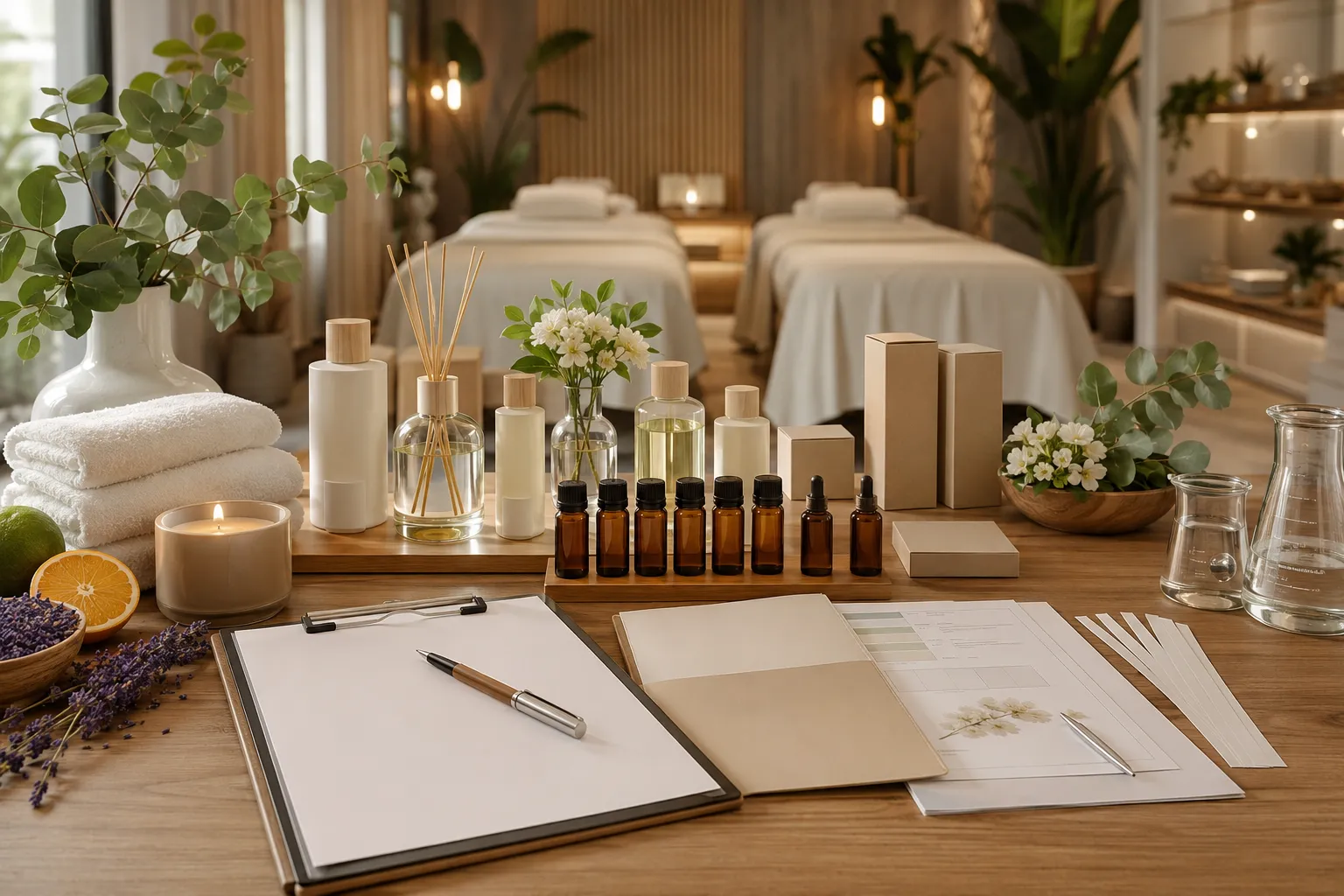
Wholesale spa fragrance for distributors and wellness retailers
Wholesale spa fragrance can become a strong category for distributors because it connects atmosphere, retail, gifting, and professional wellness use. A distributor can sell to spa chains, beauty salons, wellness stores, spa suppliers, boutique retailers, and gift shops.
The best wholesale approach is not to offer random scents. It is to build a clear spa scent product line with a simple story. Buyers should consider product mix, packaging level, scent direction, sample strategy, order planning, carton preparation, and reorder potential.
Distributor product range ideas
- A starter range may include three scent families across two formats, such as reed diffuser and room spray.
- A premium range may include diffuser, room spray, mini spray, and gift box for wellness brands and boutique retailers.
- A spa-chain range may include a reception scent, a treatment-room scent, and a guest retail mini spray.
- A retail range may focus on shelf-ready diffusers and sprays with simple scent descriptions and consistent packaging.
Planning a wholesale spa fragrance range for your market? Request Jasmine catalogs and share your buyer type, sales channel, preferred formats, and packaging direction.
How can Jasmine support spa scenting fragrance projects?
At Jasmine Factory in Turkey, we can support spa scenting fragrance projects as a Turkey-based fragrance and air freshener manufacturing partner for B2B buyers. The strongest fit is for wellness brands, private label founders, importers, wholesale buyers, and distributors who want to turn a spa fragrance idea into a structured product line.
Relevant support areas include private label development, scent direction, product format planning, packaging, branding, testing mindset, catalog review, documentation discussion, and logistics-oriented preparation. The value for buyers is process clarity: moving from concept to samples, then from approved details to a more organized production and shipment plan.
What to send us before starting
- Target country
- Buyer type
- Product format
- Scent direction
- Packaging reference
- Expected SKU count
- Label language needs
- Destination-market documentation needs
- Wholesale, private label, or distribution goal
Send us your brief via WhatsApp so our team can review your spa scenting fragrance project and suggest the next discussion path.
Common mistakes to avoid when planning spa fragrance products
- Choosing a fragrance only because it is popular, without checking brand fit, target market, or environment.
- Using one fragrance everywhere without considering reception, treatment rooms, lounges, and freshness zones separately.
- Approving a strong sample that later feels overpowering in smaller treatment rooms or longer-stay spaces.
- Ignoring packaging durability, label clarity, carton protection, and shelf presentation.
- Starting with too many SKUs before the concept, scent families, and sales channels are clear.
- Leaving documentation, destination-market requirements, and label language until the end.
- Treating samples as final without written approval of scent, bottle, cap, label, box, and carton details.
A better approach is to build a focused spa fragrance story, test the right formats, approve packaging carefully, and prepare the product line for the real sales channel.
FAQs about spa scenting fragrance
1. What is a spa scenting fragrance?
Spa scenting fragrance is the planned use of fragrance to create a consistent atmosphere in spa and wellness spaces. For B2B buyers, it can also become a private label product line using formats such as reed diffusers, room sprays, mini sprays, air freshener formats, and gift sets.
2. Can Jasmine manufacture private label spa fragrance products?
Yes. Jasmine supports private label fragrance and air freshener projects through scent direction, packaging discussion, testing mindset, branding, and shipment-oriented preparation. Buyers should send their product format, scent direction, packaging idea, target market, and documentation needs before requesting samples.
3. What spa fragrance products are suitable for distributors?
Distributors can consider reed diffusers, room sprays, mini sprays, air freshener formats, and gift sets. The best mix depends on the target market, buyer type, packaging level, scent direction, documentation needs, and reorder plan.
4. What should I ask before ordering wholesale spa fragrance?
Ask about scent samples, customization scope, packaging options, label requirements, quality checks, certificates, export documentation, and shipment preparation. IFRA-related fragrance safety and destination-market rules should also be discussed before production.