A well-prepared perfume manufacturing RFQ is the foundation of any successful manufacturing partnership. It gives the manufacturer the information needed to estimate costs accurately, assess production requirements, and propose realistic lead times.
To avoid assumptions that could later create unexpected costs or budget gaps, we at Jasmine prepared this guide to explain how to structure a clear RFQ and what information should be included before requesting a quotation.
This guide covers:
- The essential information required in an RFQ
- Detailed perfume and packaging specifications
- Production quantity, target market, and delivery timing
- The elements that make quotations easier to compare
- A practical private label perfume RFQ template
Key information to include in a perfume manufacturing RFQ
Before asking Jasmine or any other perfume manufacturer for a price, clearly define the project and the products you want included in the quotation. The more complete this picture is, the less the manufacturer needs to rely on assumptions when preparing the fragrance manufacturing quotation.
To turn your concept into a perfume manufacturing RFQ that can be properly evaluated, start by providing the following information:
- The company or brand name that will be used for production
- The country where your business is based or where the shipment will be received
- Whether the project is an established business or a new venture
- Whether the product is completely new or part of an existing product range
- The total number of products and the number of fragrance variations required
- The current development stage of each product
- Whether you already have a proprietary formula or an approved reference sample
- The target market or markets where the fragrances will be distributed
- The sales channels you plan to use to reach the final customer
These details establish the commercial framework around the project before the manufacturer begins reviewing the technical perfume product specification, packaging choices, production quantities, and costing requirements.
If a decision has not yet been made, write “To be confirmed” rather than entering an estimated specification. This makes it clear which elements have already been approved and which still require discussion with the manufacturer.
A clearly defined project and brand brief can save significant time during the quotation process. Consult our experts today to organize the key information your manufacturer needs before preparing your RFQ.
Read also: Importing Turkish Fragrances to Lebanon: Cost & Requirements
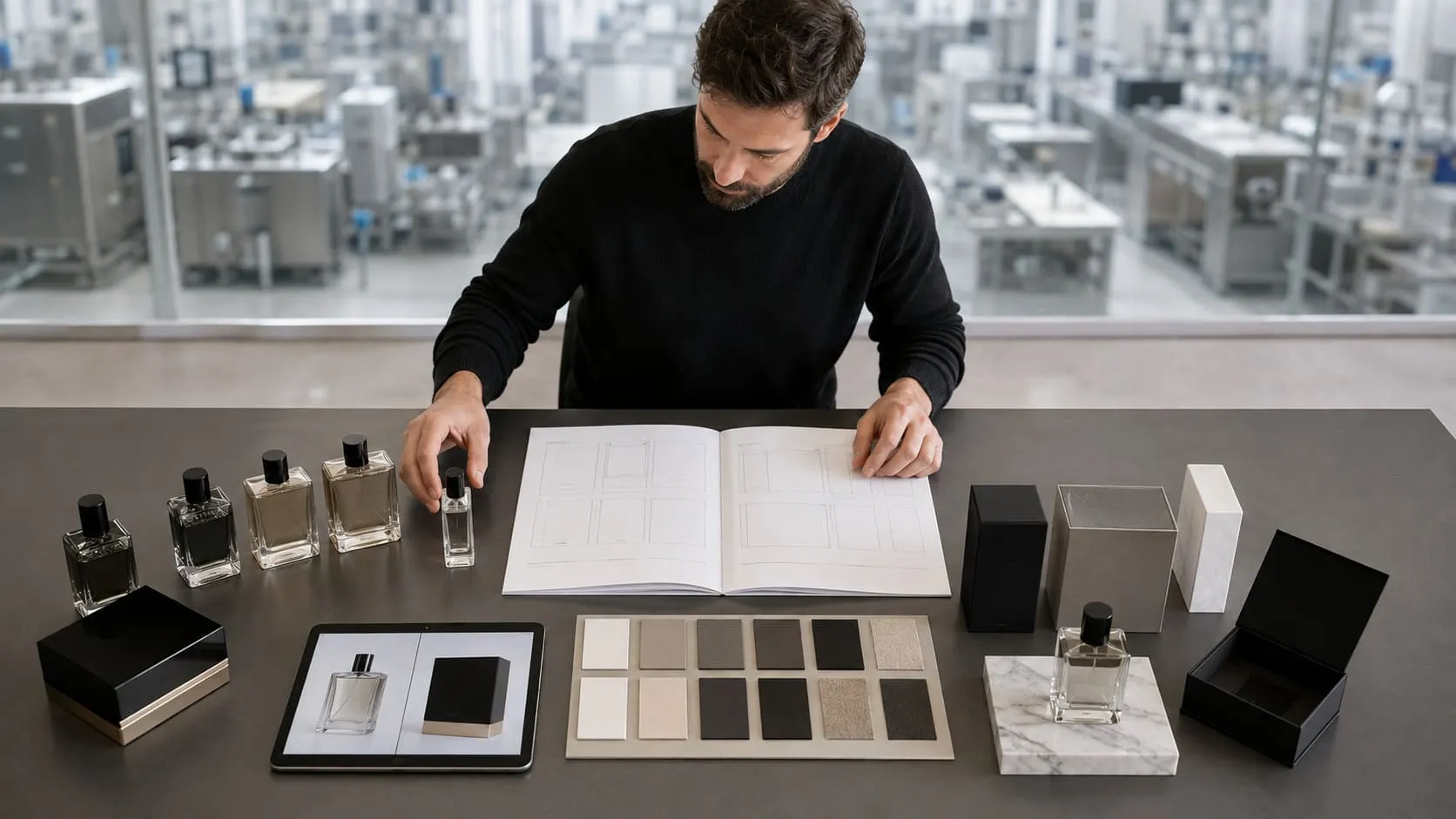
How to define perfume and packaging specifications for an accurate quotation
Turning a product idea into an accurate fragrance manufacturing quotation requires a clear set of specifications that our factory can use when assessing the project and calculating the cost. Your request should cover the following areas.
Define the Perfume Product Specification for Manufacturing
Prepare a separate perfume product specification for each item in your range. This allows us to understand the scope of work and determine how complete the product requirements are before pricing begins.
For each product, specify:
- The type of fragrance product to be manufactured.
- The required fragrance concentration.
- Bottle capacity and fill volume.
- The number of fragrances or scent variations required.
- Whether the final formula is already available.
- Whether an approved reference sample is available.
- Whether the fragrance still requires development.
- Any special manufacturing specifications.
- The target market and any requirements that may affect the product.
At this stage, attach any reference sample or details of a specific formula when available. If the product is still under development, state this clearly so the manufacturer does not treat the specifications as final.
Define the bottle and packaging specifications
A perfume bottle specification involves more than capacity alone. To prepare an accurate quotation, we also need to know which packaging components should be included in our scope and which items you intend to supply yourself.
Provide details such as:
- Bottle type and capacity.
- Pump specifications.
- Compatible cap type.
- Required color or surface finish.
- Label or printing requirements.
- Outer box specifications.
- Protective shipping-carton packaging.
- Whether final artwork has already been approved.
- Reference images or physical packaging samples.
- Any components that you will supply directly.
Avoid broad descriptions such as “luxury bottle” whenever possible. Reference images, dimensions, finishes, and comparable examples give the manufacturer a far more reliable basis for estimating the actual cost.
Define sample, quality, and documentation requirements
Samples, quality requirements, testing, and documentation can all affect the scope and cost of the project. They should therefore be identified before the quotation is finalized.
Specify whether you require:
- A reference sample to be sent to the manufacturer.
- An initial development sample before production.
- A specific number of samples.
- Special quality standards for the finished product.
- Predefined technical tests.
- Regulatory documents required for your target market.
- Supplier certificates required as part of your evaluation process.
- Any additional costs associated with these technical requirements.
Before submitting your perfume manufacturing RFQ, make sure all required testing and documentation are included. This helps ensure that their impact is reflected in both the project scope and the final quotation.
Read also: Bespoke Perfume Creation for B2B Brands: Complete Manufacturing Guide
How to define order quantities, target markets, and delivery dates
Once the product specifications have been defined, the manufacturer also needs commercial information about the order size, destination market, and required timing. These details form an essential part of the pricing process.
How to structure a perfume MOQ request by fragrance and size
If your project includes several products, do not submit your perfume MOQ request as one total number. Break the quantity down so the manufacturer can see the required volume for each fragrance, size, and SKU.
Include:
- The total order quantity.
- The quantity required for each fragrance.
- The quantity required for each bottle size.
- The production quantity for each SKU.
- The number of samples required within the order.
- Alternative quantity scenarios for price comparison.
You can organize this information in a simple table:
| Product | Concentration | Size | Quantity |
| Product 1 | – | – | – |
| Product 2 | – | – | – |
| Product 3 | – | – | – |
If the final quantity has not yet been decided, ask the manufacturer to quote several volume scenarios in the same RFQ. This makes it easier to compare how different production quantities affect unit pricing before you commit to a final order.
This is also where a private label perfume RFQ template becomes particularly useful, because it allows quantities to be separated by fragrance, bottle size, and SKU rather than being presented as one unclear total.
Define the target market, launch date, and delivery location
These details can directly influence how the quotation is prepared, so your RFQ should clearly state:
- The country or countries where the products will be distributed.
- The main sales channels.
- The planned product launch date.
- The required shipment arrival date.
- The delivery country, city, or port.
- Any trade fairs, seasonal campaigns, or fixed commercial deadlines.
- Market requirements that may affect packaging.
Whenever possible, use specific dates instead of broad terms such as “as soon as possible” or “urgent.” Clear timing allows us to evaluate production and delivery schedules properly and confirm whether the required deadline is achievable before the order is approved.
A well-defined commercial and brand brief can save considerable time throughout the quotation process. Consult our team to organize the essential information required for your project.

What makes a fragrance manufacturing quotation clear and comparable
Ordering the same number of bottles does not necessarily mean that quotations from different manufacturers cover the same scope. One fragrance manufacturing quotation may include components or services that another excludes.
To compare quotations on a like-for-like basis, start with the following steps.
Break down what is included in the product price
Ask the manufacturer to provide a clear breakdown of the fragrance manufacturing quotation rather than presenting only a final total. The quotation should show whether the price includes:
- Total unit price.
- Fragrance formula.
- Perfume bottle.
- Pump specifications.
- Compatible cap.
- Label or printing.
- Outer box specifications.
- Final shipping packaging.
- Sample or product development costs.
- Mold or customization fees.
- Paid testing or documentation.
- Shipping and handling costs.
- Any potential additional charges.
Any exclusions and pricing assumptions should also be stated clearly. This helps you understand which changes to the perfume product specification, packaging, or order quantity could require the quotation to be revised.
Standardize specifications before comparing quotations
Do not compare prices until you confirm that each manufacturer has quoted against the same requirements. Differences in fragrance concentration, packaging, quantity, services, or quality standards can make a direct price comparison misleading.
Use the same comparison basis for:
- Fragrance concentration.
- Fill volume and bottle capacity.
- Detailed packaging specifications.
- Required production quantity.
- Technical services.
- Quality standards.
- Delivery terms.
- Target market requirements.
Once these elements have been standardized, place the information from each quotation into one table so the differences are easy to identify:
| Item | Manufacturer A | Manufacturer B | Manufacturer C |
| Fragrance specification | – | – | – |
| Packaging | – | – | – |
| Quantity | – | – | – |
| Unit price | – | – | – |
| Samples | – | – | – |
| Documents | – | – | – |
| Additional costs | – | – | – |
| Lead time | – | – | – |
| Payment terms | – | – | – |
| Delivery terms | – | – | – |
This approach allows you to compare the commercial scope of each offer rather than choosing solely on the basis of the lowest unit price.
Clarify payment terms, delivery conditions, and quotation validity
These terms define the actual commercial commitment behind the quotation. A clear offer should therefore specify:
- The currency used for pricing.
- How long the quotation remains valid.
- Detailed payment terms.
- The required deposit amount and payment date.
- When the final balance is due.
- Delivery method and terms.
- Estimated production lead time.
- Circumstances that may require repricing.
- The process for approving the quotation and converting it into an order.
Private label perfume RFQ template ready to complete
Once you have defined the product specifications, quantities, target markets, timing, and commercial terms, combine them into a single private label perfume RFQ template that you can use when contacting manufacturers.
A complete template should include the following sections:
1. Company information
- Company name:
- Brand name:
- Country:
- Contact person:
- Email address:
- Preferred contact method:
2. Project scope
- Project type:
- Number of products:
- Number of fragrances:
- New product / Existing product:
- Current project stage:
3. Perfume product specification
- Product type:
- Fragrance concentration:
- Bottle size:
- Formula available / Development required:
- Reference sample:
- Special requirements:
4. Perfume packaging specifications
- Bottle:
- Pump:
- Cap:
- Color or finish:
- Printing / Label:
- Box:
- Packaging:
- Available artwork files:
- Visual reference or physical sample:
5. Samples, quality, and documentation
- Required sample:
- Specific quality requirements:
- Required testing:
- Required documents:
- Known target-market requirements:
6. Order quantity and perfume MOQ request
| SKU | Fragrance | Size | Quantity |
| – | – | – | – |
If your preferred quantity is below or close to the manufacturer’s minimum production level, include a clear perfume MOQ request and ask whether the minimum applies per fragrance, per size, per SKU, or to the total project.
7. Target market and sales channels
- Target country or countries:
- Sales channel:
- Target market or customer segment:
8. Timeline and delivery
- Planned launch date:
- Required product availability date:
- Final deadline, if applicable:
- Delivery country:
- City / Port:
- Preferred delivery term, if known:
9. Information requested from the manufacturer
- Unit price.
- Items included in the price.
- Additional fees.
- Minimum order quantity, if applicable.
- Sample costs, if applicable.
- Payment terms.
- Production lead time.
- Delivery terms.
- Quotation validity period.
- Documents the manufacturer can provide.
- Information that must be completed before production.
Complete the fields that have already been confirmed and use “To be confirmed” wherever a decision is still pending. Attach any available reference images, artwork, technical files, or samples so the Jasmine team can understand your requirements accurately and prepare the perfume manufacturing RFQ on a clear and realistic basis.
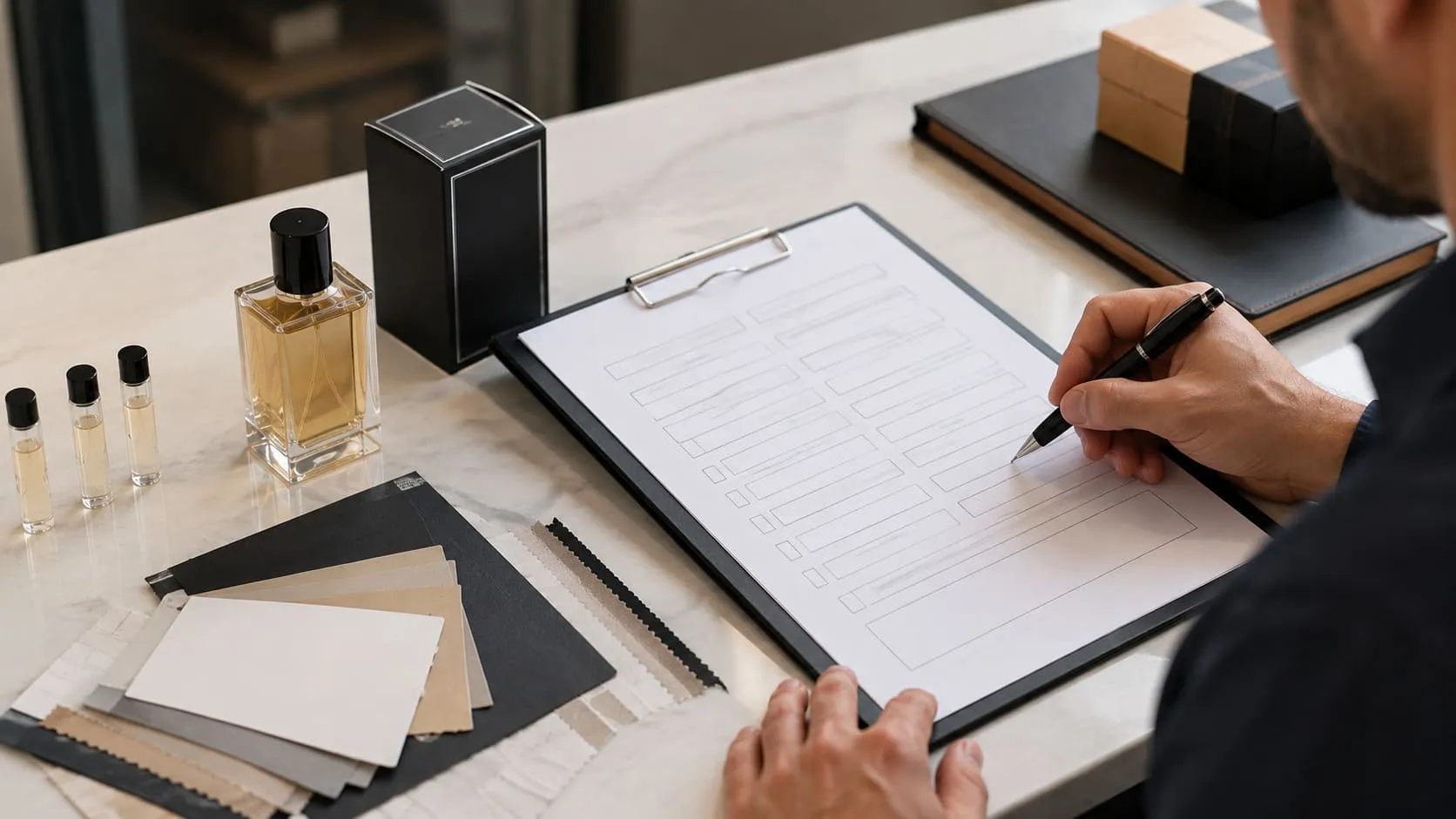
Jasmine: An integrated system for developing and manufacturing your fragrance brand
Jasmine for Perfumes and Fragrances is an established name in perfume and private label manufacturing, backed by extensive industry experience and the trust of both local and international brands. Through an advanced production facility and a specialized team that oversees the details of manufacturing and quality control, we provide end-to-end solutions that begin with fragrance development and continue through to a finished product ready for market.
Our experience has shown that a successful project starts with accurate information. This is where a well-structured perfume manufacturing RFQ becomes essential. Instead of relying on a general price request, the RFQ helps us understand your project through its actual commercial and technical requirements.
Once we receive your RFQ, we review the submitted information, identify any missing details, and discuss the points that may affect the manufacturing scope before finalizing the fragrance manufacturing quotation. This approach gives both sides a clearer basis for decisions involving the product specification, packaging, quantities, development requirements, and production timeline.
Our manufacturing experience and developed production capabilities are ready to support your brand. Contact our specialized team for a consultation and let us turn your project requirements into a clear and workable manufacturing plan.
Read also: Turnkey Perfume Solutions: End-to-End Perfume Setup for B2B Brands
FAQs about perfume manufacturing RFQs
Can I submit a perfume manufacturing RFQ before the packaging design is finalized?
Yes. Make it clear that the packaging design is still under development and attach any available specifications, references, or preliminary artwork. This helps the manufacturer identify which parts of the quotation may need to be updated once the final packaging is approved.
Can I request pricing for several quantities in one RFQ?
Yes. List each quantity as a separate pricing scenario so the manufacturer can provide a clear price for each option.
This is especially useful when preparing a perfume MOQ request, because it allows you to compare how different order volumes affect unit pricing and determine which quantity best fits your commercial plan.
Should each product have a separate line in the RFQ?
Preferably, yes, particularly when products differ in fragrance, bottle size, packaging, or order quantity.
Listing each product separately makes the perfume product specification clearer and allows the manufacturer to calculate the requirements and price for each SKU without relying on assumptions.
When should I send a physical perfume sample with the RFQ?
Send a physical sample when you want the manufacturer to use it as a reference for fragrance development or to help define the required product characteristics.
State clearly in the RFQ why the sample is being provided and whether it is intended for fragrance matching, development direction, quality reference, or another specific purpose.
When should a non-disclosure agreement be signed for perfume specifications?
An NDA may be appropriate when the information you plan to share contains proprietary or confidential business information and you want its disclosure and use to be governed contractually before sending it to a potential manufacturer.
This may be relevant to proprietary formulations, confidential technical specifications, product concepts, or other information your company considers commercially sensitive.
Should I use the same private label perfume RFQ template when comparing manufacturers?
Yes. Use the same core private label perfume RFQ template and the same baseline specifications when requesting quotations from different manufacturers.