A hotel can look premium, train its staff carefully, and design every room beautifully, yet still feel forgettable if the scent experience is random, too strong, or disconnected from the brand. For hospitality groups, hotel suppliers, importers, and B2B distributors, choosing the right hotel signature scent is the first step toward building a memorable scent identity that can be used, gifted, sold, and reordered.
This guide by Jasmine explains how to choose a hotel signature scent step by step, from defining the hotel personality and guest expectations to selecting use areas, testing samples, and preparing the scent for private label hotel fragrance products. For the wider strategy across hotel spaces and branded formats, buyers can also read our hotel scent marketing guide.
What is a hotel signature scent?
A hotel signature scent is a custom hotel scent or carefully selected fragrance used to represent the hotel scent identity across key guest touchpoints. It can appear in the lobby, guest rooms, spa areas, reception zones, amenities, and branded retail products.
A strong hotel signature fragrance should feel intentional. It should match the hotel brand scent, interior design, guest profile, location, and service level. A business hotel may need a clean, polished, professional scent. A beach resort may need a fresh, airy, or aquatic direction. A luxury boutique hotel may need something warmer, deeper, and more memorable.
The goal is not to make every space smell strong. The goal is to create a recognizable atmosphere that feels refined, comfortable, and consistent. Guests may not describe the scent directly, but they can remember the feeling it created.
For B2B buyers, the commercial value is clear. A hotel signature scent can support brand differentiation, improve consistency across properties, and create hotel fragrance products that guests can buy, receive as amenities, or experience across a hotel group.
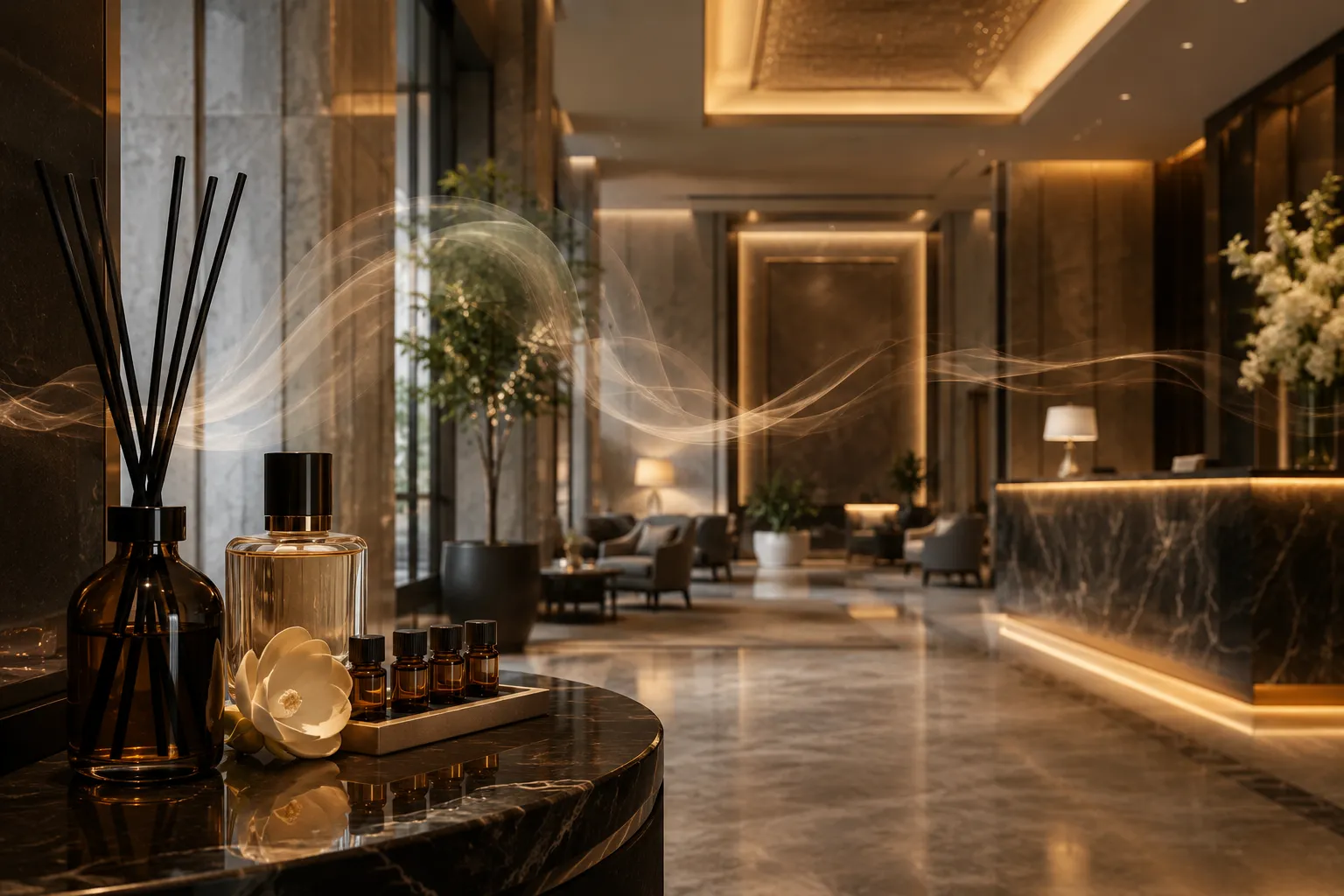
How to choose a hotel signature scent for your brand?
-
Choose the hotel personality
Before choosing fragrance notes, define the hotel personality. The scent should not be selected only because one decision-maker likes it. It should support the hotel brand identity and the expectations of the guests.
Start by asking what the hotel wants to communicate. Is it calm and minimal? Warm and luxurious? Fresh and family-friendly? Elegant and cultural? Modern and business-focused? Each answer points toward different luxury hotel scent ideas and different levels of intensity.
Clarify the hotel personality through these points:
- Interior style and materials, such as wood, stone, marble, linen, metal, or natural textures
- Guest profile, such as business travelers, couples, families, wellness guests, or international tourists
- Price positioning, from accessible comfort to luxury hospitality
- Location identity, such as coastal, urban, heritage, desert, mountain, or resort-based
- Desired emotion, such as calm, freshness, confidence, warmth, intimacy, or exclusivity
- Commercial goal, such as in-hotel ambience, retail shelf products, VIP amenities, or distributor catalogs
This step prevents a common mistake: choosing a fragrance that smells attractive in isolation but does not fit the hotel’s visual identity, service style, target guests, or private label product plan.
-
Match the scent to guest expectations
A hotel scent must work for the people who experience it every day. Guest expectations should guide hotel fragrance selection because different guests respond differently to intensity, sweetness, freshness, warmth, floral notes, and oriental accents.
A scent that feels premium in a large luxury lobby may feel too heavy in a small guest room. A bright citrus scent may work well in reception but feel too sharp in a spa. A soft floral scent may be ideal for a boutique hotel signature scent but may not fit a business hotel that needs a more neutral hospitality fragrance.
The goal is scent memory without guest fatigue. Scent memory happens when a fragrance becomes associated with a place, mood, or experience. In hospitality, this can help guests remember the hotel after checkout and recognize the same atmosphere when they return.
To match the scent to guest expectations, consider:
- Why guests choose the hotel and what they expect from the stay
- How long guests and staff remain in each scented area
- Whether the property serves international guests with varied preferences
- Whether the scent should feel luxurious, relaxing, clean, energetic, cultural, or intimate
- Whether the fragrance will become part of retail, amenities, or private label hotel scent products
- Whether the destination market prefers fresh, floral, woody, oud, amber, musk, citrus, or aquatic profiles
For hospitality groups and distributors, this step is essential. A scent used across multiple properties or sold as a private label hotel fragrance must feel distinctive enough to be remembered, yet balanced enough to work across different markets and spaces.
-
Decide where the scent will be used
The place of use changes how a hotel signature scent should be selected. A lobby scent needs a clear first impression. A guest room scent needs more softness and comfort. A spa scent should feel calm and relaxing. A reception or waiting area can carry a more recognizable note because it shapes the first brand memory.
Before approving the fragrance, map the exact touchpoints where the hotel brand scent may appear. This helps the buyer decide whether one core scent can work across the property or whether the hotel needs one signature scent with lighter variations for specific spaces.
A practical hotel scent map can include:
- Lobby and entrance areas
- Reception desk and waiting zones
- Guest rooms and suites
- Spa and wellness rooms
- Corridors and elevators
- Bathrooms and shared facilities
- Hotel boutiques, VIP gifts, and branded amenities
- Hotel transfer cars or chauffeur fleets when a wider fragrance line is planned
This section is about choosing the right signature scent for each use case. For the broader strategy of using fragrance across the full guest journey, read our hotel scent marketing guide. For lobby-focused product sourcing after the scent direction is clear, buyers can also read our guide to wholesale hotel lobby air fresheners.
-
Choose the right fragrance family
The fragrance family gives structure to the scent profile. It helps the hotel move from a vague request such as “luxury,” “clean,” or “fresh” into a direction that a hotel fragrance manufacturer can develop, sample, and refine.
Common fragrance families for hotels include citrus, floral, woody, amber, musky, aquatic, herbal, gourmand, powdery, and oriental-inspired profiles. Each family creates a different emotional effect and works differently across spaces and products.
Citrus notes often feel clean, bright, and energetic. Floral notes can feel elegant, soft, or romantic depending on the composition. Woody notes add warmth, structure, and premium character. Musk can create a clean and comfortable impression when used carefully. Amber, oud, and oriental-inspired notes may feel luxurious, but they should be balanced to avoid heaviness in shared spaces.
The most important decision is not choosing one note. It is building a balanced scent profile. Top notes create the first impression. Middle notes shape the main character. Base notes add depth, softness, and lasting identity.
For hotel fragrance selection, the scent profile should answer three questions:
- Does the first impression match the hotel entrance experience?
- Does the scent remain pleasant after guests spend time in the space?
- Does the dry-down still feel aligned with the hotel brand identity?
- Can the scent work across room spray, reed diffuser, mini spray, or gift set formats if the buyer wants a private label line?
A luxury hotel may choose a refined woody-musky direction with soft floral or amber details. A boutique hotel may explore a more distinctive blend that reflects its location or design story. A wellness property may choose clean herbal, tea-like, or soft floral notes. The right fragrance family should support both the guest experience and the business model. For a deeper article focused only on lobby scent directions, buyers can read our hotel lobby fragrance guide.
-
Test the scent before full rollout
Sample testing is one of the most important steps before full rollout. A fragrance can smell excellent on a blotter or in a bottle, then behave differently in a real hotel environment. Airflow, temperature, room size, fabric, cleaning products, guest traffic, and ventilation all affect perception.
A professional process starts with samples, internal review, and controlled testing. Shortlisted scents should be tested in the actual lobby, reception area, sample guest room, or spa area before full rollout. The goal is to confirm that the scent is pleasant, stable, brand-appropriate, and comfortable at the intended intensity.
Avoid judging only from the first impression. A hotel signature scent should be evaluated after several minutes and again after longer exposure. Staff feedback is also important because employees experience the scent for longer periods than guests.
Use this testing checklist before approving a final scent:
| Testing Point | What to Evaluate | Why It Matters |
| First impression | Does the scent match the hotel entrance experience? | Supports brand identity from arrival. |
| Intensity | Is it noticeable without feeling heavy? | Reduces guest complaints and staff fatigue. |
| Space fit | Does it work in lobby, rooms, spa, or reception zones? | Prevents inconsistent fragrance use. |
| Dry-down | Does the scent remain pleasant over time? | Improves comfort and scent memory. |
| Product potential | Can it work as a room spray, reed diffuser, or amenity? | Supports private label expansion. |
| Market fit | Will local and international guests accept it? | Reduces commercial and rollout risk. |
If your team is comparing several samples, Jasmine can help structure the decision around scent direction, product format, packaging, and destination-market requirements before production. For broader strategy around scenting spaces and branded formats, read our hotel scent marketing guide.
-
Turn the signature scent into hotel products
After the hotel signature scent is selected and tested, it can be adapted into private label hotel fragrance products. This step helps the hotel or B2B buyer extend the scent identity beyond the physical space and turn it into room sprays, reed diffusers, linen sprays, mini sprays, car fresheners, amenities, or gift sets.
The key point is adaptation. A scent that works in a large lobby may need a softer version for a guest room spray. A reed diffuser needs gradual scent release. A mini spray should feel convenient and gift-ready. Packaging should match the hotel’s visual identity, intended use, and sales or gifting channel.
This section is connected to signature scent selection. It helps buyers understand whether the chosen scent can move into branded hotel products. For the complete hotel scent marketing and product-system strategy, buyers can read our hotel scent marketing guide.
Because exact cost, MOQ, lead time, and shipping details depend on project scope, buyers should evaluate the following variables before requesting a quotation:
- Product type, such as room spray, reed diffuser, air freshener, mini spray, car freshener, or gift set
- Bottle, cap, pump, diffuser stick, label, box, carton, and packaging choices
- Label design, language, and destination-market requirements
- Fragrance complexity and customization level
- Order volume, SKU count, and production planning
- Export documentation requested by the destination market
- Shipping method, destination, packing protection, and reorder planning
Before confirming production, ask the hotel fragrance manufacturer:
- Can the same scent be adapted across several hotel products?
- Which packaging options fit both hotel use and retail display?
- What labeling information is required for my target market?
- How are samples approved before production?
- How is fragrance consistency checked between sample and production?
- What export documents may be needed for my destination country?
- How should products be packed to reduce leakage or damage?
- What information is needed to prepare an accurate quotation?
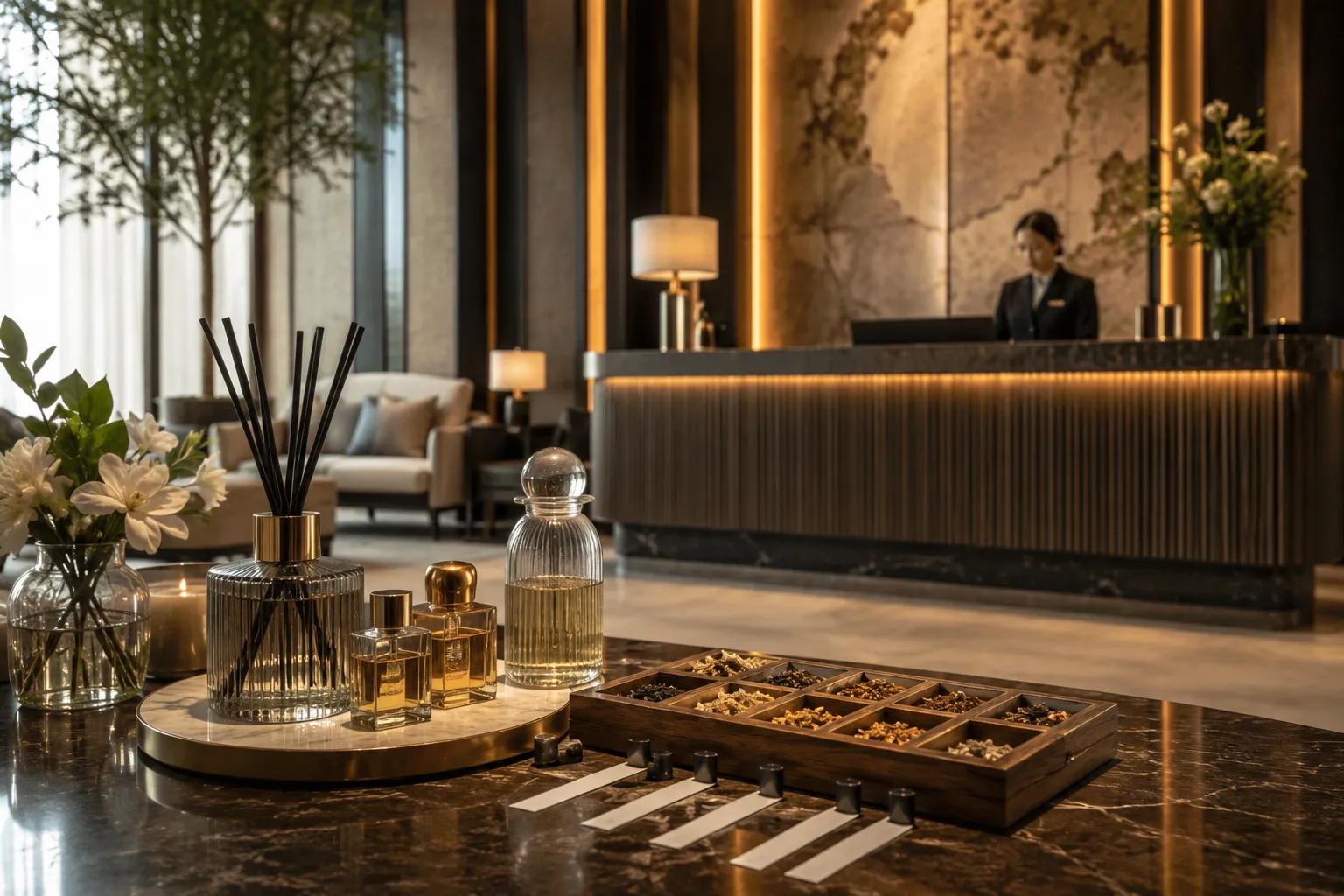
Common mistakes when choosing a hotel signature scent
- Choosing an overpowering scent: A hotel fragrance should create atmosphere, not dominate the space. Strong intensity may impress for a few seconds, but it can become uncomfortable when guests or staff stay in the area longer.
- Using scent inconsistently across the property: If the lobby smells luxurious, the guest room smells generic, and the spa has a completely unrelated fragrance, the brand experience becomes fragmented. The property does not always need one identical scent everywhere, but it needs a coherent scent system.
- Choosing a scent profile that conflicts with the hotel identity: A sweet gourmand scent may not fit a corporate hotel. A deep amber or oud profile may feel too heavy in a compact lobby. A sharp fresh scent may not match a warm boutique interior.
- Ignoring operational reality: The scent must work with ventilation, cleaning routines, staff exposure, guest sensitivity, airflow, and product format. A beautiful fragrance is not enough if it is difficult to use consistently.
- Approving a scent without real-space testing: A sample smelled in an office may behave differently in a lobby with high ceilings, air conditioning, fabrics, cleaning products, and constant movement.
- Treating packaging as an afterthought: For private label hotel scent products, packaging affects perceived value. If a hotel room spray or reed diffuser looks generic, it can weaken the premium perception of the scent.
Why work with Jasmine for hotel signature scent products from Turkey?
Choosing a hotel fragrance manufacturer in Turkey is a strategic decision. The right partner should understand scent direction, product format, packaging, approval workflow, and export-oriented planning. For hotel owners, hospitality groups, importers, and B2B distributors, this reduces the risk of developing a scent that smells good but fails commercially.
At Jasmine Factory in Turkey, we can support custom hotel fragrance products by helping buyers move from concept to scent direction, sampling, packaging discussion, and private label hotel fragrance development. This is valuable when a hotel wants one scent for its physical spaces and a product line that carries the same identity into guest rooms, retail shelves, gift boxes, or distributor channels.
A practical collaboration begins with a clear brief. The buyer should share brand positioning, target guests, interior style, desired emotion, preferred formats, destination market, and packaging direction. From there, the scent can be refined through samples and product planning.
For B2B distributors, the opportunity is also strong. Instead of offering generic hospitality fragrance products, distributors can build a focused hotel fragrance concept for lobbies, guest rooms, spas, amenities, and branded resale.
Before contacting Jasmine, prepare:
- Hotel brand story and target guest profile
- ·Preferred fragrance direction or examples
- Intended use areas, such as lobby, rooms, spa, reception, amenities, or retail
- Product formats needed, such as room spray, reed diffuser, mini spray, air freshener, or gift set
- Packaging style and branding requirements
- Destination market, label language, and export expectations
- Any documentation or importer requirements for the target country
- Preferred route: private label, wholesale, agency, or distribution inquiry
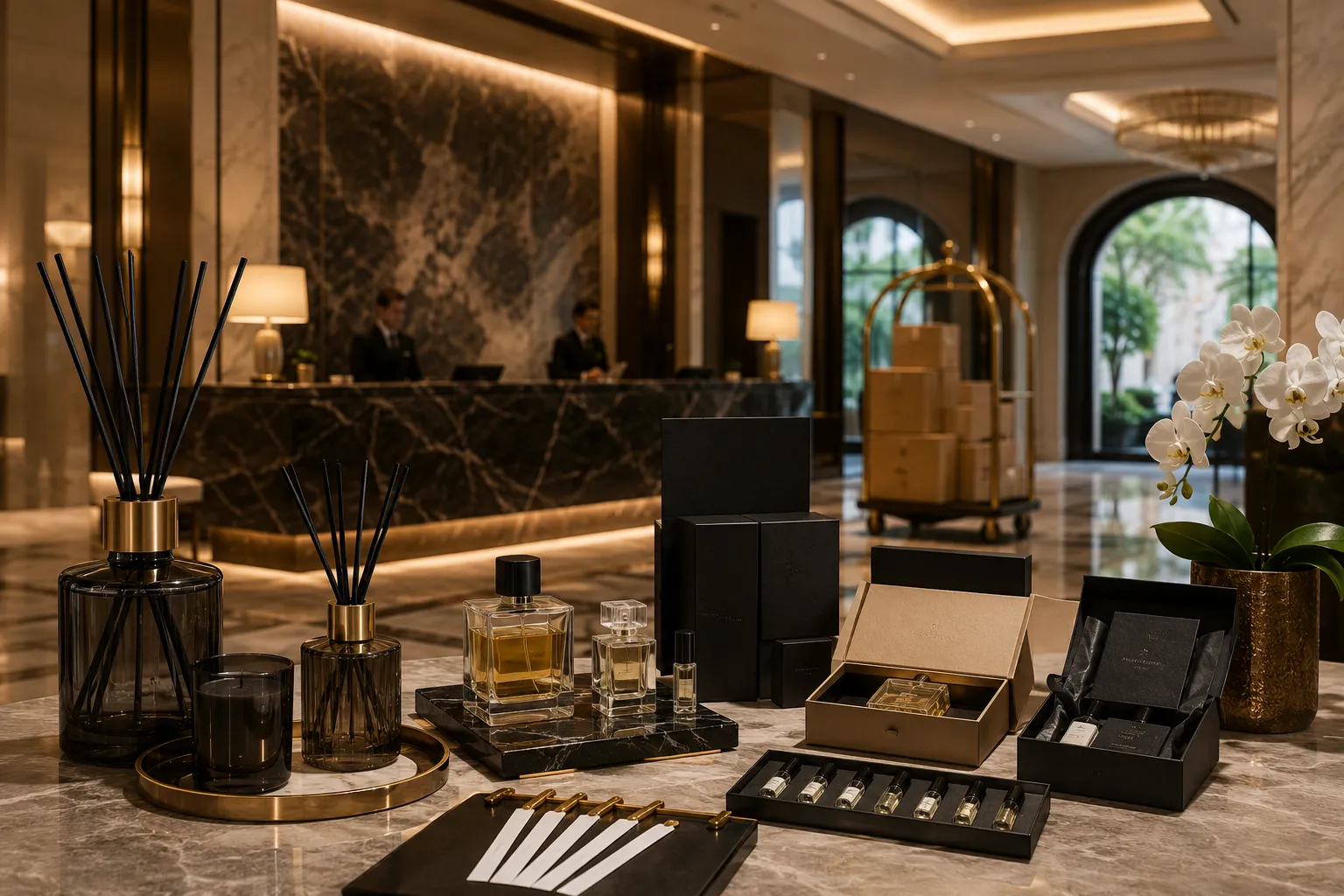
Turn a hotel signature scent into a branded guest experience
Choosing a hotel signature scent requires more than selecting a pleasant fragrance. It requires a structured process that connects brand identity, guest expectations, scent placement, fragrance family, real-space testing, and private label product development.
For global B2B buyers, the strongest projects are planned from the start around target market, product format, packaging, label language, documentation needs, and reorder logic. This turns the scent from a decorative detail into a repeatable hotel scent identity.
Ready to develop a hotel signature scent from Turkey for your property, hospitality group, or distribution business? Contact Jasmine via WhatsApp with your target market, preferred product formats, scent direction, packaging needs, and destination-market requirements.
FAQs about choosing a hotel signature scent
What Makes a Good Hotel Signature Scent?
A good hotel signature scent matches the hotel’s brand identity, guest expectations, interior style, and service level. It should feel memorable without becoming too strong, so guests can connect the fragrance with the hotel experience naturally.
How Do I Choose the Right Signature Scent for My Hotel?
Start by defining the hotel personality, target guests, and main scenting areas such as the lobby, rooms, spa, or reception. Then choose a fragrance family, test samples in real spaces, and adjust the scent before full rollout.
Can a Hotel Signature Scent Be Used in Guest Products?
Yes. A hotel signature scent can be developed into private label hotel fragrance products such as room sprays, reed diffusers, pillow sprays, mini sprays, car fresheners, amenities, and gift sets.
What Is the Difference Between a Custom Hotel Scent and a Hotel Brand Scent?
A custom hotel scent is the fragrance developed or selected for the property. A hotel brand scent is the wider identity created when that fragrance is used consistently across spaces, products, packaging, and guest touchpoints.
Should Boutique Hotels and Luxury Hotels Use Different Signature Scents?
Often, yes. Boutique hotels may choose distinctive or artistic scent profiles, while luxury hotels may prefer refined, elegant, and balanced fragrances. The right choice depends on concept, guest profile, market, and desired emotional impression.