Many brands want a signature scent, but the real problem starts when the idea reaches production. A fragrance may smell attractive in a sample and still fail commercially if the format is wrong, the packaging is weak, the scent brief is vague, or the destination market requirements are discussed too late. For importers, distributors, retailers, private label founders, hotel suppliers, home fragrance brands, and car freshener buyers, custom fragrance development is not only a creative step. It is a sourcing decision that must turn a scent idea into a repeatable, shipment-ready product.
In this guide, we explain how custom fragrance development works for trade buyers who want to build perfumes, body mists, room sprays, reed diffusers, air fresheners, car fresheners, and related fragrance products. You will learn how to prepare a scent brief, choose the right development route, review samples, plan packaging, avoid common delays, and work with Jasmine Factory in Turkey as a fragrance and air freshener manufacturer for private label, wholesale, and export-focused projects.
Custom fragrance development for trade buyers
Custom fragrance development is the process of creating, refining, or adapting a scent direction for a specific brand, product format, audience, and market. It can start from a broad idea, such as “a clean luxury scent for hotel rooms,” or from a more specific brief, such as “a warm amber-musk perfume for GCC retail shelves.”
Fragrance is wider than perfume. A perfume is usually a personal fragrance product, while a fragrance direction can be adapted into several applications: perfume, pocket perfume, body mist, room spray, reed diffuser, air freshener, car freshener, or another scented product. Each application has different performance expectations and packaging needs, so the development process must connect the scent idea to the final product format.
For trade buyers, the process should be commercial as well as creative. A good fragrance must fit the customer profile, product format, sales channel, packaging tier, and destination market. The approved sample becomes the reference point for production and future reorders, which is why custom fragrance development should be managed through clear approval gates.
Have a scent idea for your market? Contact us and share your product type, target country, scent direction, and packaging goal.

Custom fragrance development vs private label, white label, OEM, and ODM
Many buyers use custom fragrance, private label, white label, OEM, and ODM as if they mean the same thing. In practice, each route gives the buyer a different level of control, speed, customization, and responsibility.
White label is usually the fastest route because the product is mostly ready and the buyer focuses on branding or basic packaging changes. Private label fragrance development gives the buyer more room to shape the brand identity, scent selection, packaging, and presentation while working within a factory-supported structure. OEM is more buyer-led, where the buyer provides stronger specifications. ODM is more factory-led, where the manufacturer supports development through existing capabilities, validated formats, or recommended directions.
Custom fragrance development is the stronger route when scent identity matters. It is useful for brands that do not want to launch with a generic fragrance or rely only on catalog-based options. However, it requires a clearer brief, better feedback, and disciplined approvals.
For a deeper comparison, review our OEM Private Label Perfume vs ODM guide before choosing the development model.
Custom fragrance development routes for trade buyers
| Route | Best For | Buyer Provides | Factory Supports | Approval Gate | Risk to Manage |
| White label | Fast market entry | Brand, logo, and basic packaging direction | Existing product plus label or packaging support | Label and packaging approval | Lower uniqueness |
| Private label | A branded line with customization | Brand identity, product preferences, target market | Scent options, packaging, filling, and production | Sample and packaging approval | Unclear brief |
| Custom fragrance development | Signature scent or exclusive direction | Scent brief, audience, references, and market context | Fragrance direction, sampling, refinement, and application guidance | Approved sample | Too many revisions |
| OEM/ODM | Structured buyer-led or factory-led development | Specification or development direction | Manufacturing, development, packaging, and quality checks | Specification or sample sign-off | Responsibility confusion |
This table helps you choose the right path before contacting a factory. If speed matters most, a catalog or white label route may be more practical. If differentiation matters most, custom fragrance development may be stronger. If strict specifications or a larger launch system is needed, OEM or ODM may be more suitable.
When is custom fragrance development the right choice?
Custom fragrance development is the right choice when scent identity matters to the business model. It is especially useful for private label founders, retailers, distributors, hotel suppliers, home fragrance brands, car freshener brands, and beauty entrepreneurs who want a fragrance direction that feels connected to their audience.
A retailer launching a premium perfume line may need distinctive custom perfume development because the scent itself is part of the brand promise. A home fragrance brand may need a signature clean, floral, woody, or amber direction that can be adapted across room spray and reed diffuser products. A car freshener distributor may need a recognizable scent family that is clear, commercial, and suitable for automotive use.
Custom development is not always the fastest starting point. Buyers who want to compare several directions before committing can begin with our Catalogs or a stock fragrance library route, then move into deeper customization once the market direction is clear.
Custom fragrance development process
The fragrance development process should be managed as a buyer journey. It begins with commercial clarity, then moves into scent direction, fragrance sampling, written feedback, final approval, packaging, and production release.
You, as a buyer, do not need to know every technical detail, but you should know the target customer, market, product type, positioning, and preferred scent family. These inputs help your manufacturer understand whether the product should feel mass-market, masstige, premium, niche-inspired, oriental, clean, minimalist, youthful, luxury, or gift-oriented.
When reviewing broader production stages, buyers can also read our Perfume Manufacturing: Wholesale and Private Label guide for context on manufacturing, packaging, and supply planning.
Step 1: Define the brand and target market
Scent development begins with business positioning. Before discussing notes, define who the end customer is and where the product will be sold. A GCC retail line may prefer oud, amber, musk, rose, vanilla, spicy woody, or oriental directions. A European lifestyle line may prefer clean musk, tea, citrus, soft floral, green, or minimalist scents. A hotel supplier may focus on atmosphere and guest experience, while a car freshener distributor may prioritize clarity and product recognition.
- Who is the end customer?
- Is the product for retail, wholesale, e-commerce, hotels, gifts, or distribution?
- Is the positioning mass, masstige, premium, luxury, or niche-inspired?
- Which scent families are preferred, and which notes should be avoided?
- What is the destination country, label language, and expected sales channel?
- Will the product launch as a single item, a collection, or part of a wider brand line?
Step 2: Create the scent brief
The scent brief turns a vague idea into a usable factory direction. Without a clear brief, the manufacturer may send samples that smell good but do not fit the buyer’s market.
- Product type: perfume, body mist, room spray, reed diffuser, air freshener, car freshener, or another format.
- Target market: country, region, channel, and customer profile.
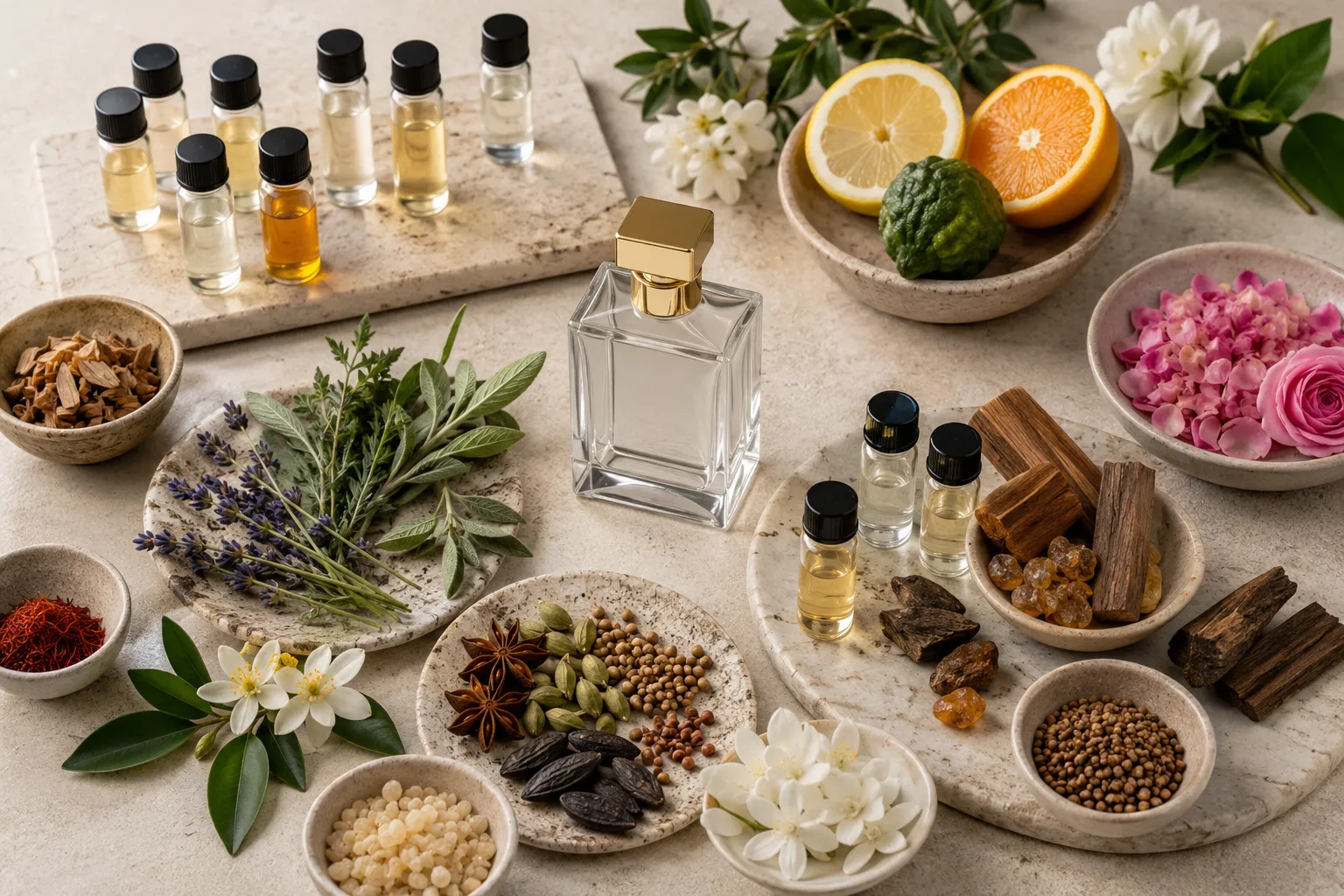
- Scent family: floral, fruity, woody, amber, oud, musk, citrus, gourmand, clean, spicy, aquatic, or green.
- Reference direction: inspiration only, not a request to copy another product.
- Intensity preference: light, balanced, strong, soft, fresh, warm, or long-lasting impression.
- Packaging direction: bottle shape, cap style, label style, box, color direction, or gift packaging.
- Format preference: alcohol-based or alcohol-free where relevant.
- Destination market requirements: label language, barcode, importer documents, or retail listing expectations.
A practical brief gives us enough context to recommend a catalog selection route, private label fragrance development, or a custom scent project instead of sending random samples.
Step 3: Develop and review samples
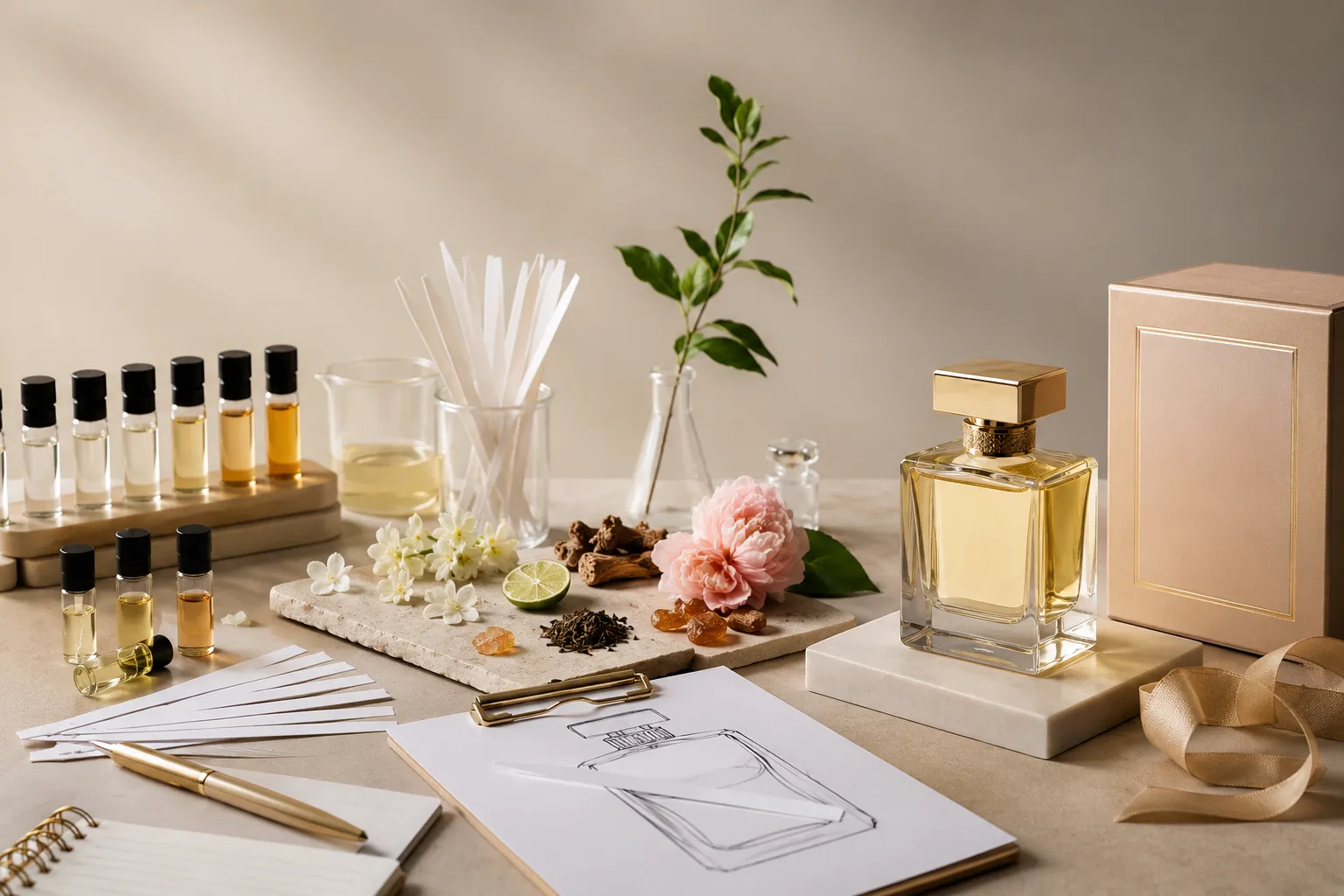
Sampling should be controlled, not random. Samples should be evaluated against the scent brief, target customer, product format, and market positioning. When reviewing perfume samples, consider opening, heart, dry-down, balance, strength, character, and audience fit. For room spray or home fragrance, consider freshness, diffusion, room context, and intensity. For air freshener and car freshener products, consider application suitability, clarity, and stability expectations.
- Make it fresher.
- Reduce sweetness.
- Add more clean musk.
- Make the dry-down warmer.
- Reduce smoky notes.
- Keep the opening but change the base.
- Make it more suitable for premium retail.
The goal is to move toward an approved sample, not to keep restarting the direction. Clear feedback shortens development and protects the launch plan.
Step 4: Approve the final scent direction
The approved sample is the bridge between creative development and production. It becomes the reference for manufacturing, packaging confirmation, quality checks, and future reorders.
- The scent direction is approved.
- The product format is approved.
- Packaging components are confirmed.
- Label and carton artwork are approved.
- Required documents are discussed.
- Destination market needs are shared.
- Reorder expectations are clear.
Formula ownership, exclusivity, and usage rights should not be assumed. They should be clarified directly with the manufacturer in writing when relevant.
Product formats for custom fragrance development
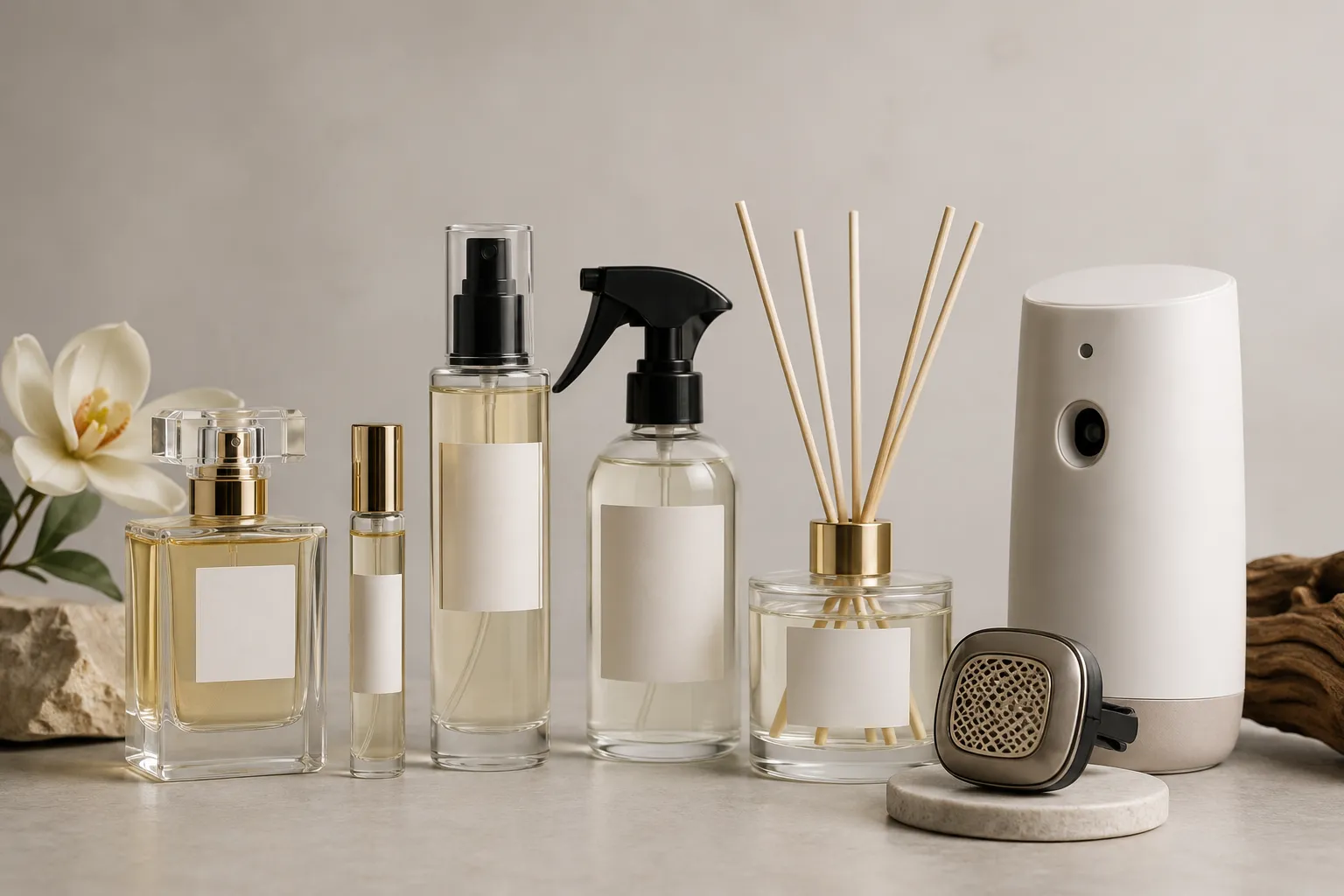
Custom fragrance development is not limited to fine perfume. A scent direction can be developed for several product categories, but each format has different performance expectations, packaging needs, and technical considerations.
Jasmine’s product universe includes perfumes, pocket perfumes, body mists, room sprays, reed diffusers, air fresheners, car fresheners, and related fragrance formats. Buyers can review our Catalogs and products before defining the right development route.
A key point for buyers: one scent direction may need adjustment across formats. A perfume formula should not automatically be assumed to work in a room spray, reed diffuser, or car freshener without testing. Each base, application, packaging component, and usage context can affect the final experience.
Perfume and pocket perfume
Perfume and pocket perfume development focuses on personal fragrance identity. Buyers should define the fragrance character, concentration direction, bottle presentation, cap, sprayer, box, label, and retail shelf appeal. A strong perfume brief should describe the desired impression, strength, dry-down, and usage occasion instead of relying on vague promises.
Body mist and body spray
Body mist and body spray development often fits lifestyle, youth, daily-use, and layering concepts. The scent should feel easy to wear, commercially clear, and aligned with the buyer’s packaging and price positioning. These formats should be planned separately from fine perfume because customers expect a different scent behavior and usage routine.
Room spray, reed diffuser, and home fragrance
Room spray, reed diffuser, and home fragrance products require a space-focused mindset. The fragrance must support atmosphere, freshness, and product identity without unrealistic health, therapeutic, or antibacterial claims. For private label fragrance development in home fragrance, buyers should consider room type, customer use case, intensity level, packaging, refill logic, and reorder potential.
Air freshener and car freshener
Air freshener and car freshener fragrance development requires attention to scent clarity, application suitability, packaging durability, and market preference. These products are often bought quickly, so the scent name, packaging, and first impression must be easy to understand. A car freshener fragrance may need to feel clean, energetic, sporty, luxurious, or fresh, depending on the retail channel.
Buyers planning ambient scent products can also review our Air Freshener Manufacturer page for related category context.
Jasmine product and brand references for custom fragrance projects
When planning custom fragrance development with Jasmine, trade buyers can use our existing product and brand structure as a reference point for product format, scent families, packaging direction, and market positioning. This does not mean every custom project must copy an existing product. It means buyers can communicate more clearly by pointing to the type of product application they want to develop.
- JASMINE can help buyers understand a broad fragrance-product universe that includes perfumes, reed diffusers, room sprays, pocket perfumes, car perfumes, and body mists.
- LUVEAL is useful as a reference for air fresheners, diffusers, and car perfume directions.
- Cavayelo can support discussions around reed diffusers, room sprays, perfumes, body splash, car perfumes, and gift-style formats.
- MAROTA is relevant for buyers comparing reed diffusers, room sprays, and car freshener-style products.
- PURE PASSION can be used as a reference point for reed diffuser and air freshener positioning.
- JASMINE NICHE can support premium-style discussions around diffusers and fresheners.
- VILARA is useful for air and car freshener concepts, including room sprays and reed diffusers.
For importers and distributors, these references make the first inquiry more practical. Instead of saying “we want a custom fragrance,” the buyer can say: “We want a custom scent direction for a reed diffuser and room spray line similar in format to your home fragrance categories,” or “We need a car freshener scent family for retail distribution.” This helps Jasmine respond with a more relevant development path.
To compare available categories before a custom project, request our catalogs and then send your product-format brief via WhatsApp.
Packaging decisions for final fragrance product
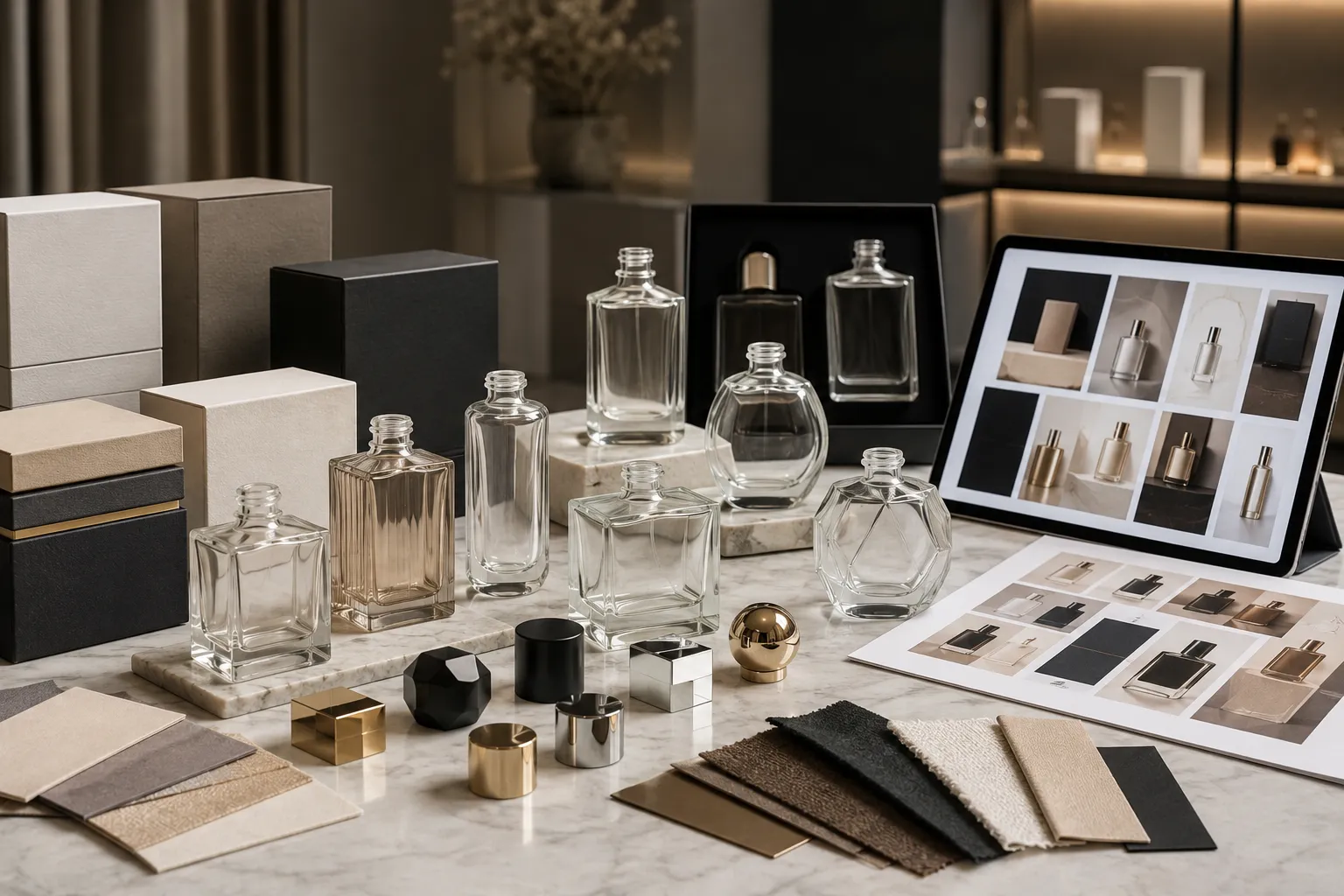
Fragrance packaging is not an afterthought. It shapes the customer’s first impression, affects production compatibility, and influences how the product performs in storage, transport, retail display, and repeat purchase.
Packaging decisions may include bottles, caps, sprayers, labels, cartons, gift boxes, finishes, barcode space, batch code placement, multilingual labels, and outer carton strength. The right packaging should match the product format, market expectations, and logistics requirements.
| Packaging Element | What to Check | Why It Matters |
| Bottle or container | Shape, size, compatibility, finish | Supports brand identity and production fit |
| Cap and sprayer | Fit, function, leakage risk, usage feel | Affects customer experience and returns |
| Label | Adhesion, language, barcode, legal space | Supports retail and import readiness |
| Carton | Durability, print quality, batch code area | Protects the product and supports shelf appeal |
| Outer packing | Carton strength and packing method | Helps shipment and warehouse handling |
| Gift box | Premium feel and structure | Supports higher-positioned retail lines |
Our Private Label service is the main route for buyers who want to combine scent, packaging, and brand identity in one manufacturing project.
What buyers should be before production
Before approving production, buyers should ask practical questions that reduce risk:
- Is the fragrance sample approved before production?
- What sample will be used as the production reference?
- What documents can be provided for this product type?
- Which documents should the buyer verify for the destination market?
- How will label and carton artwork be approved?
- How are batch codes and product information handled?
- How are packaging components checked before filling?
- How will reorders be matched to the approved sample?
- How is shipping handover coordinated?
- What information should the buyer provide before quotation?
These questions help you compare suppliers based on the operating process, not only price.
Common mistakes in custom fragrance development
Custom fragrance development can move smoothly when the buyer gives clear inputs and respects approval gates. Most delays happen when the project starts with unclear direction or changes too late.
| Mistake | Why It Delays Launch | How to Avoid It |
| Starting without a clear target market | Samples may not match the buyer’s real customer | Define country, channel, positioning, and customer profile |
| Sending vague scent references | The factory cannot understand what to keep or avoid | Explain the reason behind each reference |
| Approving fragrance before confirming product format | The scent may need adjustment for the final application | Confirm whether it is perfume, body mist, room spray, diffuser, air freshener, or car freshener |
| Treating packaging as only design | Components may not fit production or shipping needs | Check bottle, cap, label, carton, and barcode space early |
| Asking for documents too late | Import planning may be delayed | Discuss document needs before production release |
| Changing the brief after sample approval | It can restart development and affect packaging | Lock the brief before moving forward |
A structured workflow helps buyers avoid these problems. Our Turnkey Private Label Perfume Manufacturing Guide is useful for understanding how approvals and launch planning connect.
How to choose a custom fragrance manufacturer in Turkey?
Choosing a custom fragrance manufacturer in Turkey should not be based only on price. Price matters, but the operating process matters more. A low quote with unclear samples, weak packaging coordination, or incomplete documentation can create higher risk later.
A strong manufacturer should help with brief clarification, scent direction, fragrance sampling, packaging coordination, production planning, quality checks, and shipment readiness. The supplier should also be able to explain which route fits the buyer’s project: catalog selection, white label, private label, custom fragrance development, OEM, or ODM.
- Product-format range.
- Fragrance development capability.
- Private label and packaging support.
- Catalog access for faster shortlisting.
- Sample approval process.
- Quality and documentation mindset.
- Communication clarity.
- Export experience.
- Reorder consistency.
- Ability to support different buyer types.
Jasmine Factory in Turkey is positioned as a practical partner for trade buyers who need fragrance products, private label support, catalogs, certificates, and direct contact for wholesale, agency, or own-brand manufacturing inquiries.
Start your custom fragrance development project with Jasmine
Custom fragrance development gives your brand a clearer scent identity, stronger market differentiation, and a structured path from idea to production. The process works best when the buyer defines the target market, product format, scent direction, packaging needs, and document expectations before requesting samples.
Jasmine Perfumes is a fragrance and air freshener manufacturer and supplier in Turkey, with factory and office contact details listed in Istanbul. For importers, distributors, retailers, entrepreneurs, fragrance brands, home fragrance suppliers, hospitality suppliers, and car freshener buyers, Jasmine can help connect the development journey: idea, scent brief, sample approval, packaging coordination, production, and shipment-ready handover.
To start your custom fragrance development discussion, send Jasmine your target market, product format, scent direction, packaging needs, and destination-market document requirements through WhatsApp.
FAQs about custom fragrance development
What is custom fragrance development?
Custom fragrance development is the process of creating or refining a scent direction for a specific brand, audience, product type, and market. For trade buyers, the goal is a fragrance that can be sampled, approved, produced, packaged, and reordered consistently.
Is custom fragrance development only for perfumes?
No. Perfume is one product format, but fragrance development is broader. A custom fragrance direction can be planned for perfumes, body mists, room sprays, reed diffusers, air fresheners, car fresheners, and other scented products, depending on testing and format suitability.
Is custom fragrance development different from private label perfume?
Yes. Private labels may use existing or partly customized scent options, while custom fragrance development focuses on a more original scent direction. Many brands combine both by using a private label manufacturing route with a custom scent brief and packaging direction.
What should I send before requesting fragrance samples?
Send your product type, target market, customer profile, scent family, reference directions, packaging preference, expected SKU plan, and document needs. A clear brief helps the manufacturer propose more accurate samples and reduce unnecessary revision rounds.
Can Jasmine support packaging and export documents for custom fragrance projects?
Jasmine can support trade buyers with private label manufacturing, packaging direction, catalogs, certificates, and direct contact for wholesale, agency, or own-brand manufacturing inquiries. Document needs depend on the destination market and product type, so buyers should share import requirements early.