Many fragrance importers see demand for alcohol-free perfumes, but the real challenge starts after the first sample request. A product may smell attractive and still fail commercially because the format is wrong, the label claim is unclear, the packaging does not fit the market, or the required documents were not discussed early. For Islamic retail channels, perfume shops, gift stores, online sellers, and wholesale distributors, success depends on more than offering a non-alcoholic fragrance.
At Jasmine Perfumes in Turkey, we help trade buyers turn this demand into a clearer sourcing plan. Instead of treating alcohol-free perfumes as one generic category, we look at the target country, sales channel, scent direction, product format, packaging route, and export expectations before recommending the next step.
This guide explains how alcohol-free perfumes fit Islamic markets, what formats are most relevant, how perfume oil, attar, roll-on perfume, oil-based perfume, and non-alcoholic perfume concepts differ, and how to plan a private label or wholesale route with fewer sourcing risks. It also shows how Jasmine Factory can support buyers through catalog review, scent selection, packaging discussion, available document checks, and export-oriented communication from Turkey.
Alcohol-free perfumes and islamic market demand
Alcohol-free perfumes have strong relevance in Islamic markets because fragrance is deeply connected to personal grooming, hospitality, gifting, prayer-day routines, and cultural identity. In GCC and MENA markets, as well as Muslim consumer segments in Europe, Africa, and North America, many customers actively look for alternatives to conventional alcohol-based fragrance formats.
This demand is not limited to one product type. Some markets prefer traditional perfume oil and attar-style products. Others respond well to roll-on perfume, oud and musk collections, compact gift sets, or modern non-alcoholic perfume concepts with cleaner branding. The opportunity is broad, but it must be shaped around the buyer’s market rather than copied from another country.
For importers and distribution partners, the category can serve several channels: perfume boutiques, Islamic lifestyle stores, cosmetics retailers, gift shops, online stores, wholesale networks, and private label brands. The strongest projects usually combine a clear scent story with controlled packaging, responsible label language, and reorder consistency.
Planning to enter the alcohol-free perfume category? Contact us with your target market, preferred format, and scent direction so our team can guide the first discussion.
Also read: Halal Perfume Production in Turkey for Global B2B Buyers
What are alcohol-free perfumes in B2B sourcing
Alcohol-free perfumes are fragrance products that do not rely on ethanol or alcohol as the main carrier. In commercial sourcing, the term may include:
- Perfume oils
- Attars
- Roll-ons
- Solid perfume concepts
- Oil-based perfume blends
- Alcohol-free sprays
- Other non-alcoholic fragrance formats, depending on feasibility and product requirements.
The distinction matters because each format behaves differently. Perfume oil is not the same as a spray. A roll-on is not the same as an attar-inspired oil. A solid perfume may support a niche gift concept, while a body or hair mist may need a different positioning and performance expectation. Each route affects packaging, testing, sampling, label wording, shelf display, and import preparation.
Alcohol-free, oil-based, and halal are not the same
You should separate three terms before approving product language:
- Alcohol-free perfume means the formula does not use alcohol as the main carrier.
- Oil-based perfume means the fragrance is carried in an oil base.
- Halal fragrance may require ingredient review, process review, documentation, and certification depending on the claim and destination market.
A product can be alcohol-free without automatically being halal-certified. Any halal-related claim must be supported by the right documents and verified for the destination market. This protects the importer, the retailer, and the final brand from unsupported packaging or product-page claims.
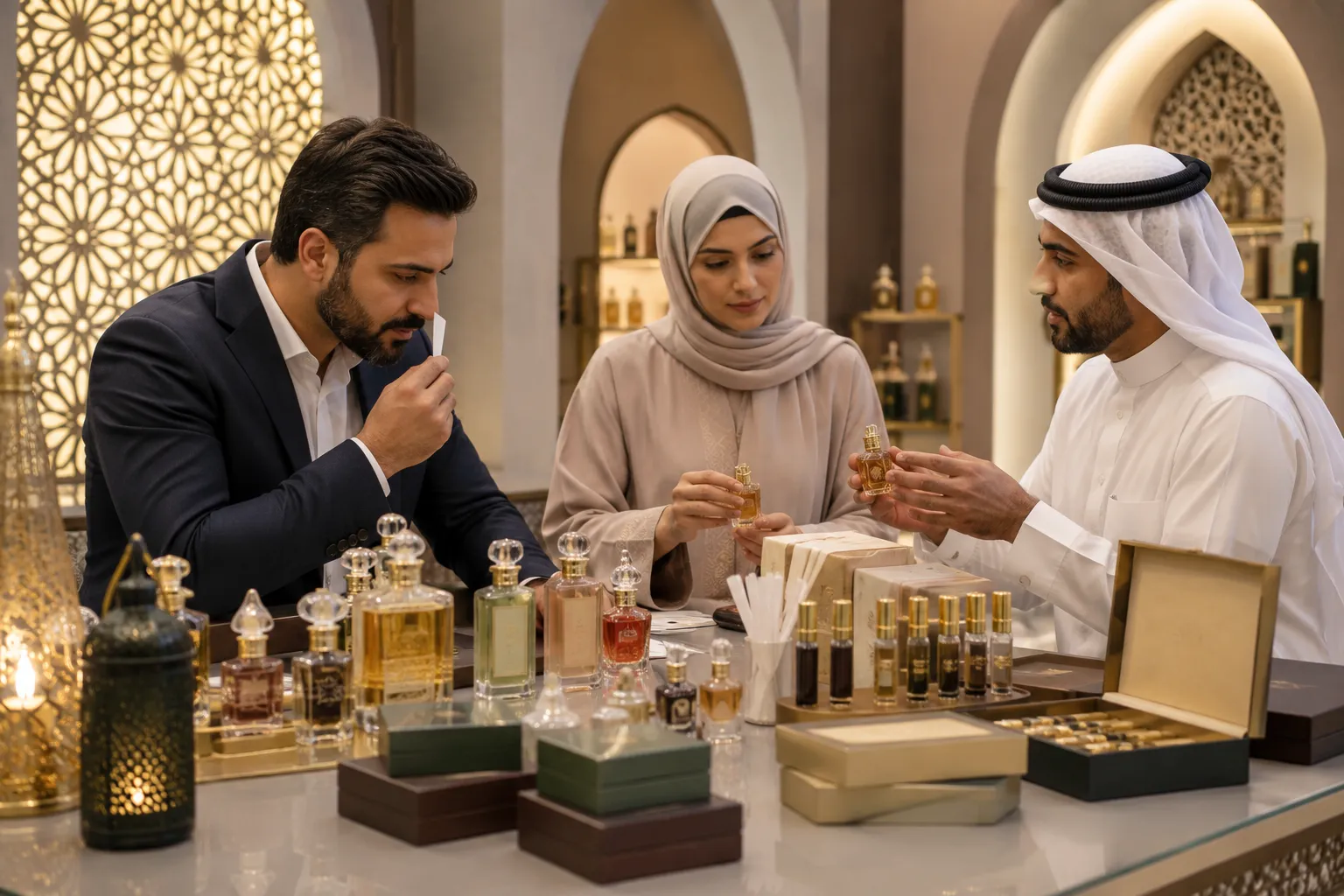
Why do islamic markets need a specific product strategy?
Islamic markets should not be treated as one identical audience. Saudi Arabia, UAE, Kuwait, Qatar, Oman, Bahrain, North Africa, Southeast Asia, and Muslim communities abroad can differ in scent preference, packaging expectations, retail channel, price level, and documentation needs.
A premium Gulf perfume boutique may need oud, amber, musk, and gift-ready packaging. A mass-market distributor may need compact roll-on perfumes with clear scent names and practical carton packing. An online Islamic lifestyle brand may prefer soft musk, floral oils, fresh woods, and clean visual identity. The same primary keyword, alcohol-free perfumes, can support different product strategies.
Cultural scent families often include oud, musk, amber, rose, sandalwood, incense-inspired notes, and warm oriental blends. These can be adapted for daily-use oils, premium sets, unisex lines, attar-inspired ranges, and private label alcohol-free perfume collections. The correct choice depends on the channel and target customer.
Main alcohol-free perfume formats for wholesale and private label
Format selection is one of the most important decisions in alcohol-free perfume sourcing. It affects how the customer applies the product, how the retailer displays it, how the distributor samples it, and how the brand explains its value.
| Format | Best use | Trade advantage | Planning note | Jasmine route |
| Perfume oil | Traditional, premium, or daily fragrance lines | Strong cultural fit in Islamic markets | Projection is more intimate than alcohol sprays | Private label or wholesale discussion |
| Attar-style oil | Oud, musk, amber, rose, and oriental concepts | Familiar for traditional buyers | Needs careful scent naming and packaging | Catalog review and custom direction |
| Roll-on perfume | Retail chains, gifts, travel, and affordable collections | Compact, easy to sample, easy to merchandise | Applicator quality affects perceived value | Private label or wholesale planning |
| Alcohol-free spray | Modern non-alcoholic fragrance concepts | Familiar usage for consumers | Requires feasibility, stability, and claim review | Project-specific discussion |
| Solid perfume | Niche, travel, gifting, or lifestyle concepts | Different shelf story | Not suitable for every market | Custom project discussion |
| Body or hair mist | Layering, daily-use, and lifestyle lines | Good for younger or online buyers | Different performance expectations | Product-specific planning |
Perfume oils are often a strong entry point because they match familiar fragrance habits in many Islamic markets. Attar-style oils can support a more traditional brand story. Roll-ons can work well for wholesale, travel, and gift channels. Alcohol-free sprays and mists may fit modern buyers, but they require careful formulation and claim discussion before production.
Jasmine product routes for alcohol-free perfume projects
At Jasmine, we offer several product and business routes that can support buyers exploring alcohol-free perfumes. You can start by reviewing our catalogs to understand available fragrance directions, brand families, packaging styles, and product categories, then confirm which route is suitable for an alcohol-free or oil-based project.
For perfume-focused projects, buyers may discuss perfume oil, roll-on perfume, attar-style directions, oud and musk concepts, or private label fragrance collections. For a broader Islamic lifestyle range, you may also explore our complementary fragrance categories such as reed diffusers, room sprays, air fresheners, and gift-ready formats when they fit the sales channel.
Our brand ecosystem includes names such as JASMINE, Jasmine Niche, Pure Passion, Cavayelo, Luveal, Vilara, and Marota. These brands help you understand product presentation and category diversity, but the alcohol-free status, claim wording, documentation, and exact format must always be confirmed for the selected product.
Brand owners who want a dedicated collection can discuss private label development with Jasmine, including scent direction, bottle choice, label language, carton design, packaging finish, and export-ready packing.
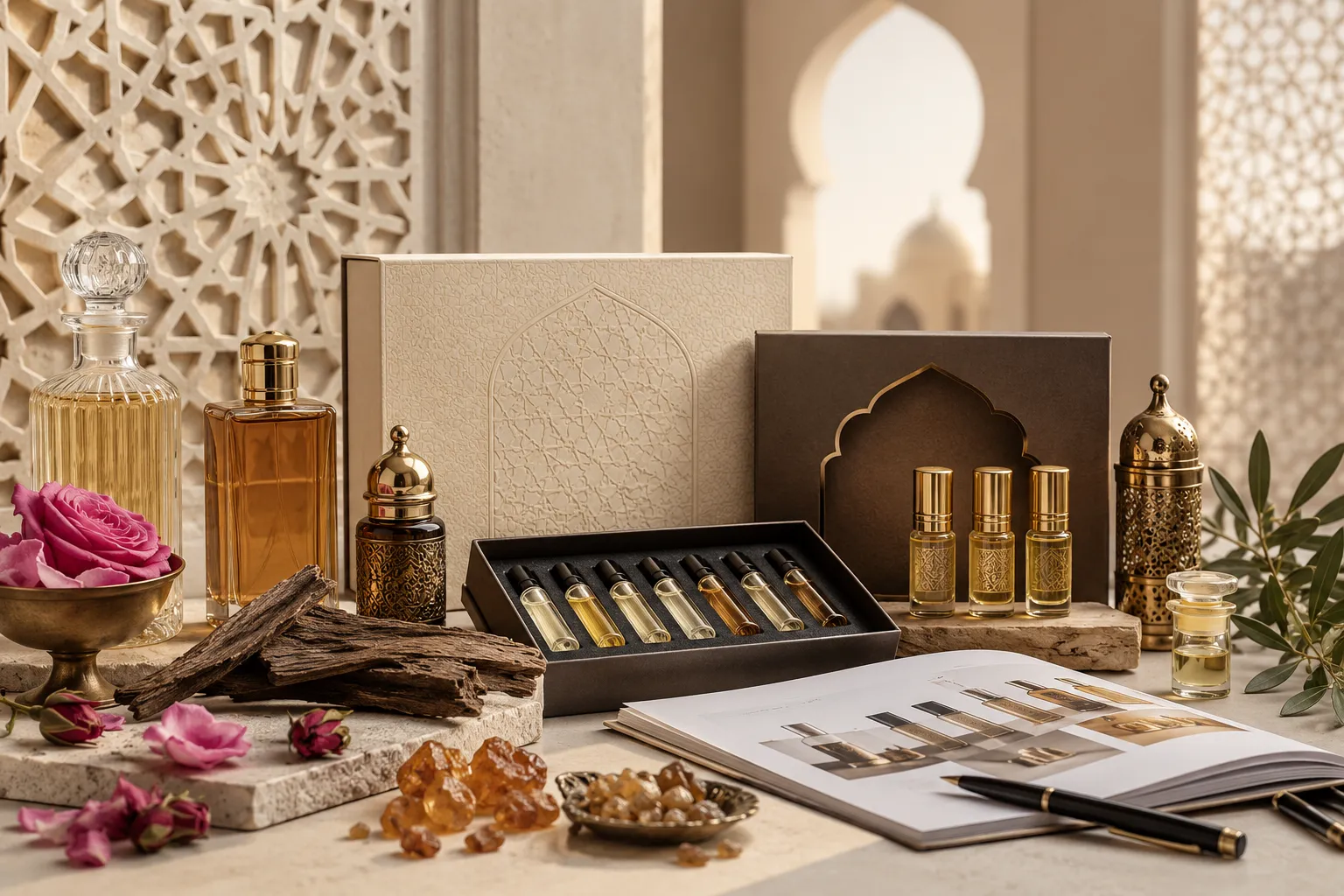
Alcohol-free perfume market entry checklist
Before asking for samples, prepare a clear brief. This makes the sourcing process faster and helps Jasmine recommend relevant options instead of sending random samples.
- Target country and sales channel.
- Product format: perfume oil, attar, roll-on, spray, mist, solid perfume, or set.
- Scent direction: oud, musk, amber, rose, fresh, floral, woody, gourmand, or oriental.
- Positioning: mass, masstige, premium, niche, gift line, or unisex daily wear.
- Branding route: wholesale, white label, private label, OEM, ODM, agency, or distribution.
- Packaging direction: bottle, cap, applicator, label, carton, gift box, or display set.
- Label language, claim wording, barcode, and retail listing expectations.
- Documents required for the destination country and sales channel.
- SKU plan and reorder expectations.
A clear brief changes the discussion. “I need alcohol-free perfumes” is too broad. “I need a private label roll-on perfume line for Islamic retail stores in the Gulf, with oud, musk, amber, and bilingual packaging” gives the manufacturer a practical direction.
Also read: Everything About Alcohol-Based vs. Oil-Based Perfumes
How to choose an alcohol-free perfume manufacturer in Turkey?
Choosing an alcohol-free perfume manufacturer should not be based only on price or scent appeal. For importers and wholesale partners, the right supplier must support format selection, sampling, packaging, label review, documentation discussion, and reorder consistency.
Turkey is a practical sourcing base for many fragrance buyers because it connects manufacturing, packaging, and export routes to the Middle East, Europe, Africa, and other international markets. Jasmine operates as a perfume and fragrance manufacturer and supplier in Turkey, with factory and office operations in Istanbul, and supports buyers who need a more structured route from concept to commercial supply.
A useful supplier evaluation should include these questions:
- Which alcohol-free perfume formats can you support or discuss?
- Can you recommend scent families for my destination market?
- How are samples documented and approved?
- Can you support packaging, label, and carton planning?
- Which documents are available for the selected product type?
- How do you protect the approved scent reference for reorder consistency?
A reliable partner should also be clear about what must be verified. No serious supplier should promise that one product is suitable for every market or that all claims are automatically valid everywhere. Product claims must match the formula, documents, label language, and destination-market requirements.
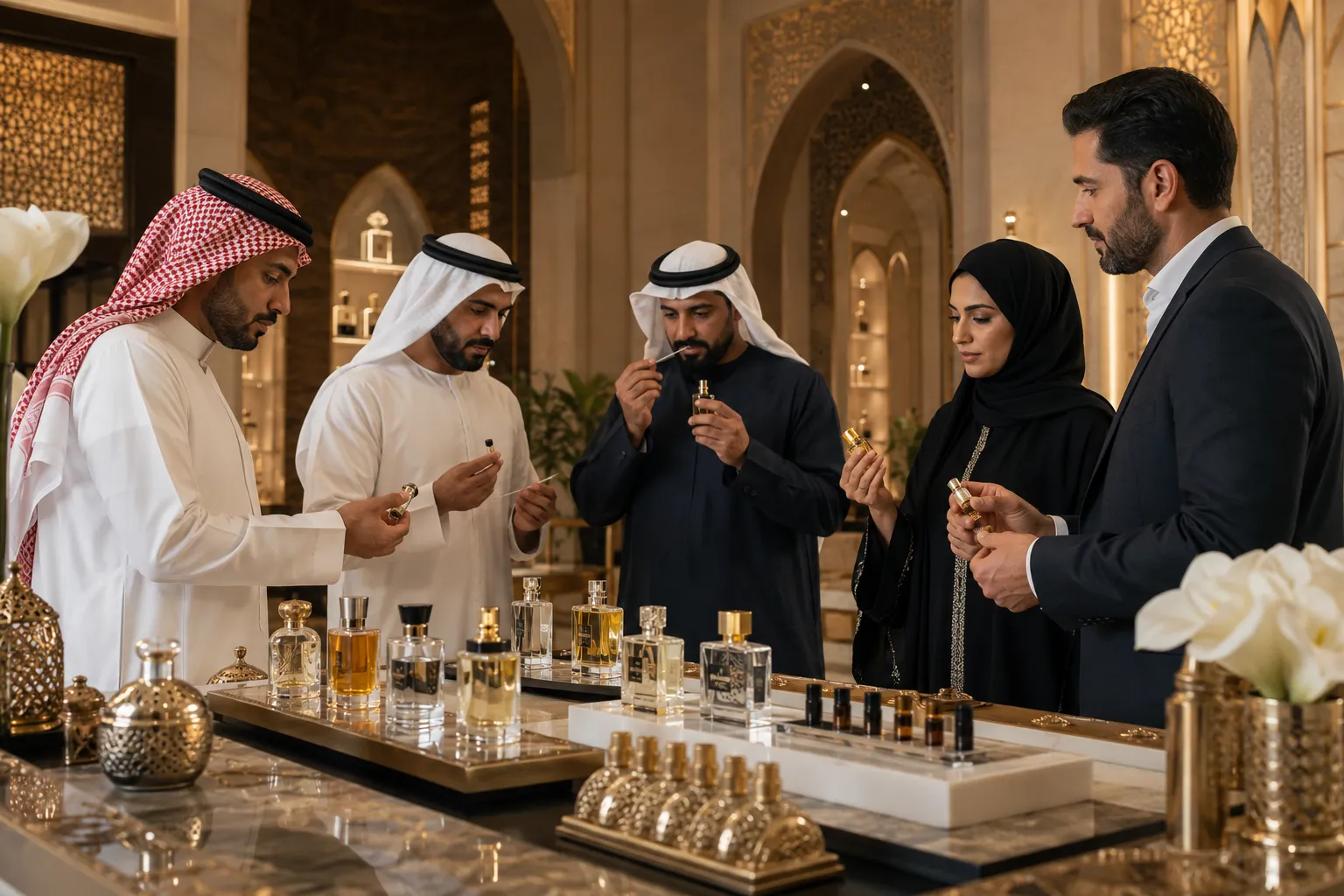
Private label alcohol-free perfume workflow with Jasmine
Private label alcohol-free perfume development works best when it follows a controlled process. At Jasmine Factory in Turkey, the first conversation should focus on the market, not only the scent.
- Define the market brief: target country, channel, customer profile, format, scent family, label language, and packaging level.
- Shortlist scent directions: oud, musk, amber, rose, sandalwood, fresh musk, floral oil, or modern unisex profiles.
- Request samples: review scent character, oil feel, format suitability, packaging fit, and customer expectation.
- Approve the reference: document the approved scent and avoid informal approvals that create confusion later.
- Confirm packaging and labels: bottle, cap, applicator, carton, barcode, language, and claim wording.
- Check available documents: confirm what Jasmine can provide for the selected product and what the destination market requires.
- Move toward production and shipment-ready packing: align carton details, references, packaging continuity, and reorder planning.
Ready to build a private label alcohol-free perfume line? Contact Jasmine to discuss scent selection, packaging direction, and export preparation.
Product positioning for GCC, MENA, and Muslim consumers abroad
A successful alcohol-free perfume line needs a position stronger than the phrase “alcohol-free.” You should decide how the product will live on the shelf and why the customer will return to it.
One route is a traditional attar or perfume oil line built around oud, musk, amber, rose, sandalwood, and oriental blends. This can suit buyers serving customers who already understand oil-based perfumery. Another route is a premium oud and musk line for gift shops and perfume boutiques, where packaging and scent naming carry strong value.
A modern alcohol-free fragrance line can target younger consumers, online stores, and lifestyle retailers. This route may use softer musk, fresh woods, light florals, and minimal packaging. Unisex daily-wear collections can also work well when the buyer wants wider appeal across online and wholesale channels.
Gift sets are especially relevant for Islamic markets, but they must be planned early because the box, insert, bottle count, packing method, and shipping carton all affect the final project. Strong SKU planning may include one hero scent, one daily-use scent, one premium oud or musk direction, one gift-ready option, and one softer unisex scent.
Common mistakes in alcohol-free perfume sourcing
Many sourcing problems happen because buyers move too quickly from idea to order. Avoid these mistakes:
- Treating alcohol-free and halal-certified as the same claim.
- Choosing scents only by personal taste instead of market fit.
- Using the same scent direction for every country or channel.
- Ignoring label language and claim wording until the final stage.
- Delaying bottle, cap, applicator, carton, and gift-box decisions.
- Approving samples without a written reference.
- Forgetting reorder consistency and SKU naming.
- Overpromising religious, medical, or skin-related benefits without support.
- Requesting a price before clarifying format, packaging, documents, and market route.
The safer approach is to treat alcohol-free perfumes as a full product line, not a single sample. You should align scent, format, packaging, label, documents, and commercial route before moving forward.
Why work with Jasmine Factory in Turkey?
Jasmine Perfumes is a practical partner for importers, distributors, wholesalers, brand owners, retailers, and fragrance entrepreneurs who need more than a scent sample. We support conversations around wholesale supply, catalog review, private label planning, scent selection, packaging coordination, and export readiness from Turkey.
For alcohol-free perfumes, this support can help buyers define the right product route before committing to production. A buyer can approach Jasmine with the target country, sales channel, preferred format, scent family, packaging direction, label language, and document needs. From there, we can discuss whether the project is better suited to catalog selection, private label, wholesale, or a more customized route.
The advantage of working with a factory partner is control. Through our private label service, you can align fragrance direction, packaging, labels, and export preparation in one process. Through Jasmine catalogs, you can start with a clearer view of available product families before narrowing the alcohol-free perfume route.
At Jasmine, we do not need to overpromise. The value is in a professional sourcing process: understanding the buyer’s market, helping select suitable fragrance directions, supporting packaging decisions, and preparing the project for commercial supply.
Also read: Private Label Perfume Guide for B2B Business
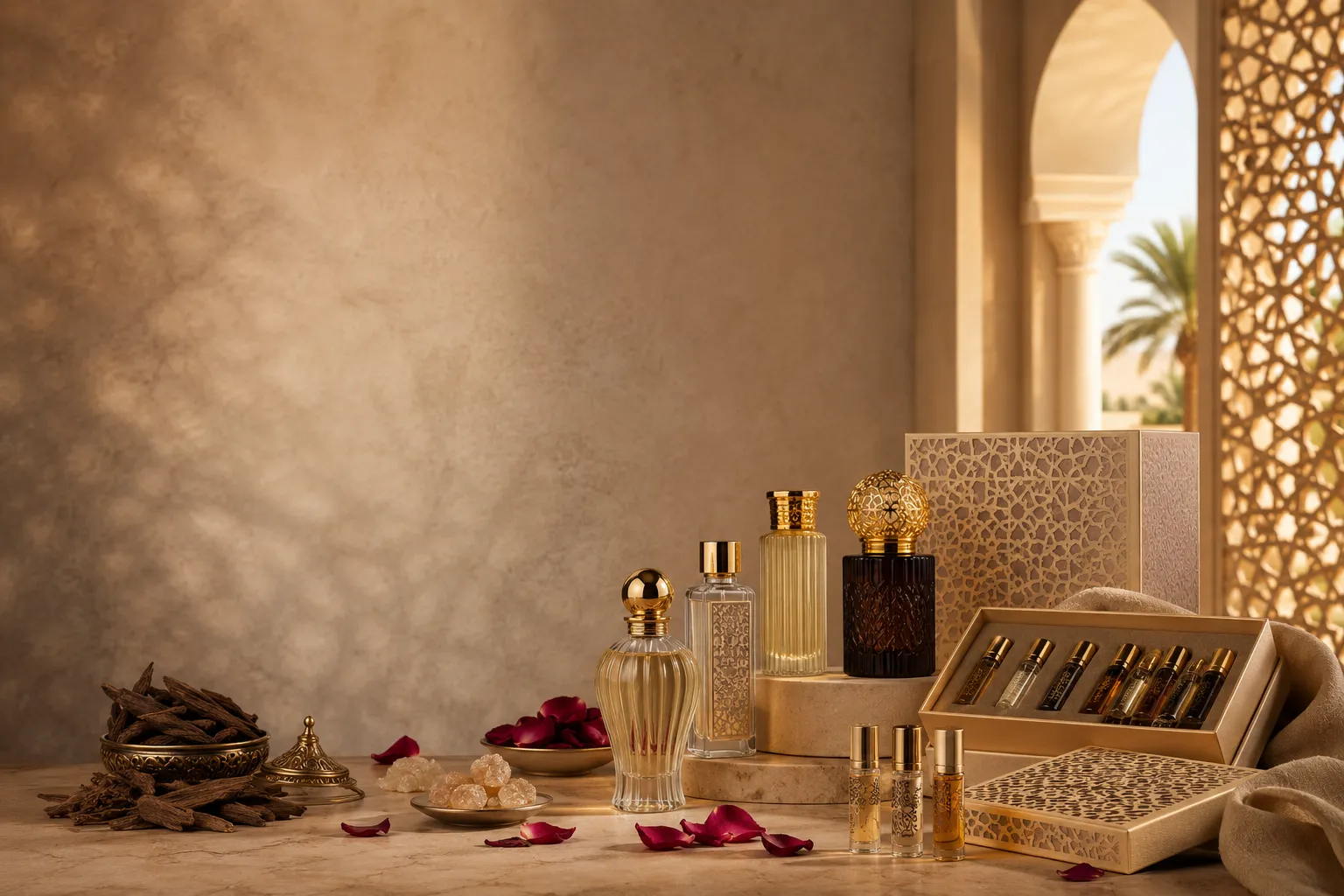
Turning alcohol-free perfumes into a product line
Alcohol-free perfumes are a strong opportunity for trade buyers serving Islamic markets, but success depends on planning. The right line needs suitable formats, culturally relevant scent directions, accurate claim wording, attractive packaging, document review, and a reliable manufacturing path.
Perfume oils, attar-style products, roll-ons, premium oud collections, modern non-alcoholic perfume concepts, and gift sets can all work when they match the target customer and sales channel. The key is to start with a clear brief and select a supplier that understands both fragrance development and export-oriented supply.
At Jasmine, we help you plan alcohol-free perfumes from concept to shipment-ready supply. Send us your brief via WhatsApp with the target country, sales channel, preferred format, scent direction, and packaging expectations to start the discussion.
FAQs about alcohol-free perfumes
Are alcohol-free perfumes only for Muslim consumers?
No. Islamic market demand is important, but alcohol-free perfumes can also appeal to customers interested in perfume oils, non-alcoholic fragrance formats, clean-beauty positioning, travel-friendly roll-ons, and alternative scent experiences.
Are alcohol-free perfumes automatically halal?
Not automatically. Alcohol-free describes the carrier or formulation direction. Halal-related claims may require ingredient review, documentation, certification, and destination-market validation before they are used on labels or product pages.
Can Jasmine support private label alcohol-free perfumes?
Yes. Trade buyers can contact Jasmine to discuss private label alcohol-free perfume routes, including scent direction, product format, packaging, label language, catalog review, and export preparation.
What formats are most relevant for alcohol-free perfumes?
Common formats include perfume oil, attar-style oil, roll-on perfume, oil-based perfume blends, solid perfume, and selected alcohol-free spray or mist concepts when technically suitable and properly tested.
What should I prepare before asking for samples?
Prepare your target country, sales channel, product format, scent families, packaging direction, label language, claim wording, and document expectations. This helps Jasmine recommend relevant options instead of random samples.
Alcohol-free perfumes are not one simple fragrance category for international buyers. In Islamic retail markets, the right product format, label wording, scent direction, packaging, and documentation can decide whether the product is commercially ready or not.
For importers, distributors, wholesalers, Islamic lifestyle retailers, and private label buyers, the goal is not only to request a non-alcoholic fragrance sample. The goal is to build a product route that fits the destination market, sales channel, customer expectations, and claim requirements
\