A large range can make a new brand look established, but it can also hide the real cost of complexity. Before you decide how many fragrances to launch, remember that five scents can become ten bottle-size combinations, several carton versions, pocket perfumes, gift sets and samples. Every finished product then needs components, artwork, content, stock, marketing support and a workable reorder path. For B2B buyers trying to launch a perfume brand, the risk is not a small catalogue; it is an opening range that consumes cash and attention faster than the business can support it.
This guide shows how to convert a proposed first perfume collection into its real finished-SKU count, compare focused, balanced and broad launch models, and test budget and production feasibility before ordering. At Jasmine Factory, our perfume and air-freshener company in Istanbul, Turkey, works with B2B buyers serving the GCC and wider international markets. We use the project’s market, channel, sizes, packaging versions and formats to discuss a more controlled private label perfume launch without promising a universal launch number or unverified MOQ.
For most new perfume brands, a manageable first collection usually starts with two to four fragrances, using one main bottle size and one packaging version for each fragrance. This creates two to four core finished SKUs. A one-fragrance launch can work when the brand has a highly focused concept and defined audience, while launching five fragrances or more generally requires stronger distribution, a larger inventory and marketing budget, reliable market knowledge and sufficient reorder capacity. This range is a practical starting point rather than a universal rule and should be adjusted according to the target market, sales channel, MOQ structure and the resources available for every finished product.
How many fragrances to launch starts with finished SKUs
Fragrance count and product count are different commercial decisions. A scent is the fragrance direction; a finished SKU is the exact sellable item a customer, retailer or distributor can order and your team must manage separately.
Count the sellable combinations
Use this perfume SKU planning formula before the final collection is approved:
Fragrances × bottle sizes × packaging versions × product formats = finished SKUs
Three fragrances in two sizes create six SKUs before you add a second carton language, bottle color or format. Four fragrances in one size and two market-specific packaging versions create eight SKUs. Five fragrances in two sizes, plus a pocket version of each, create twenty finished SKUs even with one packaging language.
The formula does not calculate order quantity. It exposes how many separate commercial units the project must finance, produce, photograph, list, store, evaluate and reorder. Quantity and production minimums must then be checked against each resulting SKU.
In the simplest launch structure, fragrance count and product count remain equal. Three fragrances in one main size and one packaging version create three finished SKUs. Adding a second size raises the total to six, while using two packaging versions raises it to twelve. Therefore, a recommendation of two to four fragrances assumes that each fragrance initially uses one main size and one packaging version unless a documented commercial need justifies additional variations.
What creates a separate SKU
- A different fragrance.
- A different bottle size or concentration where relevant.
- A different bottle, cap, color or packaging configuration.
- A separate Arabic, English or multilingual printed version.
- A pocket perfume, body mist, gift set, sample or discovery format.
- A channel-specific or market-specific finished product.
Before approving samples and packaging, create one line for every proposed finished SKU. If you are still deciding between existing scent options and custom development, compare our stock fragrance library route with our guide to custom fragrance development; use those pages for selection and development details, then return to this calculation to control the launch count.
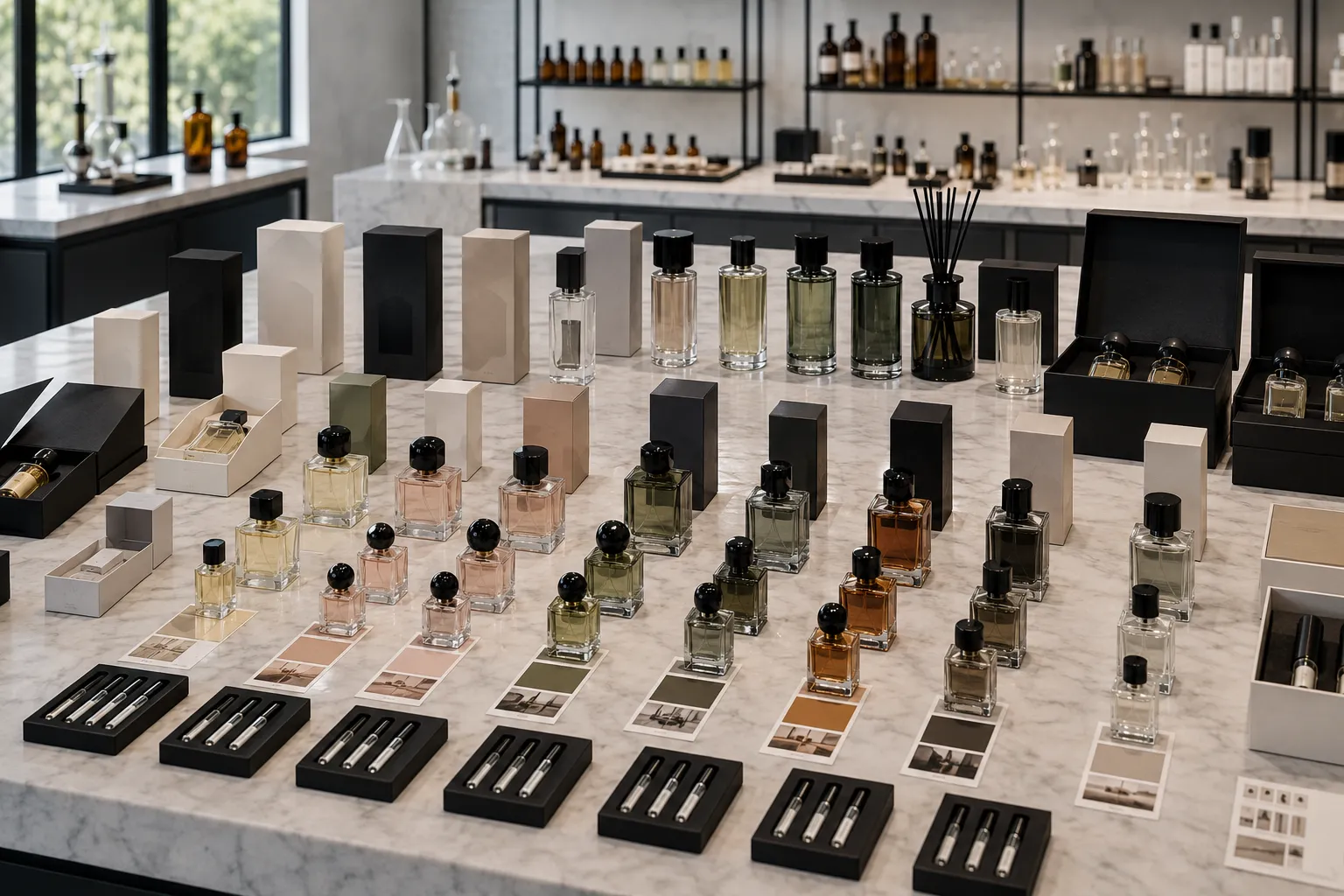
How many fragrances and products fit your first launch?
A first perfume collection can be planned through three practical models: a focused launch with one or two fragrances, a balanced launch with three or four, and a broad launch with five fragrances or more. For most new brands, the balanced model is the closest practical starting point when each fragrance begins with one main bottle size and one packaging version.
This does not mean that three or four fragrances suit every business. A single product may be stronger for a highly focused brand, while an established distributor or retail network may require a broader assortment. These models provide a clear initial range that can then be adjusted according to channel capacity, budget, MOQ structure and reorder resources.
Which launch model fits your first perfume collection?
The following models are planning references rather than formulas. Calculate the finished SKUs inside each model before deciding whether the apparent fragrance count is genuinely manageable.
Focused launch with one or two fragrances
This model suits a clear signature concept, a defined audience or a controlled market test. With one main bottle size and one packaging version for each fragrance, the launch normally contains only one or two core finished SKUs. This allows the brand to concentrate photography, campaign content, sampling, media spend, inventory and reorder attention around very few products, producing cleaner commercial feedback.
A second fragrance should perform a different job, such as serving another occasion, intensity preference or customer need. Adding a similar scent merely to make the range look larger divides attention without necessarily widening demand. The trade-off is concentration risk: weak demand for one product has a larger effect on the whole launch.
Balanced launch with three or four fragrances
This is the closest practical model for many new perfume brands that need visible variety without creating an oversized opening range. With one main size and one packaging version for each fragrance, it normally creates three or four core finished SKUs. The collection may include an accessible everyday option, a stronger identity fragrance, an evening or oriental direction, and one product serving a different occasion, price position or customer segment.
Three or four fragrances are not automatically a small launch. Every finished product still needs imagery, descriptions, sampling, marketing support and separate stock. This model is practical when the sales team or store can explain the differences quickly and the budget can give every fragrance a real commercial opportunity. Adding a second bottle size immediately expands three or four fragrances into six or eight finished SKUs.
Broad launch with five fragrances or more
This model begins with at least five core finished SKUs when every fragrance uses one size and one packaging version. It can quickly become ten products or more when the brand adds a second size, pocket perfume, body mist or another format. A broad launch is more defensible when the buyer already has established distribution, retail assortment requirements, reliable market knowledge, sufficient production and marketing resources, SKU-level tracking and practical reorder capacity.
Its principal risk is uneven demand. One or two fragrances may sell quickly while slower products lock capital in stock, cartons and components. A wider catalogue should solve a documented channel need, not compensate for weak differentiation.
Use one hero fragrance to concentrate resources
A hero fragrance is the product that leads the first commercial effort. It may receive the strongest campaign idea, most prominent imagery, widest sampling and highest early reorder attention. This is a resource-allocation decision, not a guide to choosing the scent itself.
Supporting fragrances still need distinct commercial roles, but equal quality does not require equal marketing weight. A focused centre of gravity makes customer acquisition and sales storytelling clearer while the rest of the range supports different needs.
Five factors that may increase or reduce the launch count
- Audience clarity. A tightly defined buyer may respond to one signature scent or a compact collection. A vague audience often causes the founder to add products without a clear buyer for each one.
- Sales-channel capacity. An e-commerce startup must create traffic, content and sampling for each product. An experienced distributor may support a wider range because it already understands several retail segments.
- Inventory and marketing budget. Manufacturing is only one commitment. Every SKU also needs imagery, descriptions, sampling, channel support and performance measurement.
- MOQ at finished-SKU level. Minimums may apply to scents, bottle sizes, colors, printed cartons, language versions, components or complete finished products.
- Reorder capacity. The project must be able to replenish a winner while slower SKUs still hold stock and working capital.
Start with the basic launch range, then adjust it according to the business’s actual capacity. Two to four fragrances are often manageable for a new brand, but the fragrance count should decrease when every scent requires several sizes, packaging versions or product formats. It may increase when the business has proven demand, established distribution and enough budget to support every finished SKU independently.
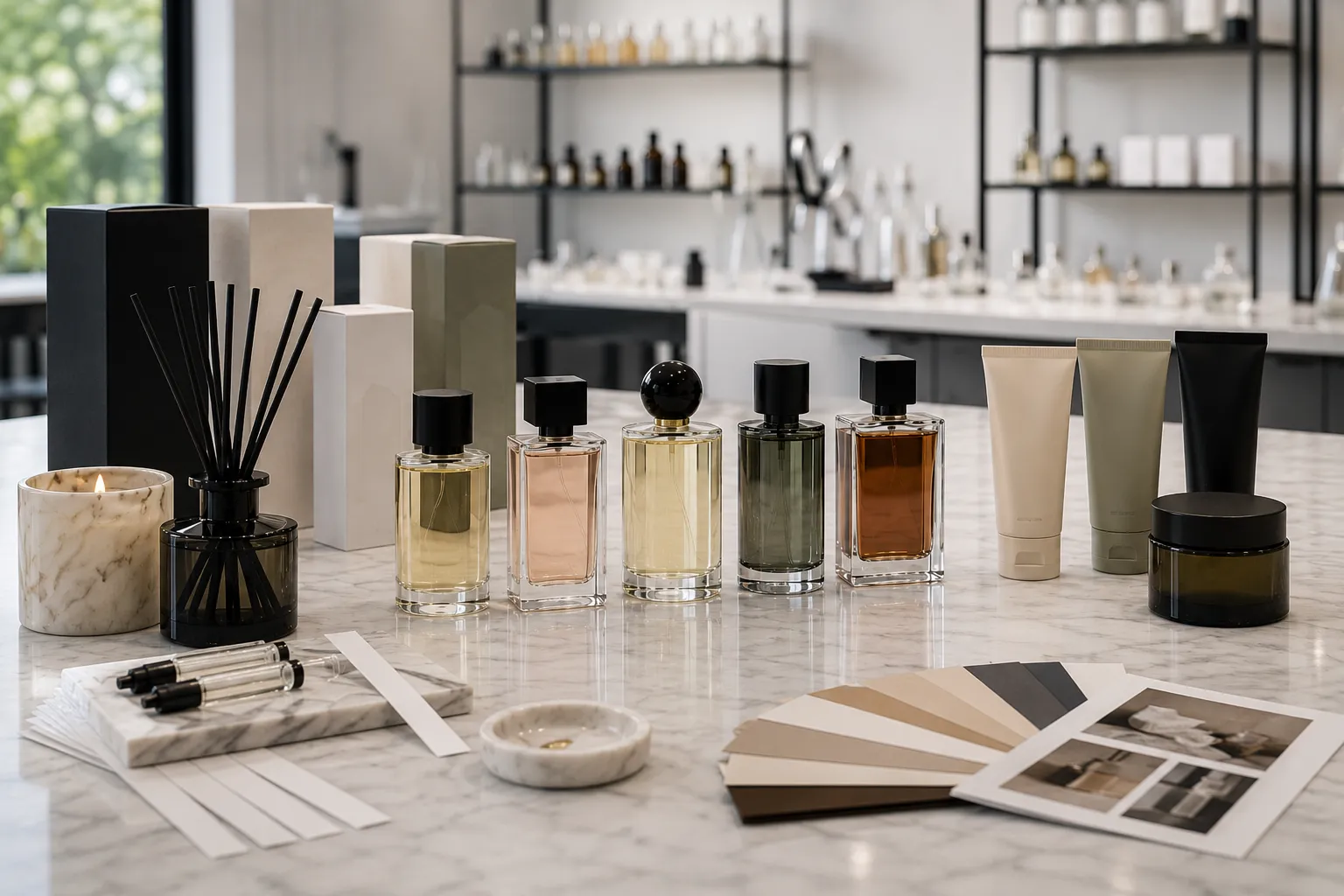
When should one fragrance become more than one SKU?
A second size or format should enter the launch only when it performs a defined commercial job. Manufacturing availability alone is not a sufficient reason, because every variation creates another stock commitment and another result your team must interpret.
Add a bottle size only for a specific role
- The main retail size for the core channel.
- A travel or trial format with a distinct use case.
- A lower entry-price option for a defined customer segment.
- A component required for a planned gift set.
- A size reserved for a particular retailer or channel.
Two closely positioned bottle sizes can divide demand without attracting meaningfully different buyers. Before adding the second size, state who buys it, where it will be sold and why it will not simply compete with the main bottle.
For this reason, when a first collection starts with two to four fragrances, the most controlled structure is usually one main bottle size for each fragrance. The project then begins with two to four finished products rather than doubling its SKU count before demand has been tested.
Treat every additional format as an independent decision
A pocket perfume may support trial, gifting, a lower entry point or compact retail. A body mist serves different usage and price expectations. A gift set can raise order value or serve a season, while samples and discovery formats can support acquisition. None of these additions is operationally free: each may require its own filling, packaging, coding, content, stock and distribution plan.
For a faster route based on pre-developed options, review how a ready-to-label perfume route changes development time and packaging control. The route may be faster, but it does not remove the need to calculate every finished SKU included in the opening order.
What Can Jasmine’s Brand Portfolio Teach You About Product-Range Planning?
Our own brand and product portfolio can be used as a practical reference when deciding how many fragrances and formats belong in an opening collection. Across Jasmine, Luveal, Cavayelo, Marota, Pure Passion, Jasmine Niche and Vilara, different brand identities are supported through selected categories such as perfumes, reed diffusers, room fresheners and car-freshener formats. The commercial lesson is not that a new brand should launch every available category, but that each format should belong to a clear product architecture, customer need and sales channel.
Importers, distributors and private-label buyers can review our online catalogs to compare how fragrances, packaging styles and product formats are organized before preparing their own launch matrix. A first collection may begin with perfume only, while pocket formats, body products, reed diffusers or air-freshener extensions can remain part of a later growth plan. This approach allows the buyer to use Jasmine’s existing portfolio as a source of direction without turning every available product option into an opening SKU.
How do you keep launching SKUs commercially distinct?
The purpose of this section is not to build an olfactory portfolio. It is to check whether every fragrance earns a separate SKU because customers, retailers and distributors can understand why it exists.
Give every fragrance one sales role
Write one sentence that defines the buyer, occasion, intensity, price position or use context for each fragrance. Examples include an easy everyday entry product, a stronger evening identity, a premium gifting option or a warm direction for a documented regional preference.
This is the relevant fragrance collection strategy distinction: the first range needs commercially different roles, not complete coverage of every family or trend. If two products target the same buyer, occasion and message, they may divide the same demand rather than expand it.
Validate distinction without turning this into a scent-development guide
Ask representative customers, retail staff, store owners, distributors or commercial buyers whether they can quickly explain the difference between the proposed products. Record where roles appear interchangeable. Keep this check focused on commercial clarity; use our perfumer briefing guide for sample and scent-direction work, and our gender-specific collection guide when the business decision concerns men’s, women’s and unisex portfolio composition.

Can budget and MOQ support every finished SKU?
A collection can be technically producible and still be commercially underfunded. Test the budget and production structure per finished SKU, because an attractive total project figure can become impractical after it is divided across scents, sizes, cartons and formats.
Protect six launch commitments
- Sampling and approval. Product evaluation and controlled approval before production.
- Packaging and print. Bottles, caps, pumps, labels, cartons, artwork and language versions.
- Production. Fragrance, filling, assembly and finished-product requirements.
- Photography and content. Packshots, descriptions, catalog entries, product pages and sales materials.
- Marketing and distribution. Advertising, sampling, retailer support and launch execution.
- Reorder and contingency reserve. Capacity to replenish a winner or address an unexpected packaging, production or channel requirement.
This is where perfume inventory planning affects the pre-launch decision without becoming a post-launch stock-control guide. Every extra SKU increases stock exposure before demand is proven and divides the budget available to create and measure that demand. Three well-supported fragrances can outperform eight products that buyers cannot distinguish or the brand cannot promote consistently.
Review MOQ at finished-SKU level
Minimums may apply to each fragrance, bottle size, bottle color, printed carton, language version, packaging configuration, shared component or final SKU. The exact structure depends on the selected production route and components, so it must be confirmed for the specific project rather than inferred from a general MOQ statement.
- Does the minimum apply to the total project or each finished product?
- Do fragrances, sizes, colors or cartons create separate requirements?
- Can bottles, caps or other components be shared across the range?
- Do language versions create separate print quantities?
- Which variations can be deferred until demand is proven?
For accurate perfume SKU planning, send us the proposed matrix rather than only a total quantity. Our broader Private Label Perfume Guide for B2B buyers explains the complete manufacturing route; this article remains focused on the number and structure of opening SKUs.
What evidence should trigger the next SKU?
Expansion should pass an evidence gate. The aim is not generic “start small and grow” advice; each new fragrance, size or format should answer a documented result or channel requirement.
Gate one proves the core range
Begin with the selected focused or balanced launch structure, usually using one main size and one packaging version for each fragrance. Then track which fragrance is tested most, which sells, how reorder interest develops, what price or packaging objections recur, and whether online and retail channels behave differently. The opening range should produce a signal clear enough to support the next fragrance, size or format decision.
Gate two strengthens a winning product
A proven fragrance may justify a travel size, pocket perfume, gift set or alternative bottle size. The extension should strengthen the winner and serve a defined use case rather than distract attention from it.
Gate three fills a documented market gap
Add a fragrance when sales or channel feedback identifies an unmet customer segment, occasion, intensity preference, price position or retailer requirement. Personal preference or a temporary trend is not sufficient evidence by itself.
Gate four supports a season or channel
Seasonal editions, gift sets and channel-specific products become more defensible after the core range generates interpretable data. Document the commercial role before production and confirm that the new SKU can be supported without weakening the existing range.
For methods that begin after products are selling, use our dedicated guide to perfume inventory management. This article stops at the evidence needed to approve the next launch SKU.
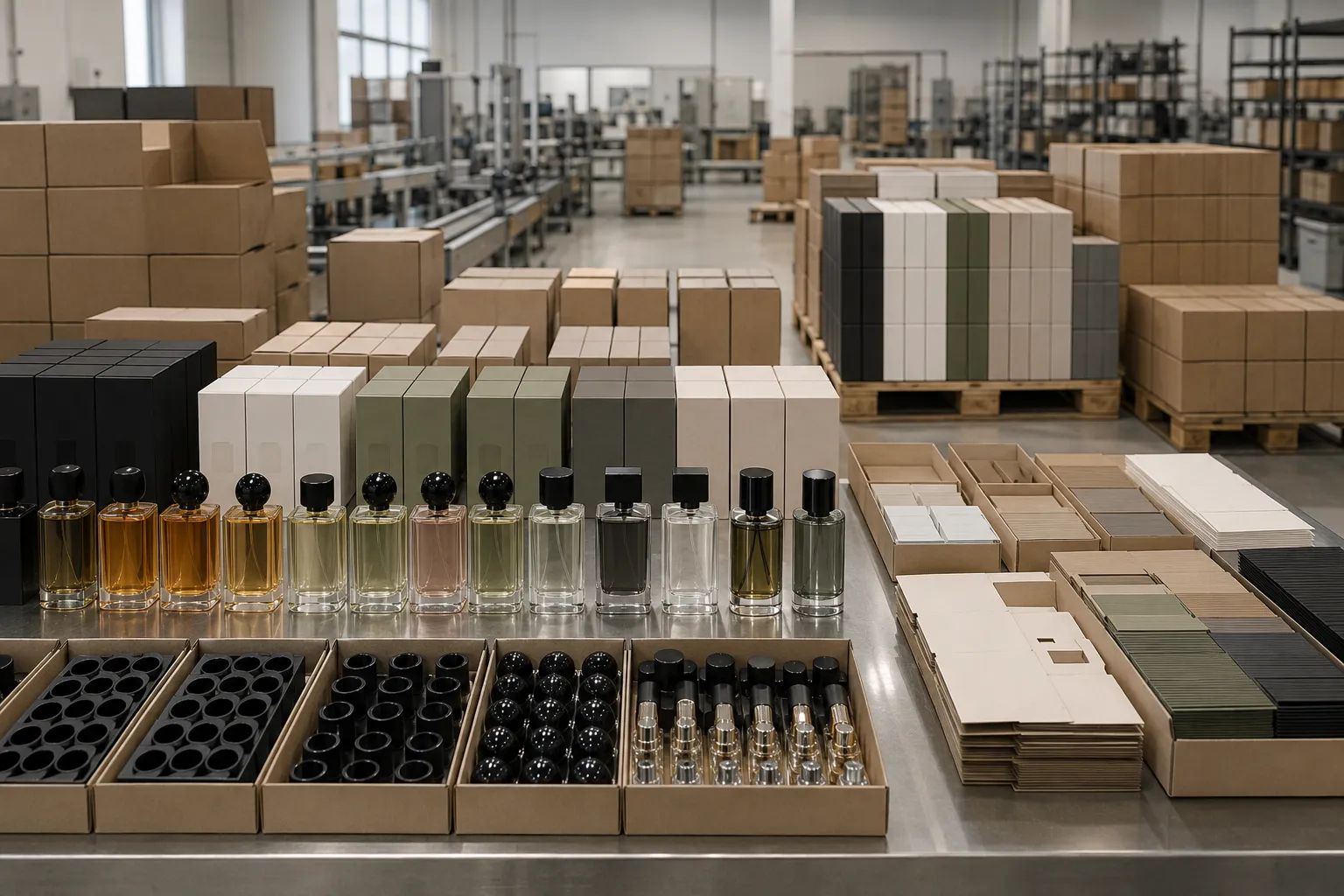
Why the first launch should test one structure at a time
When the fragrance, size, package and sales channel all change at once, weak or strong sales are difficult to interpret. A controlled launch structure does not remove uncertainty, but it creates cleaner decision-quality evidence.
Do not add another fragrance, bottle, carton or format until the current products are supportable, their commercial roles are clear, the winning and slower SKUs can be identified, and the proposed addition passes one of the evidence gates. The core question is whether the current range has answered what it was designed to test.
What Should You Send Jasmine Factory for a first-collection review?
A useful manufacturing discussion requires more than a fragrance count. Our team needs enough commercial and product information to see whether the range is focused, overly broad or divided into variations that add cost without a clear sales role.
Prepare the project inputs
- Target country or markets, including GCC or other international destinations.
- Primary sales channel and intended price position.
- Core customer profile.
- Proposed fragrance count and the sales role of each fragrance.
- Bottle size or sizes, bottle and cap variations, and packaging versions.
- Required label and carton languages.
- Product formats planned now and formats considered for later.
- Expected total quantity and target launch timing, without assuming feasibility.
Give each proposed finished product its own line with fragrance, size, packaging version, language and format. From our Istanbul, Turkey operation, we can discuss the structure with importers, distributors, retailers and brand founders serving the Gulf and wider global markets. We review the project configuration; we do not guarantee a result, market acceptance, fixed timeline or MOQ before the selected components and finished SKUs are assessed.
For most new brands, the clearest first launch therefore contains two to four fragrances in one main size and one packaging version each, creating two to four core finished SKUs. A one-fragrance launch may suit a highly focused concept, while five fragrances or more require stronger evidence, distribution, inventory funding, marketing support and reorder capacity.
How Jasmine supports a more controlled private label perfume launch
At Jasmine Factory in Turkey, we treat the opening collection as a manufacturing and commercial structure, not merely a list of attractive scents. We can discuss fragrance routes, bottles, caps, labels, cartons, filling, packing and shipment preparation from Turkey, but the first decision is which finished products genuinely belong in the initial order.
Review our private label manufacturing service to understand the available project scope, use our online catalogs to communicate product and packaging direction, then contact our team with your market, channel, customer, fragrance count, sizes, packaging versions, formats and expected quantity. We will use those inputs to discuss whether the proposed collection is focused enough for a practical private label perfume launch and which variations may be better reserved for a later evidence gate.
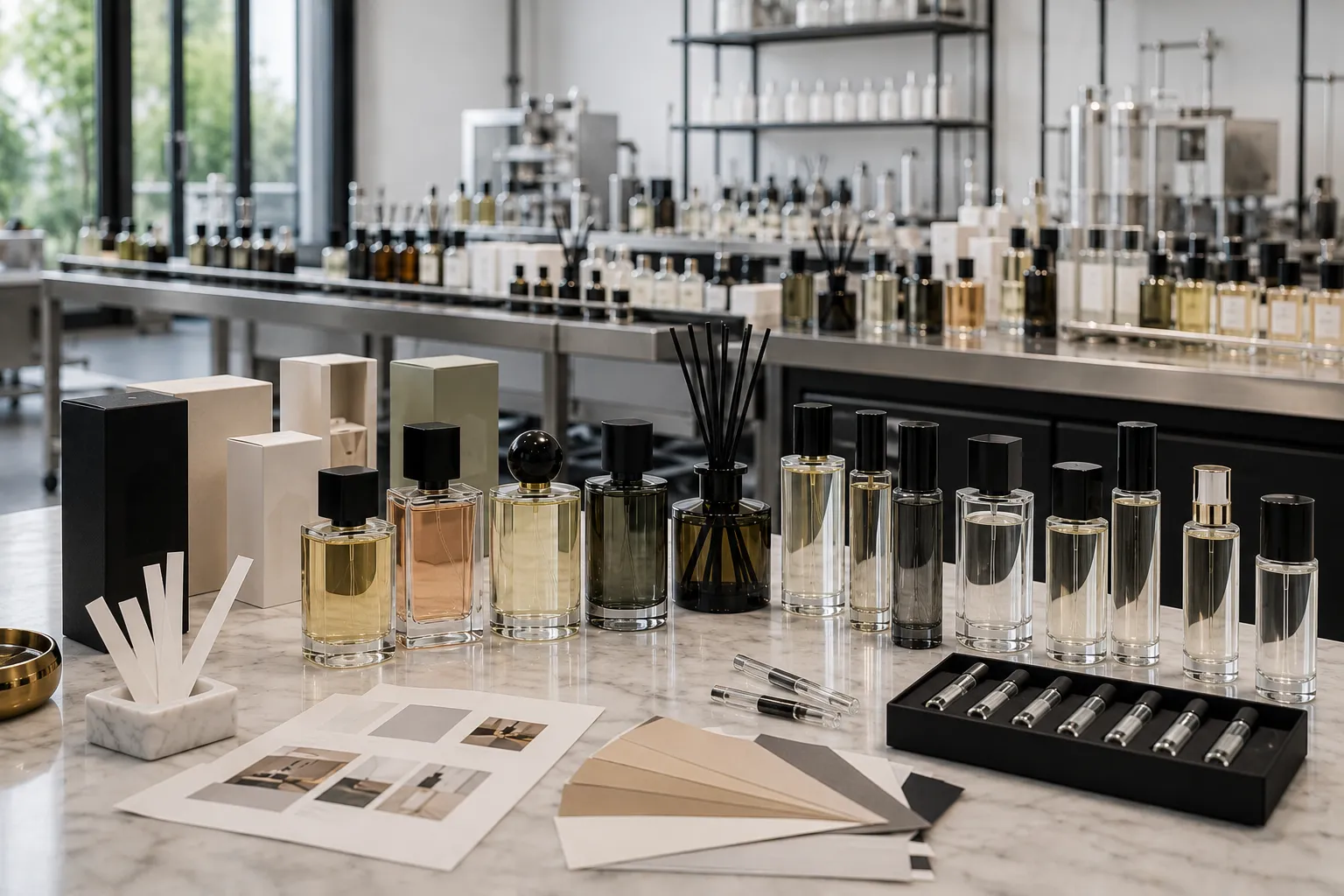
FAQs about fragrance and product count in a first perfume collection
Can I launch a perfume brand with one fragrance?
Yes. One fragrance can support a strong launch when it has clear positioning, a defined audience and sufficient content, sampling and marketing support. It concentrates resources and produces cleaner feedback, but it also increases dependence on one product, so the project needs a documented response if demand is weaker than expected.
How many perfumes should a brand launch in its first collection?
For many new perfume brands, two to four fragrances are a practical starting point when each fragrance uses one main bottle size and one packaging version, creating two to four core finished SKUs. One fragrance may be sufficient for a highly focused concept, while five fragrances or more generally require stronger distribution, market evidence, inventory and marketing resources, and reorder capacity. The fragrance count should be reduced when each scent will launch in several sizes, packaging versions or formats.
Should the first collection include separate men’s and women’s perfumes?
Only when each product serves a clearly different buyer or commercial role. Gender can organize a range, but it should not create duplicate products with nearly identical positioning. Use the dedicated gender-portfolio guide for deeper collection-composition decisions.
Should every fragrance have a pocket version or sample?
No. A pocket perfume or sample should be included only when it serves a defined function such as trial, gifting, acquisition, a lower entry point or a specific retail channel. It still creates production, packaging, coding, content, stock and distribution requirements.
When should another fragrance or format be added?
Add it after the existing range produces interpretable demand evidence or a documented channel need. The next SKU should strengthen a winner, fill a confirmed market gap or serve a specific season or channel without weakening the support available to the core collection.