If you’re creating a perfume line, one decision will shape your entire collection:
Should you use natural ingredients, synthetic ingredients, or a mix of both?
Each option affects your scent’s longevity, cost, stability, and profit margin — and choosing wrong can limit your pricing, your production, and your customer satisfaction.
This guide gives you a quick, practical breakdown of what truly separates natural and synthetic ingredients so you can choose the option that fits your market, your budget, and your performance goals.
Let’s make your ingredient choice simple and strategic.
What Are Natural Ingredients in Perfume?
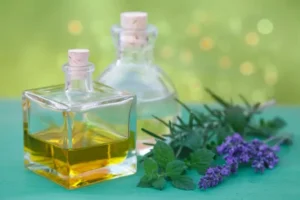
Natural ingredients in perfumery are oils and aromatic materials extracted directly from plants, flowers, fruits, woods, and resins.
These come from sources like jasmine, rose, oud, sandalwood, citrus peels, herbs, and spices. All processed through methods such as steam distillation or cold-press extraction.
But for you as a perfume retailer, the important question isn’t how they’re extracted. It’s what natural ingredients mean for your product line.
Here’s what you need to know as a business owner:
- Natural oils smell rich and authentic, which appeals to customers seeking “luxury” or “artisan-style” perfumes.
- They often come with higher ingredient costs, which affects your pricing and target audience.
- Some natural materials vary by season or harvest, meaning supply can be inconsistent.
- Natural ingredients typically produce softer projection and may require blending with fixatives to improve longevity.
- They are ideal for brands that want to market their collection as premium, botanical, or niche.
Natural ingredients can elevate your fragrance story — but they also influence cost, stability, and batch consistency.
If you’re exploring a natural-based perfume line, Jasmine Perfume Factory can help you select the right natural oils that suit both your scent vision and your budget.
Also read: Perfume Ingredients: Types and Secret Formulations
What Are Synthetic Ingredients in Perfume?
Synthetic ingredients are fragrance molecules created in a lab to replicate, enhance, or extend natural scents. They’re not “fake” — they’re engineered to provide stronger performance, longer-lasting projection, and more consistency than many natural materials.
For perfume retailers, here’s what synthetic ingredients really mean for your business:
- Stronger longevity: Synthetic notes often last longer on the skin, which customers love and remember.
- More stable performance: They don’t depend on seasons, harvests, or crop quality — meaning your batches stay consistent.
- Lower production cost: This allows for better pricing flexibility and higher profit margins.
- Access to rare or protected scents: Some natural materials (like certain musks or ouds) are restricted, but synthetics offer safe and ethical alternatives.
- Better creative freedom: Modern perfumes rely on synthetics to create unique, complex scents that naturals alone cannot achieve.
Most of the world’s top-selling perfumes — from designer brands to niche houses — use a blend of naturals and synthetics because it delivers the best balance of quality, longevity, and cost.
If you’re building a fragrance line and want strong performance with predictable pricing, Jasmine Perfume Factory can help you choose the right synthetic materials to match your market and goals.
Also read: Perfume Differences: Authentic vs. Fake, Types Explained
Key Differences Between Natural and Synthetic Fragrance Ingredients
Natural and synthetic ingredients each bring different strengths to a perfume formula. The real question for retailers is not “which one is better,” but which one fits your market, pricing strategy, and performance needs.
Below is a clear breakdown to help you understand the practical, commercial differences:
| Feature | Natural Fragrance Ingredients | Synthetic Fragrance Ingredients |
| Performance & Longevity | Usually more expensive due to harvesting, extraction, and limited supply. | More affordable, giving you higher profit margins and more flexible retail pricing. |
| Consistency & Supply Stability | Can vary from batch to batch depending on climate, soil, and crop quality. | Extremely consistent — every batch smells identical, with no surprises. |
| Cost & Pricing Flexibility | Usually more expensive due to harvesting, extraction, and limited supply. | More affordable, giving you higher profit margins and more flexible retail pricing. |
| Marketing Positioning | Great for “botanical,” “artisan,” or “luxury niche” storytelling. | Perfect for “long-lasting,” “bold projection,” and “modern” marketing. |
| Skin Sensitivity & Safety | Can cause allergies in some customers due to pure plant compounds. | Highly controlled and tested; can be safer when formulated correctly. |
Natural = prestige, authenticity, higher cost.
Synthetic = longevity, consistency, stronger margins.
Hybrid = the best of both.
Most modern perfumes — including top sellers — use hybrid blends because they offer the ideal balance of performance and affordability.
If you need help choosing the right ingredient direction for your fragrance line,
Jasmine Factory can guide you toward the perfect natural, synthetic, or hybrid formula.
Also read: Opening A Perfumery and Gift Shop: Is It a Profitable Business?
Blending Natural or Synthetic Fragrances with Fixatives & Alcohol
Whether a perfume uses natural ingredients, synthetic molecules, or a hybrid blend, it must be properly combined with alcohol and fixatives to deliver the performance customers expect.
For retailers, this step determines how long the perfume lasts, how stable it is, and how professional it smells.
Here’s what matters for your business:
1. Alcohol
Most modern perfumes use cosmetic-grade alcohol to:
- lift the fragrance notes
- improve diffusion
- ensure the scent develops smoothly on skin
- stabilize both natural and synthetic ingredients
A well-balanced alcohol percentage affects how “clean” and “professional” the perfume feels to customers.
2. Fixatives
Fixatives slow down evaporation and help the scent last longer.
They are essential when working with naturals, which evaporate faster.
Fixatives can be:
- natural (resins, balsams, woods)
- synthetic (musks, amber molecules)
If your market demands “long-lasting perfumes,” fixatives are non-negotiable — especially for fresh or floral scents.
3. Blending Naturals
Natural ingredients require careful balancing because they:
- evaporate quickly
- react differently to heat and light
- need more support from fixatives
- may smell slightly different from batch to batch
Proper blending ensures the perfume remains stable and consistent across every bottle.
4. Blending Synthetics
Synthetic molecules blend smoothly with fixatives and alcohol, giving you:
- stronger projection
- longer wear time
- reliable consistency
- more creative scent combinations
This is why most modern perfumes — even luxury ones — use a hybrid blend.
Most top-selling perfumes worldwide combine natural beauty with synthetic longevity. This gives retailers the best of both worlds:
- rich scent character
- strong performance
- stable batches
- competitive pricing
How you blend natural or synthetic ingredients with fixatives and alcohol directly affects:
- longevity
- projection
- batch consistency
- customer satisfaction
- return rates
- and ultimately, your sales
If you want long-lasting, high-performance perfumes, proper blending is more important than whether the ingredients are natural or synthetic.
Need help creating a stable, long-lasting formula? Our experts can develop natural, synthetic, or hybrid blends tailored to your market.
Also read: Perfumery: Ingredients & Manufacturing Methods (Full Guide)
How to Choose the Right Ingredient Type for Your Perfume Line
Choosing between natural, synthetic, or hybrid ingredients comes down to one thing: what your market expects and what your brand can support.
Here’s the quick decision guide:
1. Match the Formula to Your Customer’s Preferences
- Want luxury, artisanal storytelling? → Choose natural.
- Want long-lasting, strong projection? → Choose synthetic or hybrid.
2. Check Your Pricing Strategy
- Natural = higher cost + premium price.
- Synthetic = stronger margins + wider audience.
- Hybrid = the best balance of performance and pricing.
3. Consider Stability & Batch Consistency
- Naturals vary by harvest.
- Synthetics stay consistent.
If you need repeatable production → choose synthetic/hybrid.
4. Think About Brand Positioning
- Botanical / niche → Natural
- Long-lasting / strong → Synthetic
- Modern / balanced → Hybrid
Need help choosing the right direction? Jasmine Perfume Factory can guide you based on your market and budget.
Also read: Original Perfumes: Ingredients, How to Differentiate from Fake

Jasmine Perfume Factory: Helping You Create Natural, Synthetic, or Hybrid Fragrance Formulas
When you’re building your own perfume line, choosing between natural, synthetic, or hybrid ingredients is only half the challenge. You also need a partner who understands how each option impacts cost, longevity, consistency, and market performance. That’s exactly where our Factory comes in.
At Jasmine, we help retailers, brand owners, and bulk buyers create high-performance fragrance formulas tailored to their customers’ expectations — whether they prefer clean naturals, long-lasting synthetics, or a balanced hybrid blend.
Why Retailers Trust Us?
- We develop 100% natural formulas, fully synthetic long-lasting blends, or hybrid compositions that deliver the best balance of performance, cost, and creativity.
- We help you choose the right ingredient type based on your target customers
- Our production ensures stability and repeatable performance, so your perfume line smells identical from batch to batch, even in large volumes.
- We design formulas that fit your financial goals without compromising quality
- We handle everything from scent development to bottling, packaging, and bulk production, so you can launch faster and with confidence.
Whether you want a natural-inspired collection, a long-lasting performance line, or a modern hybrid series, Jasmine Perfume Factory gives you the expertise and options to build a fragrance range that truly matches your market.
Start your perfume line with confidence — visit Jasmine Factory for Perfumes and air fresheners
or contact us for tailored private-label or white-label solutions.
Also read: Aroma Chemicals in Perfumery: From Lab to Bottle
FAQs about Synthetic vs Natural Ingredients in Perfumery:
What is the difference between natural and synthetic ingredients in perfume?
Natural ingredients come from plants and flowers, while synthetic ingredients are lab-created scent molecules. Naturals offer authenticity, while synthetics provide stronger performance and consistent quality.
Are synthetic fragrances good?
Yes. Synthetic fragrances are used by most major perfume brands because they last longer, stay stable in heat, and allow more creative scent options.
Do synthetic perfumes last longer?
Usually, yes. Synthetic molecules evaporate more slowly, giving the perfume better projection and longer wear — a key advantage for retailers in high-demand markets.
What is the main difference between natural and synthetic?
Naturals provide rich, raw aroma but can vary in quality. Synthetics are consistent, affordable, and long-lasting. Each has a different business benefit depending on your brand’s goals.
Why is synthetic better than natural?
Synthetic ingredients are often better for commercial perfume lines because they offer strong longevity, stable production, and lower costs — making them ideal for large-scale, performance-driven collections.