If you want to launch a private label line fast, you’re probably trying to avoid three expensive problems. First, sampling becomes endless because nobody is filtering options based on your market and channel. Second, approvals stay informal, so the batch you receive does not always feel identical to what you approved. Third, packaging and label requirements get decided late, which creates rework and delays right before shipping.
This guide gives you a simple B2B workflow you can follow from day one. You will learn how to use a Stock Fragrance Library as a selection system, how to request a private label sample kit that matches your market, how to document pre production sample approval properly, and how to confirm a production matching sample before release to ship. You will also see where Jasmine Factory fits in if you want catalogs, white label speed, private label depth, relabel execution, or a turnkey route from concept to shipment.
What is a ready-made scent catalog for private label buyers?
This catalog-based route helps you shortlist faster and reorder with confidence a curated set of ready made formulations that a manufacturer offers for B2B sampling and selection. The real value for you is not just speed. The value is repeatability, meaning you can approve a profile and reorder it with confidence when approvals are documented properly.
Here is what you typically gain when you choose from stock scents
- Faster time to market because you start from proven directions
- Clearer decisions because each option has a reference profile you can evaluate
- Better reorder control when your approvals are written and versioned
You still keep control over the parts your customer notices the most, especially early in a brand launch. That includes your positioning, naming, packaging, label languages, and your SKU plan.
If you want to start with real options instead of guessing, request our catalogs and tell the team your target country and channel so your shortlist reflects your market reality.
Also read: Private Label Unisex Perfume: A B2B Launch Guide
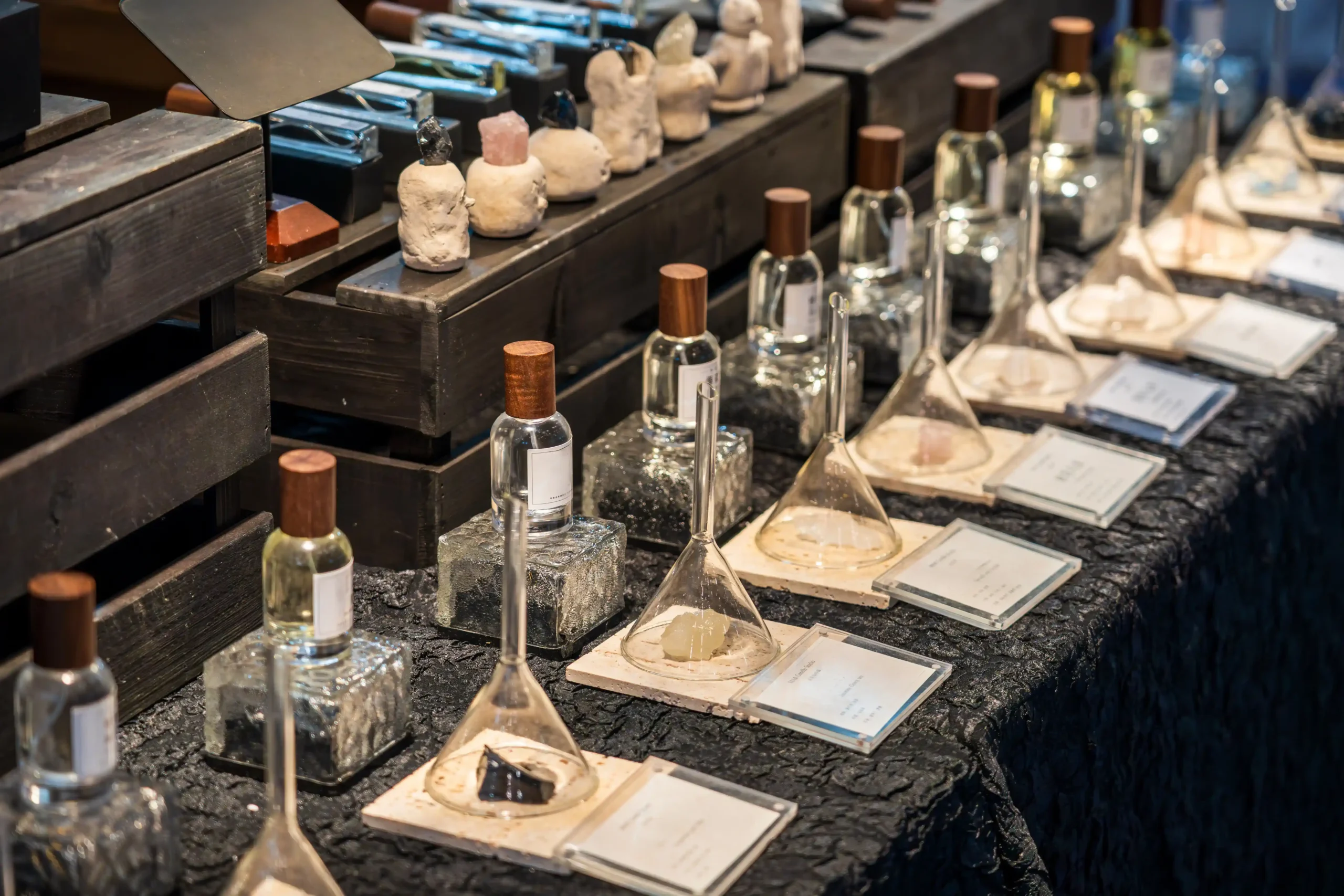
Choose from stock scents that fit your market
Shortlisting becomes easy when you stop choosing based on preference and start choosing based on context. Before you request any sample kit, define the inputs that control what sells.
| Stock Fragrance Library input you define | Stock Fragrance Library input you define |
| Destination market | Affects labeling expectations and positioning logic across markets |
| Sales channel | Changes what “best seller” means for your buyer |
| Positioning level | Prevents selecting scents that mismatch your price point |
| Buyer persona | Keeps you focused on real purchase occasions |
Once those are clear, keep your first launch disciplined. Two to four anchor families are usually enough to build a line that sells as a line, not a random collection.
- Fresh clean profiles
- Floral profiles
- Woody profiles
- Amber oriental inspired profiles
- Gourmand profiles
Now build your set so each SKU has a role. You want one hero scent, one daily easy reach scent, one occasion scent with higher impact, and only one seasonal angle if your climate and timing justify it.
Also read: Private Label Fragrance: EDP, EDT & Extrait Guide
Stock Fragrance Library briefing with a better sample kit
You do not need a long brief. You need a clear one. When your brief is specific, you stop receiving random options and start receiving a shortlist that matches your launch plan.
| Stock Fragrance Library brief item | What you send in one line |
| Target market and channel | Country and channel type |
| Positioning | Mass masstige premium |
| Launch plan | SKUs now and later |
| Scent direction | Two to four families |
| Must avoid notes | Too sweet too smoky cultural fit allergen checks |
| Packaging direction | Bottle feel cap sprayer carton style |
| Label needs | Language barcode legal text expectations |
| Export needs | Destination and importer document requests |
Send this brief through via WhatsApp and ask for a focused private label sample kit built only around your shortlist.
Also read: Private Label Perfume Guide for B2B Business
Private label sample kit evaluation that leads to approvals
A private label sample kit is not only a selection tool. It becomes your future consistency reference. Your goal is to approve a scent profile you can document and match in production.
Here is a clean way to request a kit without wasting time
- Ask for 8 to 12 options across three families you already chos
- Ask for a mix of safe crowd pleasers and bolder options
- Ask for one profile designed for gifting or occasion buying
Now evaluate samples using the same routine each time so your notes stay consistent. Start with a blotter impression, then do a skin test with the same amount and the same area, then observe how it behaves in the environment that matches your market, then write notes from opening through dry down.
If you want the kit to be faster and cleaner, ask for our catalog based sampling so the options you receive are already aligned with your segment and packaging direction.
Also read: Perfume Manufacturing: Wholesale and Private Label
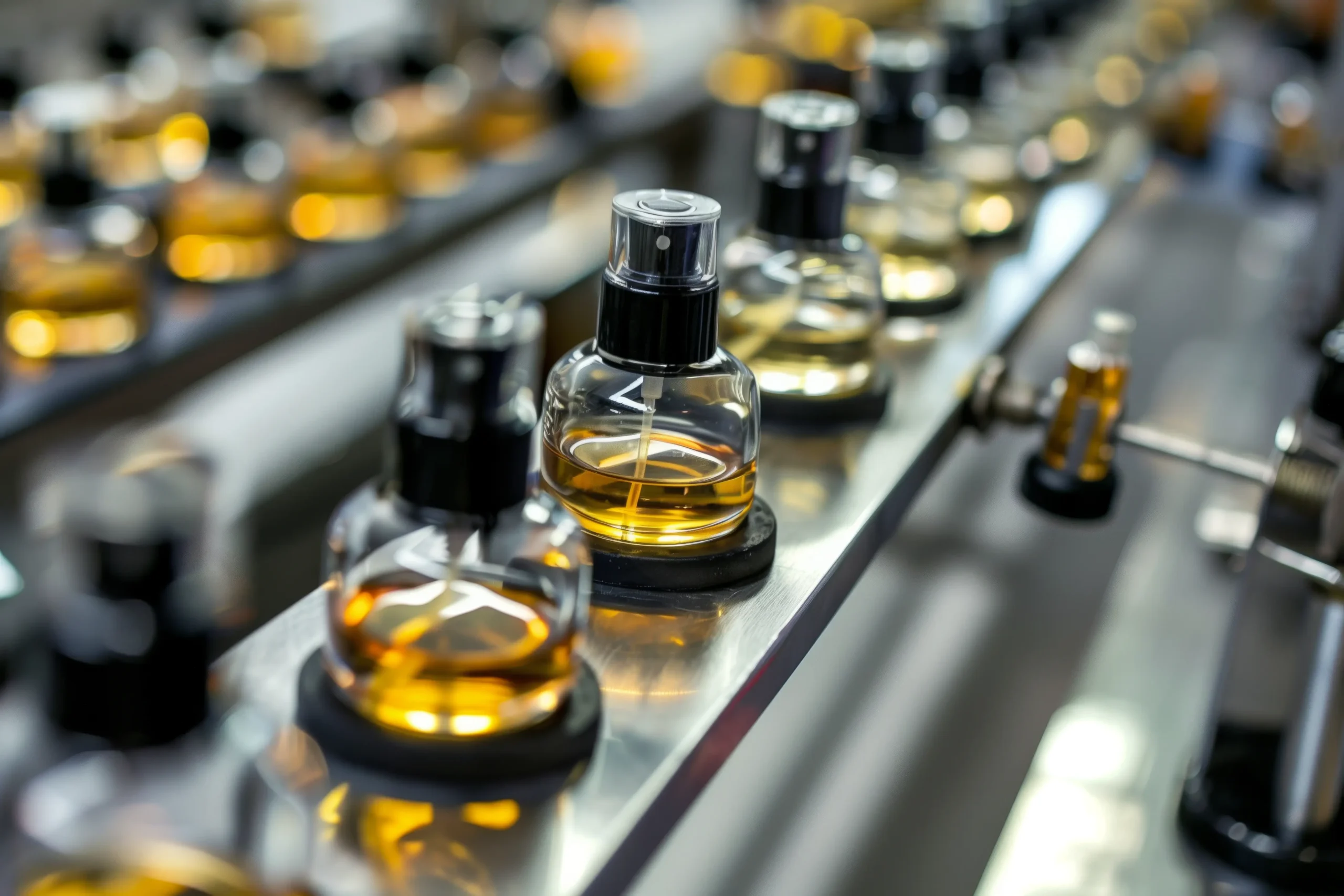
Pre-production sample approval gates that protect your launch
Fast projects fail when approvals stay vague. Pre production sample approval is where you turn “I like it” into “this exact version is approved.”
Your approval flow should cover four checkpoints
- Scent reference approval with code or version
- Packaging proof approvals including artwork and barcode readability
- Pre production confirmation for bill of materials and packing method
- Release to ship rule so nothing ships before the checklist is satisfied
What you record matters as much as what you approve.
| Stock Fragrance Library approval record | Why it protects you |
| Scent code and version | Prevents “close but not identical” disputes |
| Packaging version | Stops old files from reappearing |
| Date and approver name | Makes sign offs traceable |
| Final attachments | Ensures production uses the correct files |
If you are building private label line, ask our team for the recommended approval gates used in their private label and turnkey workflows so you do not discover issues after production.
Also read: Leading Private Label Perfume Manufacturer in Turkey
Production matching sample checks before release to ship
A production matching sample is the checkpoint that connects your approvals to the real batch before it ships. This matters because most disputes happen after production when fixes are expensive.
Here is what you should verify at production match
- Odor profile match against the approved reference
- Packaging integrity for handling and transit
- Label correctness including language placement barcode scannability
- Batch coding placement where you agreed it should be
- Pack out protection so cartons arrive stable and clean
Ask our experts to confirm the production match step for your route, whether you are doing white label speed, relabel execution, or private label depth.
Stock formulas vs custom which route fits your brand
This is not a better vs worse decision. It is a stage and risk decision.
| Stock formulas route | Custom formulation route | Custom formulation route |
| Time to market | Faster | Slower due to iterations |
| Differentiation | Medium with strong branding and packaging | High with signature scent identity |
| Development workload | Lower | Higher |
| Approval rounds | Fewer but must be documented | More and stricter |
| Best fit | First launch distributors fast assortment building | Brands building a long term moat |
If you are unsure, many B2B buyers validate demand first through white label or relabel, then upgrade to private label when sell through is proven. Tell us your target country and channel and ask our team to recommend the most efficient route for your stage, including OEM vs ODM if you need clarity on execution ownership.
Also read: Stock Formulas vs Custom Perfume Formulation: B2B Decision Guide
Ready-made formulations that stay consistent on reorders
A Stock Fragrance Library only helps if your supplier is operationally reliable, especially when exporting from Turkey to markets like the European Union or the Gulf Cooperation Council.
Before you commit, verify three areas
- Certificates and scope relevance for your destination market
- Export readiness and documentation support planned early
- Packaging compatibility because many “quality” failures are packaging failures
Request our certificates pack and ask for an export documents checklist for your destination country before you finalize your SKU plan.
Stock fragrance library next steps you can take today with Jasmine
If you want this to feel straightforward, start with one message. Send your market, channel, positioning, planned SKUs, and preferred families. Then ask for the right execution route.
• Request catalogs to align scent direction and packaging expectations
• Request a focused sample kit aligned to your shortlist
• Confirm your approval gates and production match step
• Choose the route that matches your timeline, white label, relabel, private label, or turnkey
Jasmine’s site supports all of these routes through catalogs, private label services, white label options, relabel service, and turnkey execution, with contact through WhatsApp or the contact form.
Send us your destination market and channel and ask for a Stock Fragrance Library pathway from shortlist to production match so you can launch fast and reorder without anxiety.
Also read: A Trader’s Journey with a Turkish Perfume Manufacturer
FAQs about stock fragrance library
Is a stock fragrance library “white label” or can it still be private label?
A stock fragrance library can support both models. The difference is how much you customize beyond the scent (branding, packaging, specs) and how approvals are managed. White label tends to be more fixed and faster; private label typically involves deeper control and more sign-offs.
What should I include when requesting a private label sample kit?
Send your target market, channel, desired scent families, SKU plan, label languages, barcode needs, and must-avoid notes. A clear brief helps the factory recommend relevant options and reduces sampling rounds.
What does pre-production sample approval protect me from?
It reduces surprises by locking what was approved (scent + packaging/label proofs) before mass production. That’s especially important for export projects, where fixing issues after shipment is slow and costly.
What is a production matching sample and when do I approve it?
It’s the reference check that confirms the produced batch matches the approved standard. Approve it before release-to-ship, so quality and labeling issues don’t travel to your warehouse.