Many perfume importers and brand owners request an IFRA Certificate assuming that it is sufficient to register their products. In reality, regulatory requirements in most markets call for a comprehensive product file demonstrating the safety of the finished, packaged perfume and its compliance with applicable health and safety standards. Understanding the difference between fragrance ingredient compliance and the final product safety assessment is the first step toward protecting your investment and avoiding obstacles during customs clearance or commercial launch.
To give you a complete understanding of the technical documents your project may require, we at Jasmine have prepared a comprehensive guide covering key topics such as:
- Essential documents required before contracting and manufacturing
- The technical difference between an IFRA Certificate and a perfume safety assessment
- The risks of relying solely on an IFRA Certificate and the importance of a Certificate of Analysis (COA)
- Documentation requirements for private label perfume brands and importers
- Jasmine’s role in preparing a comprehensive product file before production
Essential documents for perfume approval before contracting and manufacturing
These documents fall into three main categories that we incorporate into our operational and export processes at Jasmine to support product compliance, shipment readiness, and smoother customs clearance:
Technical approval and product specification documents
When approving a perfume for your own brand, you need a clear reference document that records every specification agreed upon with the manufacturer. This should include:
- The approved sample code linked to the final fragrance formula
- Details of the outer packaging and glass bottle components
- Officially approved artwork and print-ready design files
- Filling specifications and the declared liquid volume
- Quality acceptance criteria and agreed technical standards
At Jasmine, we use perfume manufacturing documentation to ensure that every approved specification is transferred accurately into production without unintended variations.
Regulatory documents and certificates
These documents help demonstrate that your product complies with the health, safety, and export requirements applicable in the target market. They may include:
- Safety Data Sheet (SDS / MSDS): An essential document detailing relevant composition and safety information. It is commonly required for shipping and handling perfumes as flammable goods.
- IFRA Certificate for perfumes: This confirms that the fragrance compound is used in accordance with the applicable IFRA Standards and within the permitted usage level for the relevant product category.
- Product Information File (PIF): Required for certain markets, particularly for cosmetic products sold in the EU. It includes key product documentation such as the safety assessment and information associated with regulatory notification processes, including CPNP notification where applicable.
- Quality and compliance certificates: These may include documentation relating to Good Manufacturing Practices (GMP) and final quality inspection reports, such as AQL inspection reports conducted before shipment.
Commercial and shipping documents
These are the commercial and transport documents provided with your shipment to support customs clearance and import procedures in the destination country:
- Commercial Invoice: An official document stating the perfume products, quantities, and agreed wholesale prices.
- Packing List: A detailed record of the number of cartons and units, along with shipment weights and dimensions.
- Certificate of Origin: Confirms Turkey as the country of origin for perfumes manufactured at our Jasmine facility and may be certified by the relevant official trade authorities where required.
- Bill of Lading / Air Waybill: The official transport document issued for the shipment, including shipments handled under applicable dangerous goods requirements.
At Jasmine, we help you identify and organize these requirements before production begins, supporting a smoother transition from sample approval to commercial manufacturing.
Ensuring that your technical and regulatory documentation is complete before signing a production agreement can protect your investment from delays and unexpected costs. Contact the Jasmine team to review the documents required for your project and identify any necessary adjustments before production.
Also read: When Should You Update a Perfume Product Information File (PIF)?
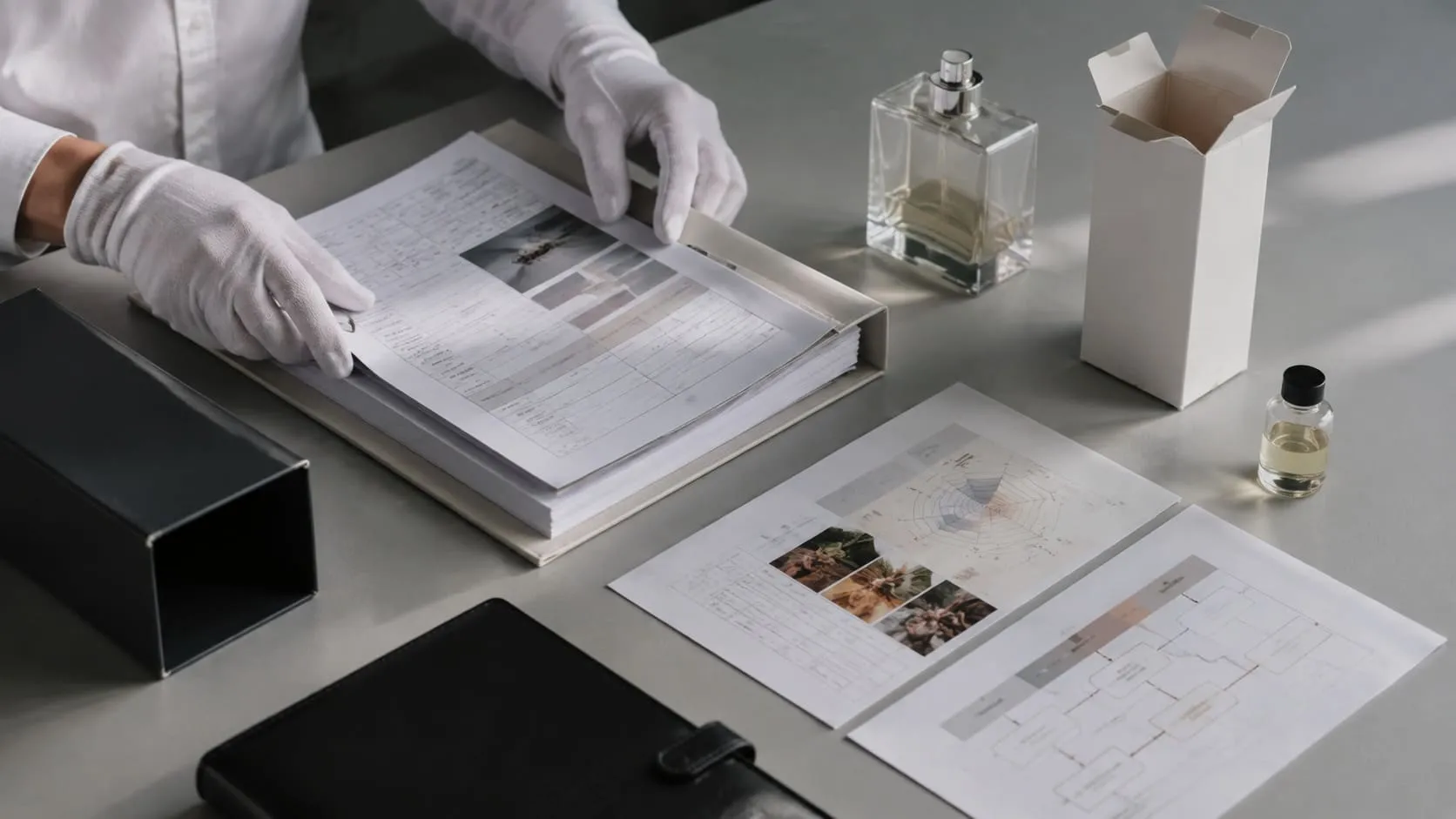
IFRA certificate vs Safety assessment vs other perfume documents
The documentation required for private label perfume manufacturing varies according to its regulatory purpose. At Jasmine, we clarify the role of each document so you can protect your product, control its specifications, and facilitate its shipment and sale across international markets:
- International Fragrance Association (IFRA) Certificate: This relates to the fragrance formula or fragrance compound selected for your product before manufacturing begins. It specifies the maximum permitted concentration of the fragrance compound in the finished formulation according to the applicable product category.
- Safety Assessment Report: This evaluates the finished product as a whole after the fragrance oil has been blended with alcohol and other ingredients. The assessment considers how consumers are expected to use the product, ingredient concentrations, and the safety requirements applicable in your target market.
- Safety Data Sheet (SDS / MSDS): This focuses on safe handling, storage, and transportation. It provides you and your logistics providers with information about the mixture’s chemical properties, flammability, and the safety and storage precautions that must be followed.
- Product Specification Sheet: This document consolidates all technical decisions related to your product, including the approved sample code, bottle and spray pump specifications, carton dimensions, and traceability codes. It serves as a key quality-control reference between our factory and your brand.
- Certificate of Analysis (COA): A technical report issued by our laboratories that records the test results for the current production batch and compares them against the defined physical and chemical specifications of your product, such as density, alcohol content, and clarity, before the shipment leaves our factory.
Technical documents required to complete a perfume manufacturing file
Once the fragrance formula has been approved and the product specifications agreed upon, moving your project into commercial production requires a set of technical documents and tests. Their purpose is to protect your investment and minimize any differences between the approved product and the final product delivered to your target market.
Product specification sheet and approval of the reference sample
This is the primary reference document that brings together the technical and commercial specifications agreed upon between your brand and our factory before production begins. It typically includes:
- The selected sample code and its corresponding fragrance formula.
- The approved fragrance concentration and specified alcohol type.
- Bottle, spray pump, and fill-volume specifications.
- Artwork and print files approved by you.
- Filling, packaging, and product identification details.
- Quality acceptance criteria and approved inspection standards.
At Jasmine, we retain the final sample approved by you as a reference for comparison with subsequent production batches. This helps ensure that all approved decisions are transferred accurately from product development into production without unintended variations.
Perfume stability and packaging compatibility tests
We conduct these tests to help ensure that the fragrance formula performs as intended once it is filled into the final packaging. They include:
- Perfume stability testing to assess the stability of the formulation and changes in scent or color over time.
- Packaging compatibility testing to evaluate the interaction between the fragrance liquid, perfume bottle, and spray tube or pump components.
- Appearance and clarity checks to confirm that the fragrance liquid remains free from visible sediment or undesirable changes after testing.
These tests help us identify potential issues together and address them before full-scale production begins, reducing the risk of problems appearing after large quantities have already been filled and packed.
Perfume certificate of analysis (COA)
A COA helps you trace the quality of a manufactured batch and link the test results to its specific batch or lot number. It may include:
- Measurement of the specified density of the manufactured batch.
- Verification of the liquid’s color and clarity.
- Assessment of the product’s defined physical and chemical characteristics.
Fragrance Allergen Declaration
If you are targeting markets with specific labeling requirements, we can prepare a fragrance allergen declaration as part of your product documentation. This identifies the fragrance allergens that must be disclosed on the product label where required, helping support regulatory compliance and the lawful import and sale of your shipment.
Once these documents and test results are consolidated into a single product file, it becomes much easier to connect the fragrance formula with the approved specifications, inspection results, and relevant production batch instead of managing every document separately.
This structured approach helps both your team and ours review the product before manufacturing and confirm that it is ready to move into the target market.
Also read: Perfume Manufacturing Quality Control Before Production
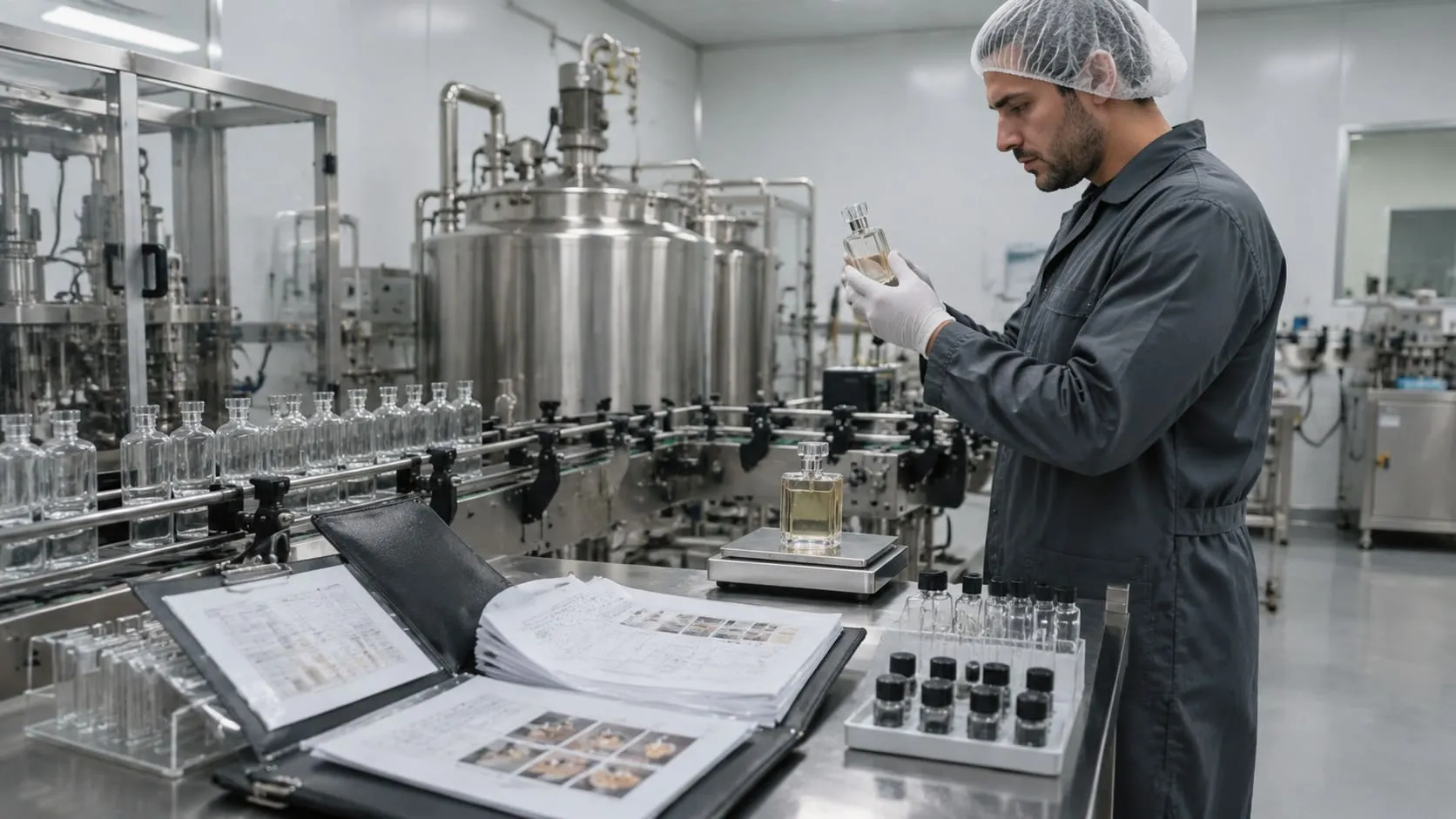
Choosing the right perfume documents based on product type and target market
The documents you need depend on how you plan to bring the product to market, your distribution model, and the country in which the perfume will actually be sold. As a brand owner or importer, you need to define your business model before approving the product, whether you are launching a private label fragrance line or importing ready-made perfumes for distribution. The following sections explain what to consider.
Perfume documents for private label brands
Launching your own perfume line requires a product file that covers the key stages of development, manufacturing, and market placement. The exact documentation depends on the level of customization requested for the fragrance formula, the packaging components you select, and the markets you intend to enter.
Sharing your distribution plan and product details with us helps determine which information and documents will be required. We can then review your project, coordinate the technical specifications, and prepare the documentation associated with your perfume before production is authorized to begin.
Documents for perfume import and distribution
These documents are typically required when preparing perfumes for import or distribution through commercial partners. They support shipping and customs clearance procedures and make it easier for the shipment to be reviewed once it reaches the port or point of entry. They include:
- Official Certificate of Origin confirming Turkey as the country of manufacture.
- An up-to-date Safety Data Sheet (SDS / MSDS).
- A perfume Certificate of Analysis (COA) issued for the production batch included in your shipment.
- Commercial invoices, packing lists, and other shipping documents related to your order.
Defining your business model and target country early can reduce unnecessary steps during product approval and regulatory registration. Request a specialized consultation from the Jasmine team to identify the documentation package that best matches your private label or import plan.
How to choose a perfume manufacturer based on product file completeness
Choosing the right manufacturing partner depends in part on its ability to manage your product file and prepare the technical and regulatory documentation required for perfume manufacturing. This helps ensure that the fragrance moves from the sample you approved into commercial production with clearly defined specifications and quality criteria.
Manufacturer’s ability to prepare perfume documentation
When comparing perfume manufacturers, review whether each factory can prepare the documents associated with your product and accurately link them to the approved fragrance formula and specifications. Make sure the manufacturer can:
- Provide the technical documentation you require, such as an IFRA conformity document, SDS / MSDS, and analytical reports.
- Ensure that all documentation corresponds accurately to the formula, packaging, and specifications you have approved.
- Link certificates and test results directly to your actual production batches.
- Understand the regulatory perfume manufacturing requirements applicable to your target market and distribution model.
At Jasmine Factory, we coordinate product data and technical specifications with you throughout the development and manufacturing process so that the technical file accurately reflects the perfume that will ultimately be produced and shipped to you.
Manufacturer’s experience with export requirements
If your project is intended for international markets, you also need a manufacturer with practical experience in export, shipping, and distribution requirements. This stage may require preparation of official documentation such as:
- Certificate of Origin.
- Updated packing lists.
- Shipping and transport documents.
- Relevant perfume safety information required for storage and sea or air transport.
Our export experience helps reduce the risk of shipment delays caused by missing documentation or inconsistencies between manufacturing records, shipment documents, and the information reviewed by customs authorities.
Batch traceability and perfume quality control
Batch traceability is a core part of managing your product file because it connects the specifications you approved with the perfume actually manufactured for your brand. This includes:
- Issuing a perfume Certificate of Analysis (COA) for your specific production batch.
- Using batch or lot numbers to trace the perfume through the manufacturing process.
- Comparing the finished batch against the approved reference sample and established product specifications.
Also read: Perfume AQL Inspection: Will Your Order Pass?
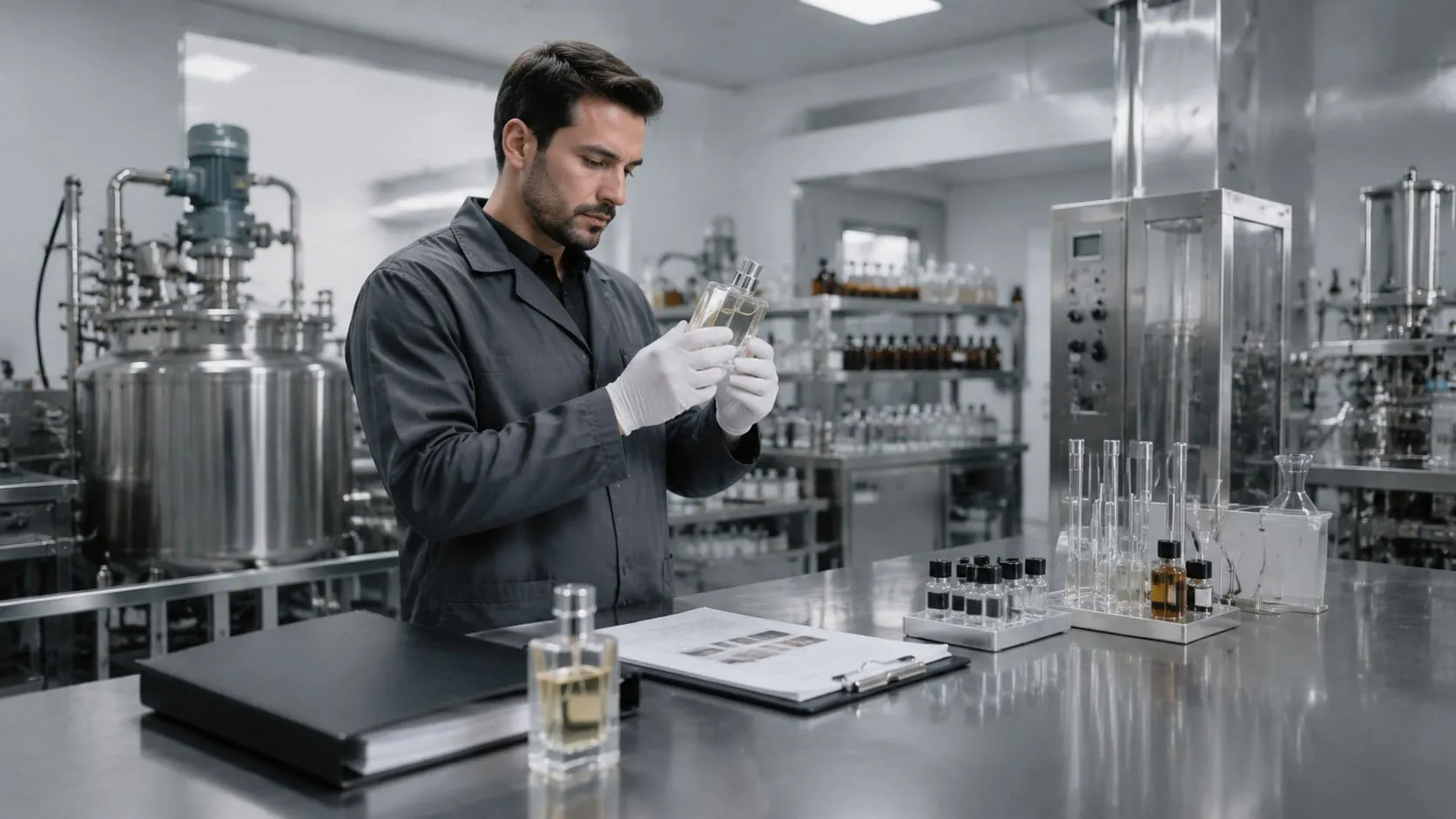
Private label perfume manufacturing with Jasmine
Working with the right manufacturing partner is essential to bringing a perfume to market at a high level of quality and in line with the applicable regulatory requirements. Jasmine Perfumes is a leading provider of customized perfume manufacturing solutions, managing the technical and operational stages professionally so that brand owners can move their projects forward with greater control and confidence.
This is where private label perfume manufacturing with Jasmine becomes a structured process that takes your concept from initial development through to the finished product. Turning a fragrance idea into a product ready for manufacturing involves clearly defined development stages that connect your brand vision with production requirements:
Fragrance development and technical file preparation
At Jasmine, we begin by understanding the direction of your product, its target audience, and the required specifications. We then develop the fragrance sample and prepare the associated technical requirements before final approval. This stage includes:
- Developing the fragrance formula in line with your brand direction.
- Evaluating the sample and approving the final specifications.
- Preparing the technical data associated with the product and its packaging.
Moving from approval to production
Once the sample and specifications have been approved, the project moves into manufacturing based on the finalized product data. Throughout this stage, we coordinate filling and packaging requirements and prepare the documentation associated with the relevant production batch.
Managing your perfume project through a structured process that connects development, manufacturing, and logistics helps create a smoother and more reliable route to market. Request a consultation with the Jasmine team to begin the development process and define the approval requirements for your new fragrance.
FAQs about perfume documentation for brands
Is an IFRA certificate enough to approve a perfume product?
No. An IFRA Certificate primarily confirms that the fragrance mixture conforms to the applicable IFRA Standards for its intended product category and permitted use level. Finished-product approval may require additional documentation, such as a safety assessment or CPSR where applicable, as well as batch-specific documentation such as a Certificate of Analysis (COA).
What is the difference between an IFRA certificate and a COA?
An IFRA Certificate indicates whether the fragrance mixture complies with the applicable IFRA Standards and permitted usage level for the relevant product category. A Certificate of Analysis (COA), by contrast, reports the physical and chemical test results of a specific production batch and verifies them against the established product specifications.
Do private label perfume documentation requirements vary by market?
Yes. Regulatory requirements, safety documentation, labeling obligations, and import procedures may differ depending on the laws of the target country, the product category, and the intended distribution model.
What should I request from a perfume manufacturer before production?
Request a technical product file that is directly linked to the perfume being manufactured. Depending on your product and target market, this may include IFRA conformity documentation, relevant perfume safety assessment records, approved bottle and packaging specifications, and a COA for the manufactured batch.