When a hero fragrance misses a retailer window or a distributor reorder, the loss is larger than one delayed purchase order. Stock disappears, campaigns pause, customers see inconsistent availability, and your commercial team starts looking for another factory under pressure. A backup perfume manufacturer can protect continuity, but adding a second source without controlled specifications can replace one supply problem with two different scents, two packaging standards and fragmented inventory.
In this guide, we explain how B2B fragrance brands should compare one fragrance manufacturer vs multiple suppliers, when a second perfume supplier is commercially justified, what perfume supplier diversification can and cannot solve, and how to qualify a backup route without weakening product consistency.
From our manufacturing base in Istanbul, Turkey, we at Jasmine Perfume Factory support importers, distributors, retailers and private-label brands across the GCC and global markets with product review, sampling, packaging coordination, quality controls and export-ready production planning.
What is a backup perfume manufacturer?
A backup perfume manufacturer is a factory that has been evaluated and prepared to produce selected products if the primary source cannot meet an agreed continuity need. The backup may remain inactive after qualification, receive occasional pilot or maintenance orders, or handle a defined share of regular volume.
This is different from collecting supplier quotations. A credible backup route requires approved references, transferable files, feasible packaging, agreed quality criteria and clear activation rules. General ISO/TS 22318:2021 guidance on supply chain continuity management also treats supplier relationships as part of a documented continuity strategy rather than an improvised response after disruption.
The correct model depends on the risk. A brand may need:
- A qualified backup perfume manufacturer for selected high-risk SKUs.
- Active dual sourcing perfume manufacturing with planned volume allocation.
- One primary manufacturer with safety stock and approved component alternatives.
- Specialist suppliers for product categories that require different production capabilities.
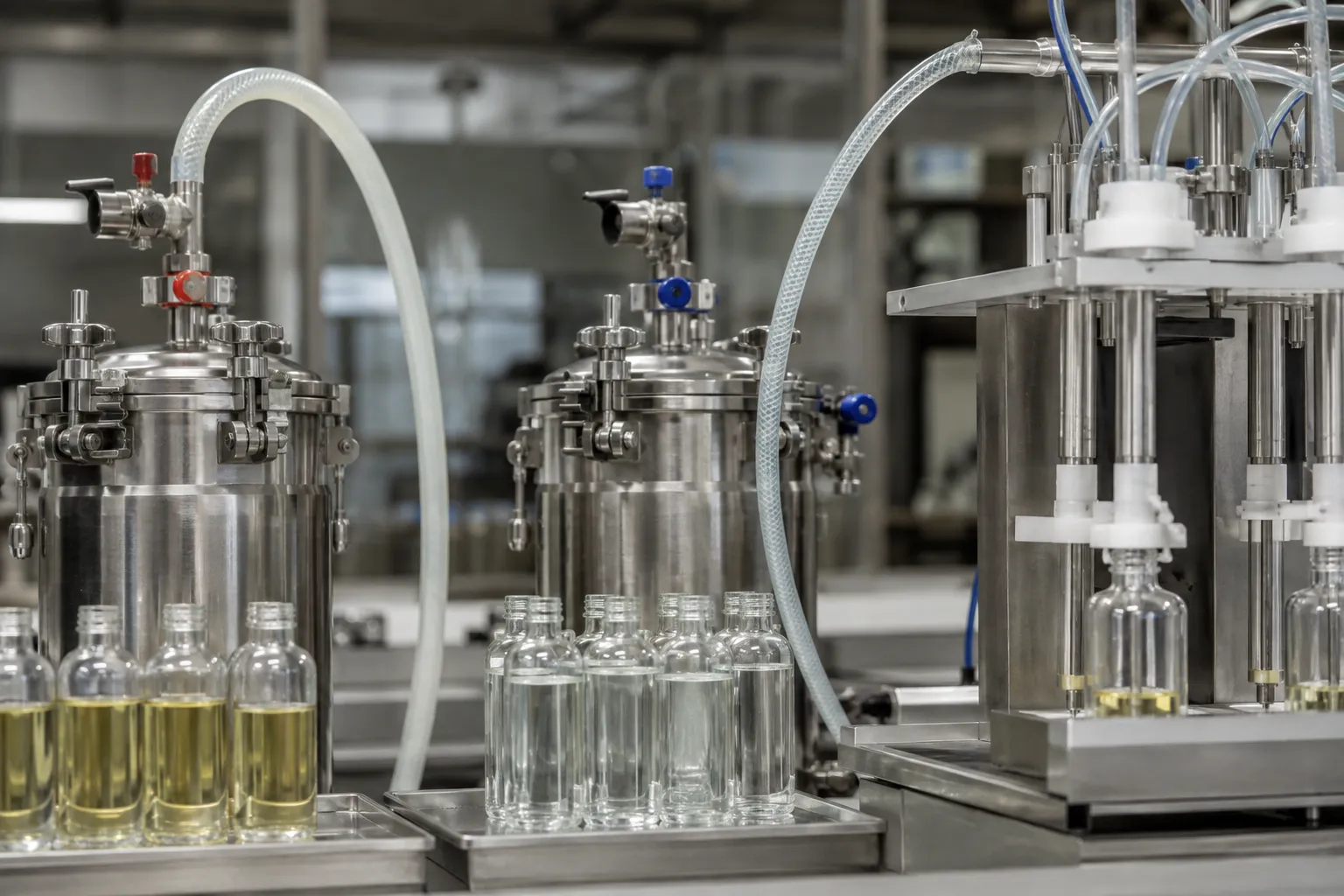
One fragrance manufacturer vs multiple suppliers
More suppliers do not automatically create more resilience. Every additional factory adds new samples, contracts, quality interfaces, packaging decisions, purchase orders and shipment plans. The commercial question is whether the continuity benefit is greater than the added operating complexity. If your concern is the factory operating model rather than supply continuity, first review our boutique vs large-scale perfume manufacturer comparison.
| Model | How it works | Best fit | Main risk |
| One primary manufacturer | Development, packaging, production and reorders remain within one controlled system. | Limited or coordinated portfolios and volumes that should not be split. | Dependence on one factory, route or component supply. |
| Qualified backup manufacturer | A second factory reviews the project, approves a reference and may complete a pilot without regular volume. | Hero SKUs, distributor commitments or high-cost interruption exposure. | Qualification becomes outdated if files, materials and capacity are not reviewed. |
| Active dual sourcing | Planned production volume is divided between two factories. | Stable demand with enough volume and internal control resources. | Fragrance, packaging and batch variation between sources. |
| Specialist supplier model | Different manufacturers handle categories where they have stronger capabilities. | Portfolios combining fine fragrance, diffusers, room sprays or car fragrance. | Multiple contracts, approvals, documents and logistics interfaces. |
When is one manufacturer the better decision?
For many brands, concentration is the safer structure during launch and early scaling. One manufacturer is often better when:
- You are launching a controlled number of scents, sizes and market versions.
- The scent, bottle, pump, label and carton must be approved as one commercial product.
- Consistency and accountability matter more than a small difference in quoted unit price.
- Your team does not have procurement and quality resources to manage several factories.
- The current manufacturer covers the required categories and can show a credible reorder path.
- Order volume cannot be split without multiplying minimum order quantities or packaging stock.
Our turnkey private label perfume manufacturing route is designed for buyers who want fragrance, packaging, approvals, quality gates and shipment preparation coordinated through one manufacturer-led workflow. Before adding another source, compare the operating model and future scale, not only the number of factories.
When does a second perfume supplier become necessary?
A second perfume supplier becomes useful when it addresses a defined continuity exposure. It should not be added because multiple suppliers sound safer in theory.
When a stockout would damage a major channel
A backup route is more defensible when a hero SKU supports a distributor contract, seasonal campaign, retail listing or recurring order that cannot tolerate a long interruption. Qualification should begin while the primary source is still operating normally, because emergency matching and packaging transfer usually create weaker decisions.
When demand is moving beyond reservable capacity
Growth does not automatically mean the current supplier has failed. The first step is to review forecast accuracy, booking windows, component lead times and available capacity. If demand remains above the practical production route, a backup perfume manufacturer or controlled volume split may become necessary.
When delays or uncontrolled substitutions repeat
One late order is not enough to rebuild a supply chain. Repeated delays become more serious when they are combined with weak communication, undocumented component changes or no credible corrective plan. The decision should be based on the pattern, root cause and recovery capability.
When one component creates single-source exposure
A perfume formula may be repeatable while a custom bottle, pump, cap, decoration or carton remains available from only one source. In that case, perfume supplier diversification may need to begin with qualified packaging alternatives rather than a complete transfer to another perfume factory.
When a new category needs a different capability
A manufacturer may be strong in fine fragrance but not offer the appropriate route for reed diffusers, room sprays, car fragrance or a specialized package. A specialist supplier can handle the new category while the primary perfume manufacturer remains responsible for the core line.
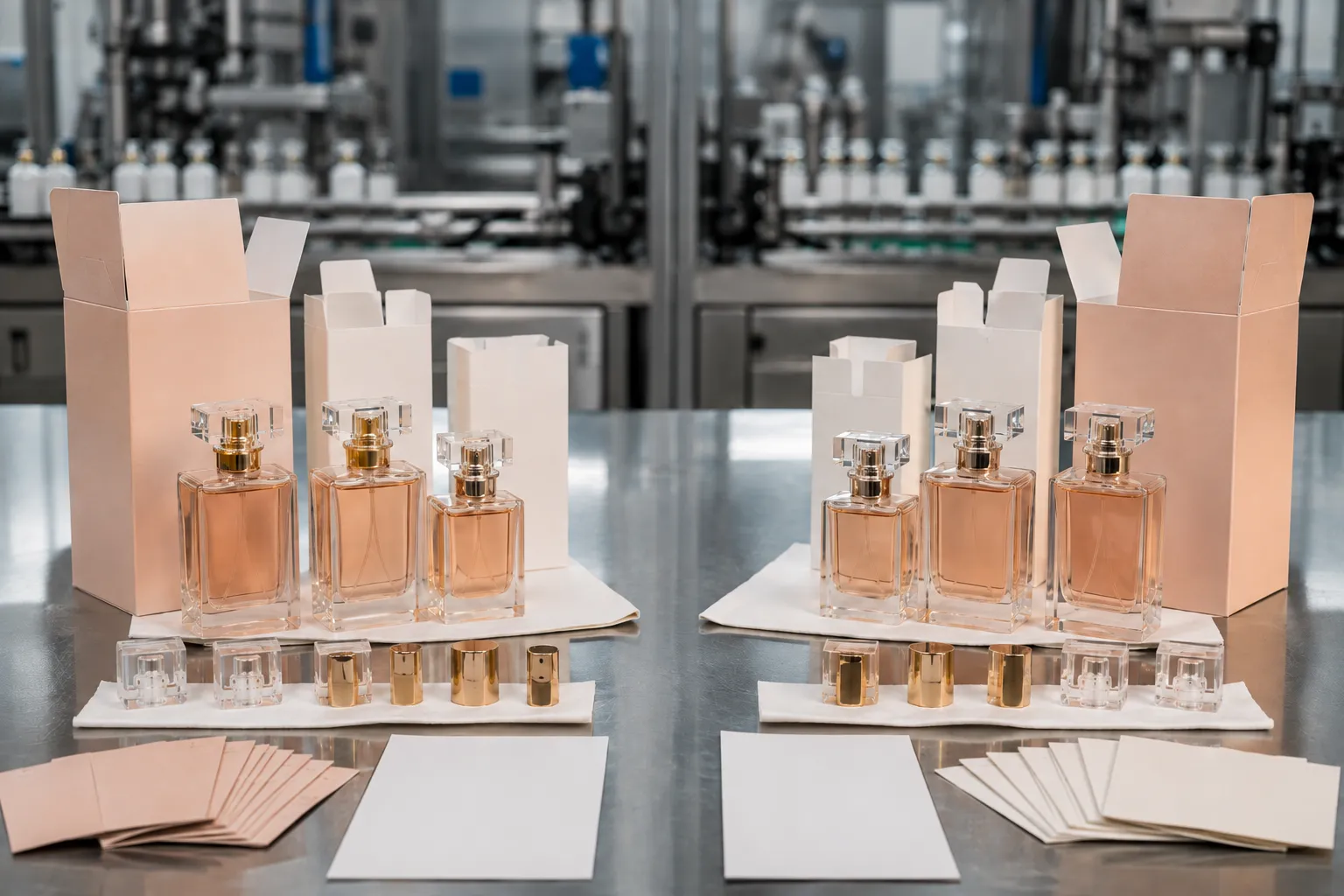
What does perfume supplier diversification add and what can it risk?
Perfume supplier diversification reduces dependence only when both sources are controlled against the same commercial product standard. Otherwise, the brand may gain capacity while losing consistency.
Fragrance variation between factories
A fragrance name, note pyramid or concentration target is not enough to guarantee an equivalent result. Raw materials, processing, maturation, filtration and interpretation of the approved reference can differ. The brand needs clear ownership or authorization, a controlled reference and one evaluation method for both sources.
Packaging variation on the same shelf
Two bottles may appear similar in a quotation but differ in glass colour, weight, neck finish or decoration. Pumps can change spray dose and user experience. The packaging bill of materials must identify approved component codes, acceptable alternatives and the changes that require new approval.
Fragmented MOQs and higher total cost
Splitting volume can create duplicate minimums for bottles, printing, cartons and production setup. It may also duplicate sample costs, inspection, freight, documentation and packaging stock. Compare total landed cost and inventory exposure, not only factory price.
Different quality systems
One supplier may measure label displacement while another relies on visual judgement. One may retain approved samples and batch records while another uses photographs. Use the same acceptance criteria, defect definitions and reporting expectations across suppliers. Our perfume manufacturing quality-control guide explains the approval gates that should remain aligned before production and shipment.
Ownership and file-access constraints
A brand may discover too late that it cannot transfer a formula, artwork, packaging file or approved reference. Review ownership, confidentiality, handover rights and nonconforming-goods procedures before qualification. Our private label manufacturing agreement guide covers these controls in greater detail.
What must be transferable before dual sourcing perfume manufacturing?
Dual sourcing perfume manufacturing works only when the second factory can evaluate the product without guessing or using information the brand is not authorised to share. Build a manufacturer-neutral transfer pack for each protected SKU.
The pack should include:
- Market-specific label and documentation requirements.
- Final artwork, barcode, batch-code location and print specifications.
- Approved visual and functional samples with codes and approval dates.
- Change history, approved alternatives, forecast and reorder assumptions.
- Quality criteria, defect catalogue and pre-shipment inspection expectations.
- Product format, nominal volume, concentration direction and destination markets.
- Packaging bill of materials covering bottle, pump, cap, collar, label, carton and master carton.
- The approved fragrance reference or a documented development brief for an authorised alternative.
The transfer pack does not require the first supplier to surrender confidential know-how. It does require the brand to understand what it owns, what it may share and which elements must be recreated through a separate development route.
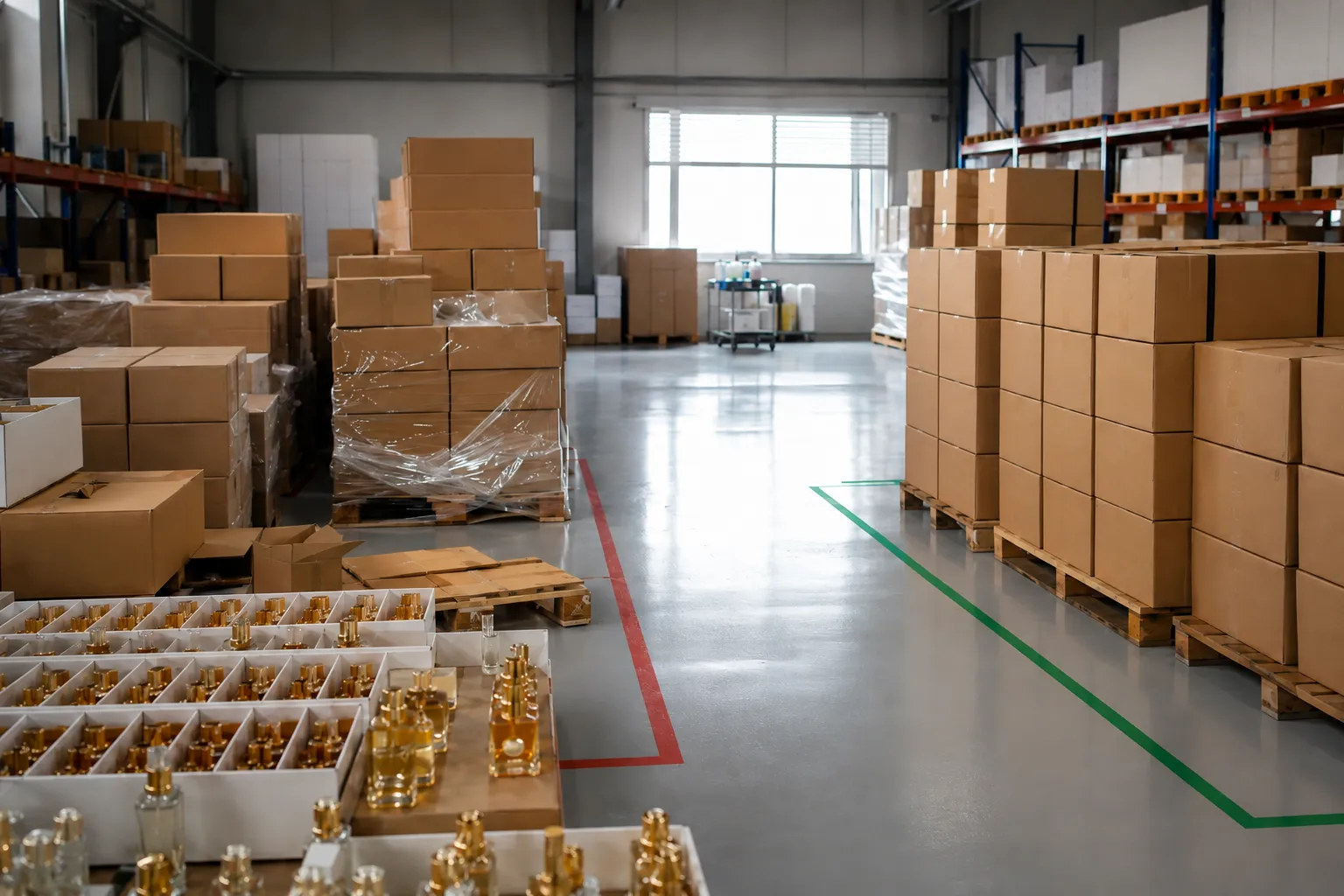
How do you qualify a backup perfume manufacturer?
- Define the interruption you are protecting against and select only the SKUs that need backup coverage.
- Review formula, artwork, packaging and file rights before sharing information.
- Prepare one comparison brief and acceptance standard for every candidate.
- Confirm product scope, component feasibility, capacity, destination-market support and realistic minimums.
- Use an NDA where sensitive commercial or technical information will be exchanged.
- Compare second-source samples against a controlled reference using one documented evaluation method.
- Complete a pilot order that tests fragrance, packaging, quality reporting, documentation and shipment execution.
- Define activation triggers, forecast notice, volume allocation, change authority and the status of the primary supplier.
- Maintain the qualification through periodic sample, component, document and capacity review.
Do not treat a successful sample as full qualification. A second supplier must demonstrate that it can execute the finished product, not only reproduce a scent direction.
Send us via WhatsApp the SKU, authorised reference information, packaging, target market, expected quantity and the supply risk you need to solve. We will review whether the project fits one-factory consolidation, a specialist route or qualification with Jasmine as a backup perfume manufacturer. Contact Jasmine
Safety stock or a backup perfume manufacturer?
Not every delay requires another factory. Safety stock or earlier booking may be more efficient when the risk is predictable seasonality, transport variation or a short production gap. A second source is more relevant when the exposure involves long-term capacity, facility interruption, non-replaceable components or repeated failure to meet the agreed process.
Many B2B brands use a hybrid continuity structure:
- Calculated safety stock for high-impact SKUs.
- One primary manufacturer for product control and regular reorders.
- Approved component alternatives for the most vulnerable packaging items.
- A qualified backup perfume manufacturer for selected products where a prolonged interruption cannot be accepted.
How we at Jasmine Factory support a backup-manufacturer route from Turkey
At Jasmine Factory in Turkey, we do not begin by promising an undocumented copy of another factory’s product. We first review what your company is authorised to share, the fragrance reference or development direction, packaging, order scale, destination market, quality expectations and the reason for qualification.
From our Istanbul manufacturing base, we can support B2B buyers in the GCC and international markets through:
- Sample development or second-source reference approval.
- Bottle, pump, cap, label and carton coordination.
- Private label production with defined approval gates.
- Quality-control and shipment-preparation discussions.
- A structured route for pilot production and repeat orders.
- Feasibility review for perfumes and selected fragrance-product categories.
Brands building a new portfolio can use our Private Label service to consolidate unnecessary handoffs from the beginning. Existing brands seeking a second source can send us the transferable project information and continuity objective via WhatsApp. We will define what can be evaluated, what requires new development and which commercial assumptions must be confirmed before quotation or qualification.
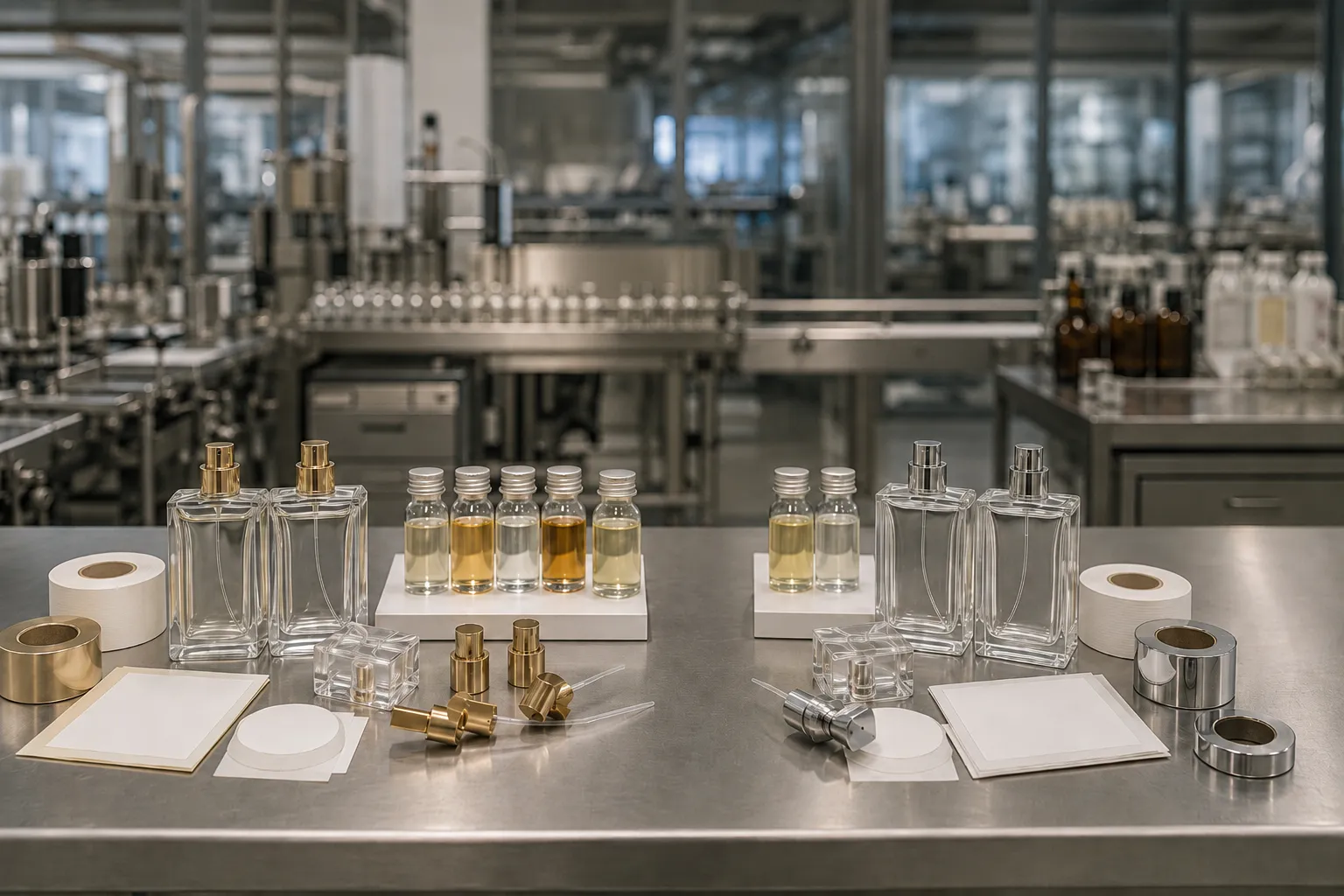
FAQs about backup perfume manufacturer
When should I start qualifying a backup perfume manufacturer?
Begin before supply becomes urgent, especially when a hero SKU supports a distributor commitment, retailer window, seasonal launch or demand that is approaching the current factory’s practical capacity.
Does a second perfume supplier always reduce risk?
No. It can reduce capacity or interruption exposure while adding variation, duplicated MOQs, inventory and quality-management complexity. The second source must be qualified against one controlled product standard.
Can two manufacturers produce exactly the same perfume?
Not automatically. The result depends on formula rights, approved references, materials, processing, packaging and evaluation criteria. In some projects, the correct route is an approved second-source version rather than a claim of perfect identity.
What is the difference between backup sourcing and dual sourcing perfume manufacturing?
A backup source is normally qualified for activation when required. Dual sourcing perfume manufacturing allocates regular production volume to two suppliers and therefore needs continuous quality, forecasting and inventory coordination.
Can Jasmine Factory act as a backup perfume manufacturer for an existing brand?
We can review the information your company is authorised to share, then assess feasibility, sampling, packaging, quality and production requirements. Matching, minimums, lead times and capacity can only be confirmed after project evaluation.