Your approved scent sample can be correct and the photographed bottles can look flawless, yet the delivered order can still contain leaking pumps, blocked sprayers, crooked labels, mixed SKUs or crushed cartons. For an importer or distributor, those defects become most expensive after the goods leave Turkey and enter freight, customs, warehousing and retail. A structured perfume AQL inspection gives you an evidence-based shipment decision before that risk moves into your market.
At Jasmine Factory in Istanbul, we manufacture perfumes and fragrance products for B2B buyers in the GCC and international markets. This guide explains how to plan perfume pre-shipment inspection, define defects, draw a representative sample, document perfume order quality inspection findings and reach perfume shipment acceptance without repeating the broader pre-production controls covered elsewhere on our blog.
What is perfume AQL inspection?
AQL means Acceptance Quality Limit. ISO 2859-1:2026 defines AQL-indexed sampling schemes for lot-by-lot inspection by attributes. In practice, the agreed lot size, inspection level and AQL values determine a sample size and the acceptance and rejection numbers applied to the defects found.
A pass does not certify that every bottle is defect-free. It means the sampled lot did not reach the rejection threshold under the agreed plan. AQL also does not replace incoming material checks, in-process quality control, packaging compatibility tests, approved samples or final product specifications.
This article is deliberately limited to finished-lot acceptance before shipment. For sample approval, packaging validation, artwork control and broader production gates, read our perfume manufacturing quality-control checklist.
Send us via WhatsApp your product format, SKU list, order quantity, packaging route, destination market and the defects your sales channel cannot accept. We can align the project brief and production milestones with a practical inspection and release discussion.
What must be agreed before perfume pre-shipment inspection?
A perfume pre-shipment inspection is only as reliable as the instructions written before the inspector arrives. The buyer and manufacturer should agree on the lot, sampling basis, defect definitions, reference documents, timing, authority and failure route.
1. Define the lot and SKU boundaries
A lot is the population presented for one acceptance decision. It should contain units produced and packed under comparable conditions. Different scents, sizes, label languages or artwork versions should not automatically share one result. State whether each SKU will be inspected separately or whether a combined approach is justified and documented.
2. Select the sampling plan and sample-selection method
The inspection instruction should identify the applicable standard or plan, lot size, inspection level and AQL for each defect class. A qualified quality professional should select these values for the product and channel risk; copying one generic AQL number from another order can create false confidence.
Samples should be drawn across different master cartons and carton positions wherever practical. Bottles selected by the packing team from one convenient carton are not a representative sample.
3. Lock the references used to judge conformity
The inspector needs one controlled answer to the question: what should this finished SKU be? Provide the approved scent or sample reference, bottle and component references, final artwork, barcode, fill requirement, packing configuration and visible acceptance limits. Our guide to the perfume product specification sheet explains how to control that approved product definition without turning it into an inspection manual.
4. Define release authority and the failure route
State who can release the lot, who may approve a concession and what happens after rejection. Sorting, rework, repacking, reproduction and reinspection should not be negotiated for the first time after a failed visit. Inspection rights and non-conforming-goods remedies can be connected to the private label manufacturing agreement or a dedicated quality annex.
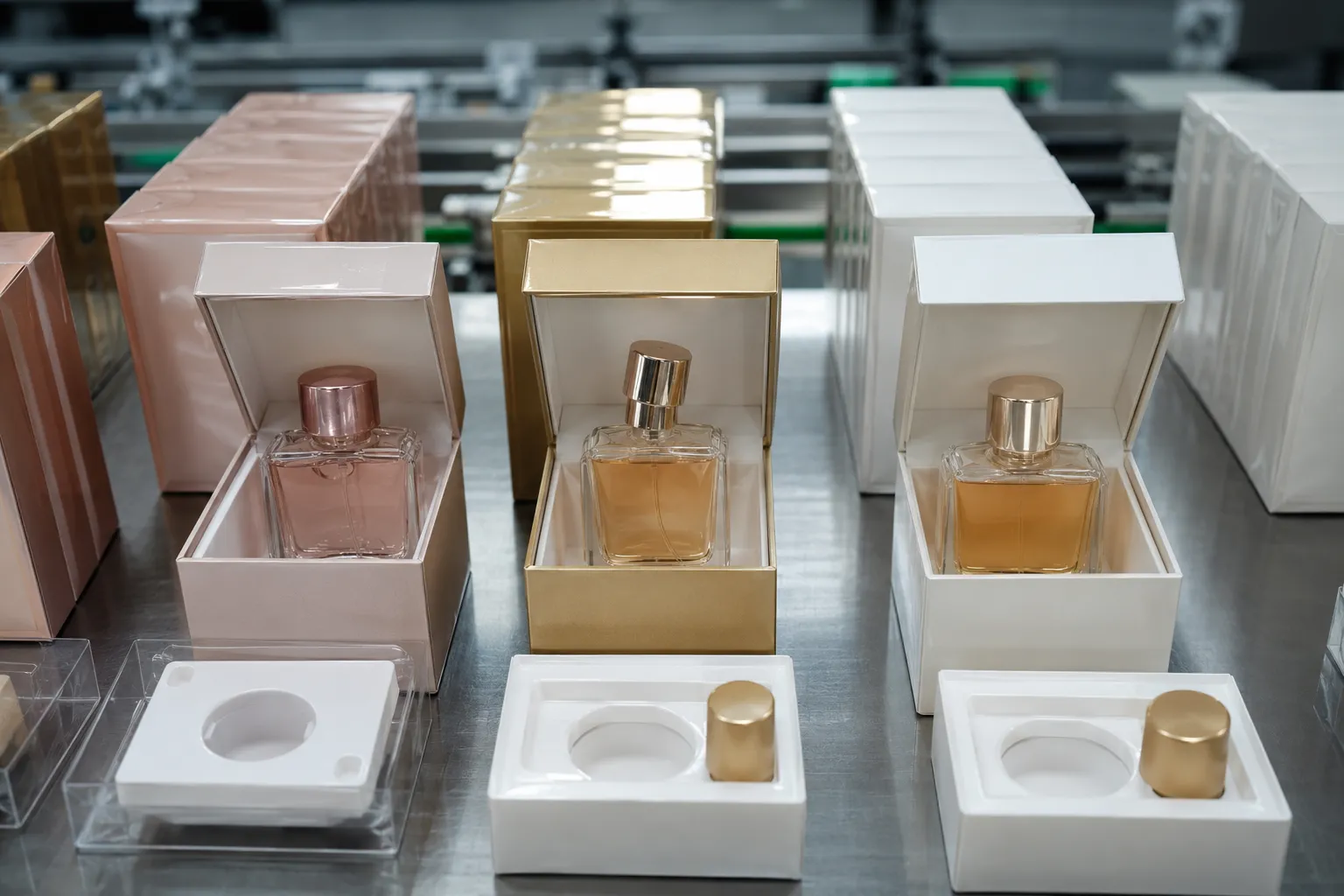
How does perfume order quality inspection create an accept-or-reject decision?
Perfume order quality inspection should convert observed defects into a documented lot decision. The sequence is straightforward, but each step must follow the written inspection instruction.
- Confirm that production is complete or substantially complete and that the selected units are packed in the configuration in which they will leave the factory.
- Draw the required sample across the defined lot rather than from a showcase carton or a hand-selected group of bottles.
- Perform the agreed visual, functional, quantity, identity and packing checks against the approved references.
- Classify each finding as critical, major or minor according to the project defect catalogue, then count findings by class.
- Compare the counts with the acceptance and rejection numbers. Release the lot only when the result and all other shipment conditions are closed in writing.
When a finding involves batch identity, component lots or affected quantities, the inspection report should reference the perfume manufacturing batch record. The AQL report supports shipment acceptance; it does not replace production traceability.
AQL inspection for fragrance packaging checklist
AQL inspection for fragrance packaging must evaluate the fully sellable assembly, not the bottle in isolation. The defect catalogue should reflect the brand position, sales channel, destination market and transport exposure.
| Defect class | Commercial meaning | Perfume and packaging examples |
| Critical | May create a safety or serious compliance risk, or make the product unsuitable for sale. | Broken glass, severe leakage, wrong product, hazardous label error or missing mandatory information agreed for the market. |
| Major | Clearly affects function, saleability or customer experience and can cause rejection or return. | Blocked sprayer, loose closure, materially incorrect fill, wrong artwork, unreadable barcode or crushed retail carton. |
| Minor | Does not prevent use but reduces visual consistency or perceived quality when repeated. | Small cosmetic mark, limited print variation or slight finish deviation within an agreed visual limit. |
These are guidance examples, not universal classifications. The same scratch, leakage condition or label deviation can be classified differently when severity, product positioning or destination-market risk changes.
Product identity, fragrance presentation and fill
- Product name, scent, size and SKU match the purchase order and packing list.
- The sampled unit is linked to the approved fragrance or production reference.
- Colour, clarity and general presentation remain within the agreed finished-product standard.
- Fill quantity or weight is checked by the agreed method.
- Batch code or production reference is present, legible and correctly positioned.
Bottle, atomizer and closure assembly
- Bottle cracks, chips, scratches, bubbles, coating defects and decoration damage.
- Pump fit, spray function, spray pattern, blockage, looseness and dip-tube condition where visible.
- Leakage under the agreed handling, orientation or test condition.
- Collar and cap alignment, closure fit and component consistency across the sample.
Artwork, label and retail carton
- The correct approved artwork and language version is used for every sampled SKU.
- Text, barcode, product code and mandatory information are readable and not cut or distorted.
- Label placement is straight and free from unacceptable bubbles, wrinkles or lifting.
- Bottle, label and carton show the same product name, size and SKU identity.
- The retail carton is correctly closed, visually acceptable and protective.
Master cartons and shipment data
- Correct units per carton, SKU separation and carton count.
- Master-carton condition, shipping marks and barcode where required.
- Protection against movement, breakage and leakage in normal transport handling.
- Carton quantities, weights and product descriptions match the packing list.
- Pallet, stacking and handling requirements are completed before handover.
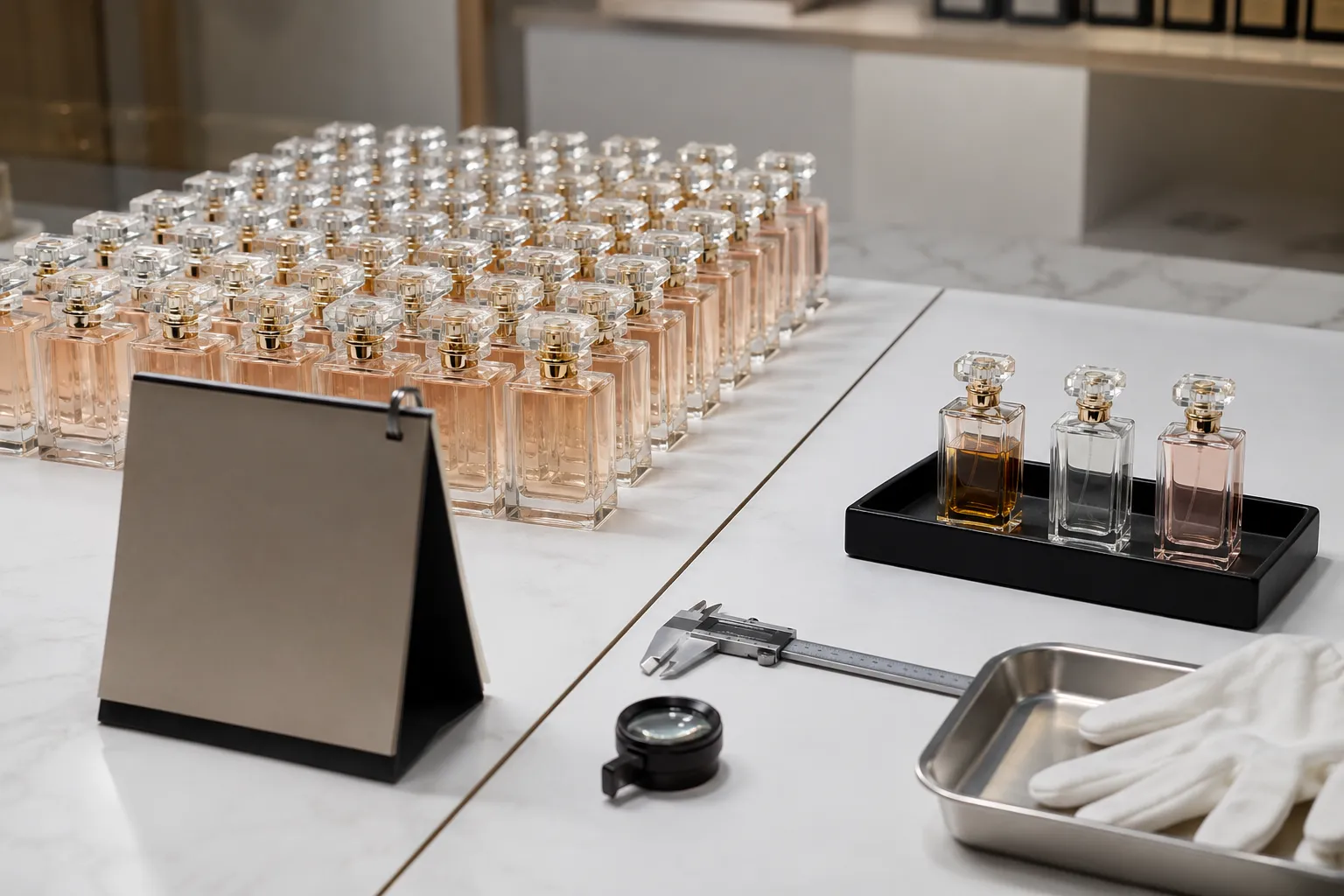
What must the AQL report show before perfume shipment acceptance?
Shipment photographs are useful evidence, but selected images cannot establish how defects are distributed across a lot or prove spray function, leakage, fill quantity and barcode readability. Before perfume shipment acceptance, the report should allow the buyer to reconstruct what was inspected and why the lot passed or failed.
- Purchase order, product, SKU, batch or lot identity and inspection date.
- Lot size, sample size, inspection level, AQL values and acceptance or rejection numbers.
- How and where samples were selected across cartons and positions.
- The approved references and defect catalogue used by the inspector.
- Defect counts by class, with clear descriptions and representative photographs.
- Results of agreed functional checks such as spray, leakage, fill and barcode review.
- Carton-count and packing-list alignment, plus any observed shipment-readiness issue.
- Final pass, fail or hold status, corrective action, reinspection result and authorized release.
What happens when the lot fails perfume shipment acceptance?
A failed sample does not prove that every unit is defective, but it removes the basis for normal shipment release. The lot should remain on hold until the defect pattern and corrective route are understood.
- Segregate the lot and prevent mixing with other finished goods.
- Investigate whether the cause comes from a component, equipment setup, artwork version, filling condition or packing method.
- Sort the full lot when the defect can be detected reliably, then repair, replace, repack or reproduce as technically appropriate.
- Record any buyer-approved concession in writing, including the affected quantity and reason.
- Repeat the agreed inspection after corrective work; do not release solely because rework was reported as complete.
Who should perform perfume pre-shipment inspection?
The right inspector depends on order value, first-order risk, buyer capability and the history of the product. The scope and authority matter more than the job title.
| Inspector | When it may fit | Control point |
| Factory quality team | The specification is clear and the product has a stable performance history. | Require a structured report, sample-selection record and evidence, not a general statement that the order was checked. |
| Buyer representative | The buyer has trained technical staff or a sourcing office near the factory. | The representative must follow the approved criteria and should not redefine defects during the visit. |
| Independent inspection provider | First orders, larger exposure, sensitive retail programs or higher market risk. | Write the inspection scope precisely; an inspector cannot create missing specifications or commercial remedies. |
A joint inspection can also be used when the buyer and factory need a shared review, provided the final release authority and treatment of observations are defined in advance.
How does Jasmine support perfume AQL inspection planning in Turkey?
At Jasmine Factory in Turkey, we treat inspection as one controlled gate inside a wider B2B manufacturing project. We connect the approved scent, packaging, artwork, SKU identity, production completion and export packing so the inspector has usable references when the finished lot is presented.
We do not present one generic AQL value as the answer for every perfume order, and sampling cannot remove every commercial risk. When your project requires a specific AQL plan, buyer representative or independent inspection provider, tell us before the quotation and production schedule are finalized. This allows timing, access, evidence, corrective-action responsibility and shipment release to be discussed early.
Our turnkey private label perfume workflow connects briefing, sampling, packaging approvals, production, quality gates and export handover. For deeper brand control, you can also review our private label perfume service.
Send us your product format, destination country, channel, SKU count, quantities, packaging references, unacceptable defects and preferred inspection route. We will review what must be locked before the finished lot is presented for release. Start your project with Jasmine
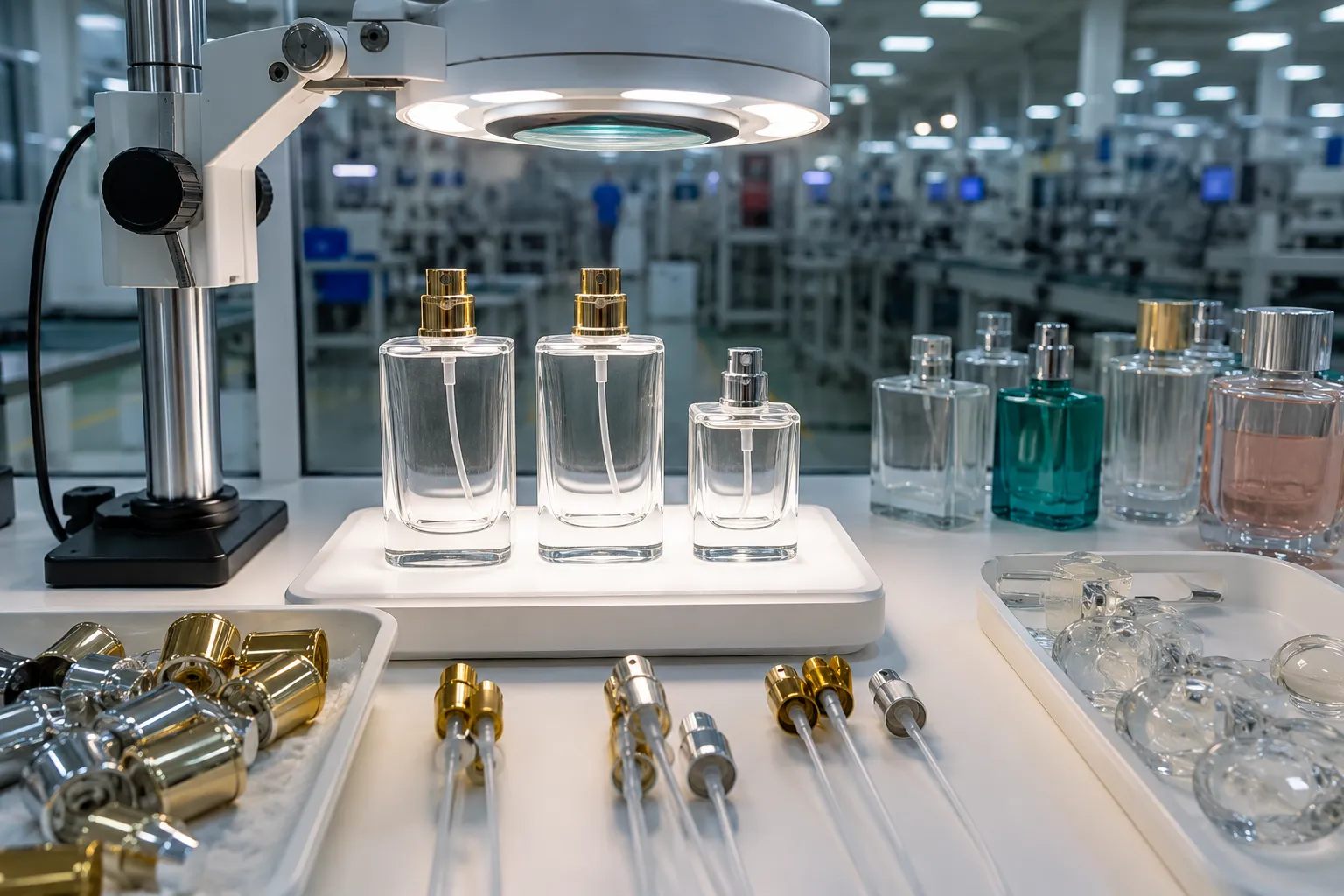
Perfume AQL inspection checklist for B2B buyers with Jasmine Factory
- Each lot and SKU boundary is defined before sampling.
- The approved scent, product specification, artwork and packing references are available.
- The inspection plan, level, AQL values and defect classes were agreed before production completion.
- Samples will be drawn across different cartons and positions.
- The perfume, bottle, atomizer, cap, label and carton will be evaluated as one sellable assembly.
- Functional checks and visible acceptance limits are written and measurable.
- Carton quantities, SKU identity and shipment documents will be reconciled.
- Failure, sorting, rework, concession and reinspection routes are documented.
- An authorized buyer representative will issue written perfume shipment acceptance.
FAQs about perfume AQL inspection
Does a perfume AQL inspection pass mean every bottle is defect-free?
No. AQL uses a representative sample and agreed statistical acceptance thresholds. A pass supports acceptance of the lot under that plan; it is not a guarantee that every unit is perfect.
Is there one AQL value for every perfume order?
No. The plan depends on the defect class, product, order history, channel risk and buyer requirements. The values should be selected with appropriate quality expertise and written into the inspection instruction.
Should every scent or SKU be inspected separately?
Not automatically, but each scent, size, artwork or market version must be represented by a defensible lot definition. Do not assume that one sampled SKU represents all variations in a mixed shipment.
Can factory photographs replace perfume order quality inspection?
No. Photographs support the evidence pack, but they do not show defect distribution across the lot or prove functional checks such as spray, leakage, fill and barcode readability.
When should AQL requirements be sent to Jasmine?
Send them before quotation approval and production scheduling. Early notice allows us to discuss lot presentation, timing, references, inspection access, reporting, and the corrective route before shipment becomes time-sensitive.
Can Jasmine support an independent perfume pre-shipment inspection?
We can discuss project readiness, timing, access, product references, packaging scope and the release workflow when an independent inspection is required. The inspection provider remains responsible for applying the agreed plan and reporting its findings.