Many fragrance projects fail before the first sample is even tested. Importers, distributors, retailers, and private label founders may know the scent they want, but they often describe it with vague words such as “luxury”, “fresh”, or “premium”. A perfumer cannot turn those words into a reliable product unless the brief explains the market, product format, scent direction, packaging, label needs, and commercial goal. This is why learning how to brief a perfumer is not a creative extra. It is the step that prevents random samples, weak revisions, and delayed launches.
In this guide, we explain how to brief a perfumer before sampling starts. You will learn what a fragrance brief should include, how to define your signature scent, how to use references without asking for a copy, how to give useful sample feedback, and how Jasmine Perfumes in Turkey can use your brief to guide private label, wholesale, and fragrance manufacturing discussions for perfumes, body mists, reed diffusers, room sprays, air fresheners, and car fresheners.
What does it mean to brief a perfumer?
To brief a perfumer means to translate a brand idea into clear development instructions. A perfumer brief should explain what the scent should express, who it is for, how it will be used, and which product format it must fit. It should not force every creative decision, but it should give enough direction for the perfumer, fragrance house, or manufacturer to create relevant samples.
For trade buyers, the brief must connect creativity with manufacturing reality. A scent for an EDP perfume may need a different direction from a body mist, reed diffuser, room spray, air freshener, or car freshener. The same amber-musk idea can behave differently depending on base, format, application, packaging, and usage environment.
At Jasmine Perfumes, we treat the brief as the first filter for the project. It helps us understand whether the buyer needs catalog-based selection, a private label route, a wholesale assortment, or a deeper custom fragrance development discussion.
Creative inputs vs factory inputs
A strong fragrance brief has two sides:
- Creative inputs describe the brand world: mood, customer, emotion, scent family, references, lifestyle, and story.
- Factory inputs describe what must be planned before sampling or production: product format, bottle, sprayer or cap, carton, label language, destination market, documents, and shipment-ready packing.
A brief that says “clean, elegant, unforgettable” is not enough. A stronger perfume manufacturer brief says: “We need a soft floral musk for premium retail in the GCC, suitable for a 100 ml boxed EDP, with Arabic/English label direction and a low-sweetness dry-down.” That gives the perfumer both olfactive and commercial guidance.
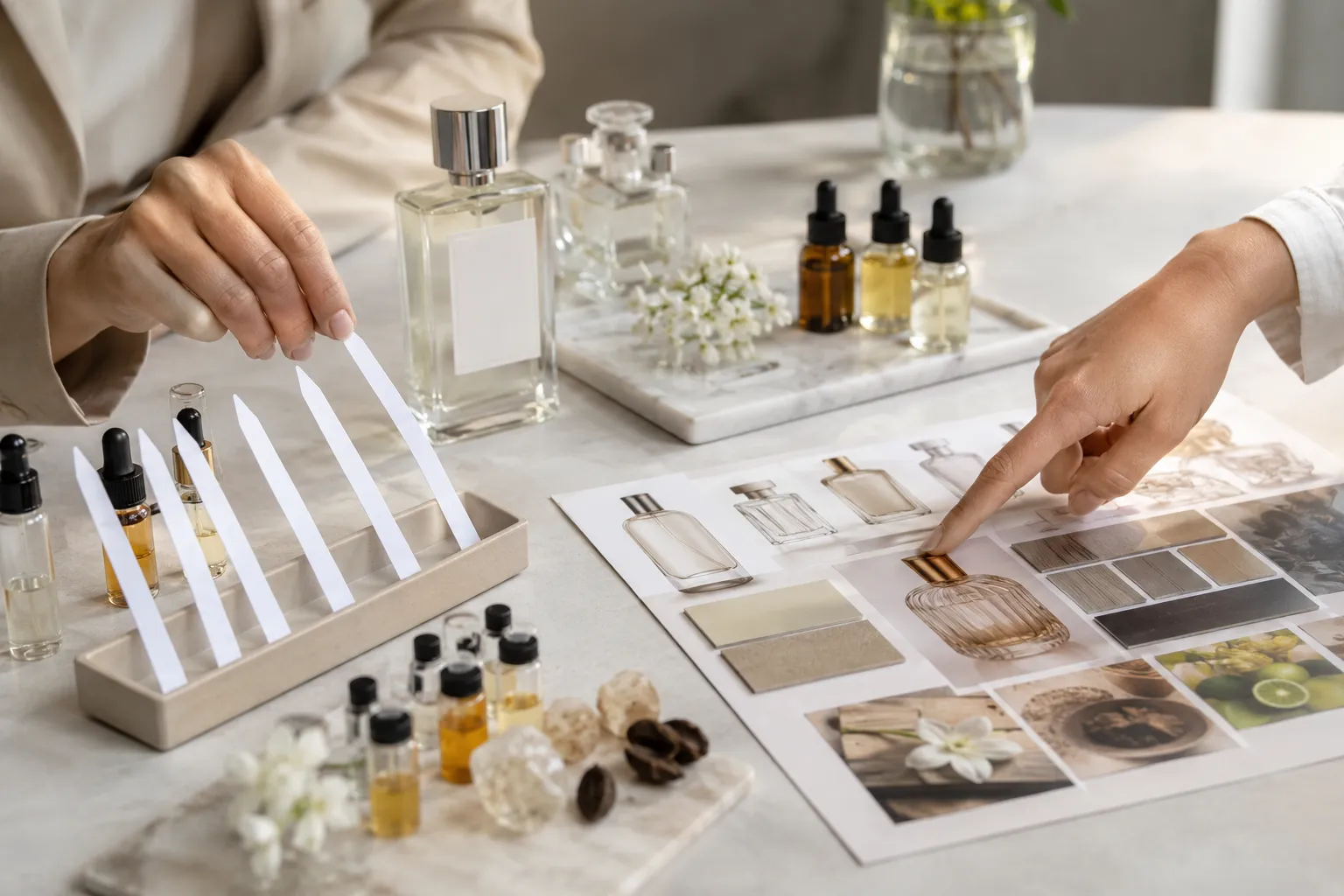
How to build a fragrance brief for your signature scent?
Your signature scent should express the brand, but it must also fit the customer and sales channel. A luxury boutique perfume, a youth body mist, a hotel room spray, and a car air freshener should not all follow the same brief. Start with the business context, then define the scent direction.
- Target country or region: for example GCC, MENA, Europe, Africa, or a specific retail market.
- Sales channel: wholesale, retail shops, e-commerce, hospitality, gifting, agency, or distribution.
- Product format: perfume, body mist, reed diffuser, room spray, air freshener, car freshener, or another scented product.
- Positioning: mass, masstige, premium, niche-inspired, luxury, hotel supply, or gift-ready.
- Customer profile: age, style, scent preference, buying occasion, and price expectation if known.
After that, choose scent families. Common directions include fresh, citrus, floral, fruity, woody, amber, oud, musk, gourmand, spicy, powdery, clean, aquatic, and herbal. You do not need perfect perfumery language. You need a clear connection between the customer, the product, and the intended feeling.
Examples of brand feelings and possible scent directions:
| Desired brand feeling | Possible scent families | Likely product fit |
| Clean and modern | Citrus, clean musk, aquatic, light florals | Body mist, room spray, hotel scent, daily perfume |
| Premium and warm | Amber, musk, vanilla, woods | EDP perfume, gift line, premium diffuser |
| Oriental and bold | Oud, spice, amber, rose, sandalwood | GCC retail perfume, oil-based direction, room scent |
| Soft and feminine | Floral, musk, powdery notes, light fruit | Personal fragrance, body mist, gift set |
| Fresh and practical | Citrus, herbal, green, clean musk | Air freshener, car freshener, room spray |
Jasmine product and brand references to include in the brief
A perfumer brief becomes more useful when the buyer defines the product format. Jasmine has product and brand references that can help trade buyers clarify whether they want personal fragrance, home fragrance, ambient scenting, or car fragrance directions. Use these references to define the product route, not to limit the creative work.
JASMINE can be a practical reference for perfume, reed diffuser, room spray, pocket perfume, car perfume, car air freshener, and body mist formats. LUVEAL, Cavayelo, MAROTA, PURE PASSION, JASMINE NICHE, and VILARA can help you think about reed diffusers, room sprays, air fresheners, body splash or body mist, and air/car freshener directions depending on the market and product brief.
This matters because a buyer may begin with one scent idea and then discover that the best commercial route is not only an EDP perfume. The same scent story may become a perfume line, a body mist range, a reed diffuser collection, a room spray, a car freshener, or a mixed private label assortment. If your brief includes possible formats from the start, Jasmine can guide the next discussion more accurately.
For faster shortlisting, review our catalogs and share the product formats you want to explore before requesting samples.
How to use fragrance references without asking for a copy?
References are useful when they explain direction. They become risky when they sound like a request to copy a famous perfume. A professional fragrance brief should explain what you like about the reference rather than asking for imitation.
- Say “we like the clean citrus opening”, not “copy this perfume”.
- Say “we want a warmer amber-musk base”, not “make it identical”.
- Say “less sweetness and more dry woody character”, not “same scent but cheaper”.
- Choose one main reference direction and one or two support references to avoid confusion.
This protects the brand and gives the perfumer a usable creative direction. It also helps Jasmine discuss a responsible private label route based on your market, positioning, and product category.
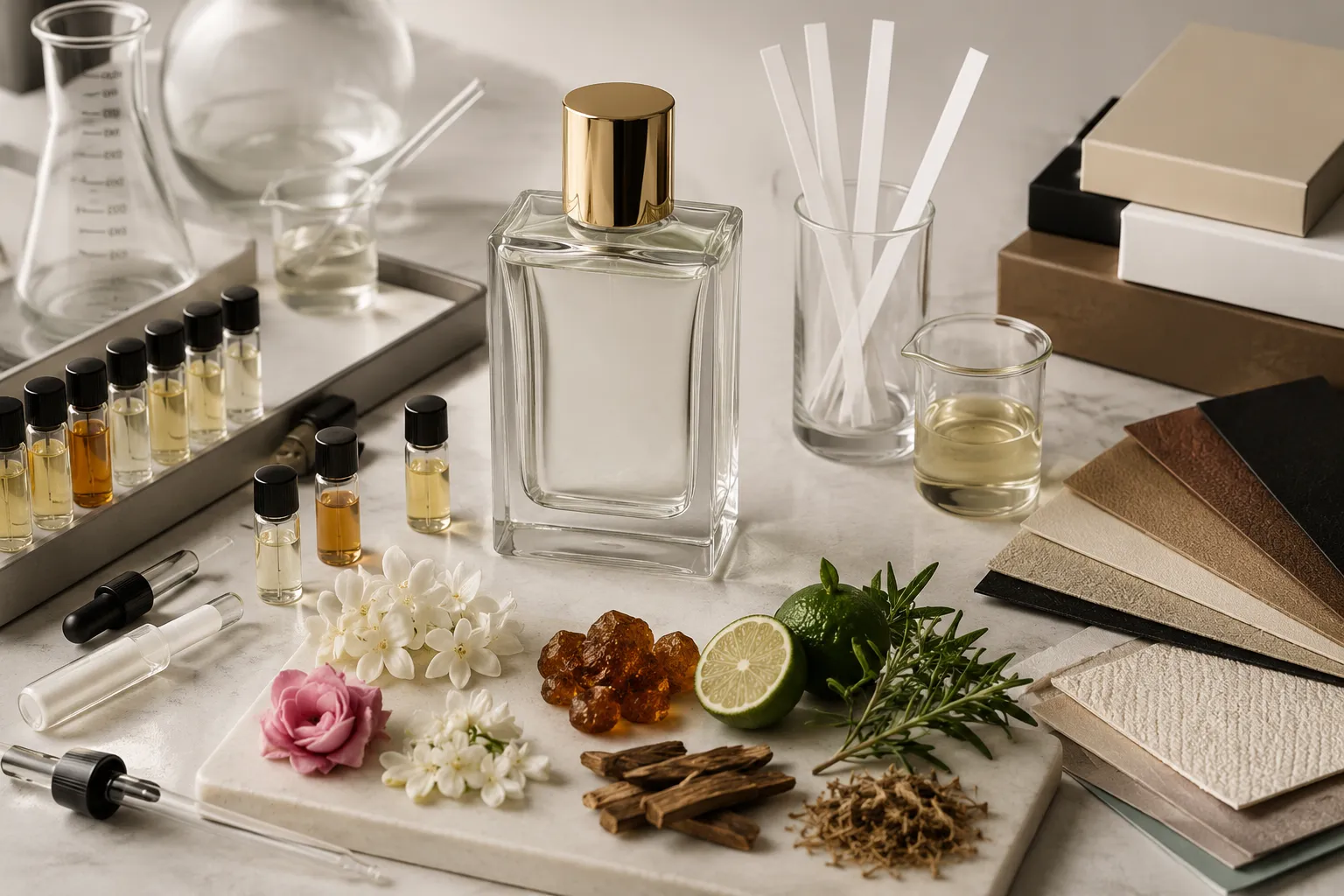
Weak brief vs strong perfumer brief
Buyers often ask how to brief perfumer teams in a way that produces better samples. The answer is to replace broad phrases with specific development inputs. The brief does not need to be long, but it must be clear.
| Brief element | Weak input | Stronger input | Why it helps |
| Scent direction | Luxury smell | Warm amber, soft musk, light vanilla, low sweetness | Gives clear olfactive direction |
| Target customer | Everyone | Women 25-40, premium retail, GCC market | Aligns scent with audience |
| Product type | Perfume | EDP spray, 100 ml bottle, retail box | Connects scent to format |
| Inspiration | Like a famous perfume | Fresh opening, woody dry-down, less sweetness | Clarifies without copying |
| Packaging | Premium box | Matte black carton, gold details, Arabic/English label | Supports brand execution |
| Feedback | Make it better | Reduce powder, increase amber dry-down, soften citrus opening | Makes revisions actionable |
A clear first message saves time because the factory can understand the project before recommending sample direction, packaging route, document discussion, and the most suitable private label or wholesale pathway.
To prepare the project for manufacturing, review our Private Label pathway and send the team a concise brief via WhatsApp.
Perfumer brief checklist for private label and wholesale buyers
Before contacting a perfumer, fragrance house, or manufacturer, prepare the details below. You can leave unknown fields blank, but the more complete your brief is, the easier it becomes to guide sampling and avoid unnecessary revisions.
Brand and market details
- Brand or project name.
- Target country or region.
- Target customer profile and positioning level.
- Competitor or shelf context without requesting a copy.
- Buyer type: distributor, retailer, importer, e-commerce seller, hotel buyer, gifting supplier, or private label founder.
- Sales channel: retail, wholesale, hospitality, e-commerce, agency, gifting, or distribution.
These details help our team understand how the scent should perform commercially. A fresh body mist for mass retail, a premium oud perfume for GCC boutiques, and a hotel room spray do not need the same scent structure or packaging logic.
Product format details
- Product type: perfume, body mist, reed diffuser, room spray, air freshener, car freshener, or another fragrance product.
- Size, bottle, sprayer, cap, box, label, and carton direction if known.
- Use context: personal fragrance, home fragrance, hotel scenting, mosque scenting, car use, retail shelf, gifting, or wholesale supply.
- Alcohol-free, oil-based, halal-related, or market-specific preferences where relevant and verifiable.
- Project route: catalog-based, private label, wholesale, OEM/ODM-style development, or not yet decided.
If the project may include both personal perfumes and ambient products, compare the relevant Jasmine manufacturing routes through our Perfume Manufacturing guide and the Air Freshener Manufacturer article.
Scent direction details
- Preferred scent families.
- Notes or accords to include.
- Notes or accords to avoid.
- Desired intensity, sweetness level, freshness, warmth, and dry-down.
- Opening impression, heart character, and base direction.
- Reference direction, if available, explained by feature rather than by copy request.
Example: “We want a fresh floral musk with a clean citrus opening, soft white flowers in the heart, and a smooth musk dry-down. It should not be too sweet or powdery.” This is stronger than “fresh and elegant” because it tells the perfumer what to keep, what to avoid, and how the scent should feel over time.
Packaging, labeling, and documents
- Bottle and box direction.
- Label language requirements.
- Barcode, batch code, carton needs, or distributor requirements if known.
- Destination country and expected import channel.
- SDS, IFRA-related documentation where relevant, invoice, packing list, certificates, or other requirements to verify.
- Any market-specific labeling, claim, or compliance requirement that must be checked before production.
Document needs vary by product type and destination market. Buyers should not assume that one document list applies to every country, claim, or product category. Share the destination market early so Jasmine can advise which documents and checks should be discussed before approval.
For trust signals and quality-system references, you can review our Certificates and confirm which documents are relevant to the selected product route.

How to give useful feedback on perfume samples?
Sampling feedback should be specific, comparative, and connected to the original brief. A first sample may not be final, but unclear feedback can slow the process. Avoid comments such as “I do not like it” or “make it better”. Those phrases do not tell the perfumer what should change.
Evaluate the sample in stages:
- Opening: first impression, freshness, brightness, sweetness, or sharpness.
- Heart: floral, fruity, spicy, woody, aromatic, powdery, or clean character.
- Dry-down: musk, amber, vanilla, woods, oud, softness, warmth, or residue impression.
- Brand fit: does it match the target customer, sales channel, and packaging direction?
- Format fit: does it work as a perfume, mist, diffuser, room spray, air freshener, or car product?
Useful feedback phrases include:
- Keep the warm amber base, but reduce the sweetness.
- Make the opening fresher and less powdery.
- The dry-down is close, but we need a cleaner musk.
- This feels too heavy for daily retail use.
- Option B is closer to our audience, but Option A has the better opening.
- The fragrance fits the packaging, but the opening should feel more premium.
Specific feedback helps the perfumer refine the direction instead of restarting the project unnecessarily. It also helps us document the approved sample reference for production matching and reorder consistency.
Top 5 mistakes when briefing a perfumer
Using only emotional words
Words such as luxury, fresh, elegant, clean, modern, and premium are useful, but they are not enough. Pair emotional words with scent families. Luxury may mean amber, oud, rose, musk, vanilla, leather, or woods. Fresh may mean citrus, aquatic, green, herbal, or clean musk.
Sending too many references
Too many references can give conflicting signals. Choose one main reference and one or two support references. Then explain what you like and dislike about each one.
Ignoring the product format
A fragrance for perfume may not behave the same way in a diffuser, room spray, air freshener, or car freshener. State the intended format in the first message. If you are considering multiple formats, list them clearly so Jasmine can guide the next step.
Changing the brief after samples
Small revisions are normal. A complete direction change after sampling is different. If the first brief asked for a soft clean musk and the buyer later wants a heavy oud-amber scent, that is no longer a small adjustment. Confirm the direction before sampling, then use feedback to refine it.
Leaving packaging and documents until the end
Packaging, labeling, and documents are part of production readiness. If they are discussed too late, the project may need avoidable rework. Share destination country, label language, packaging direction, and document expectations early.
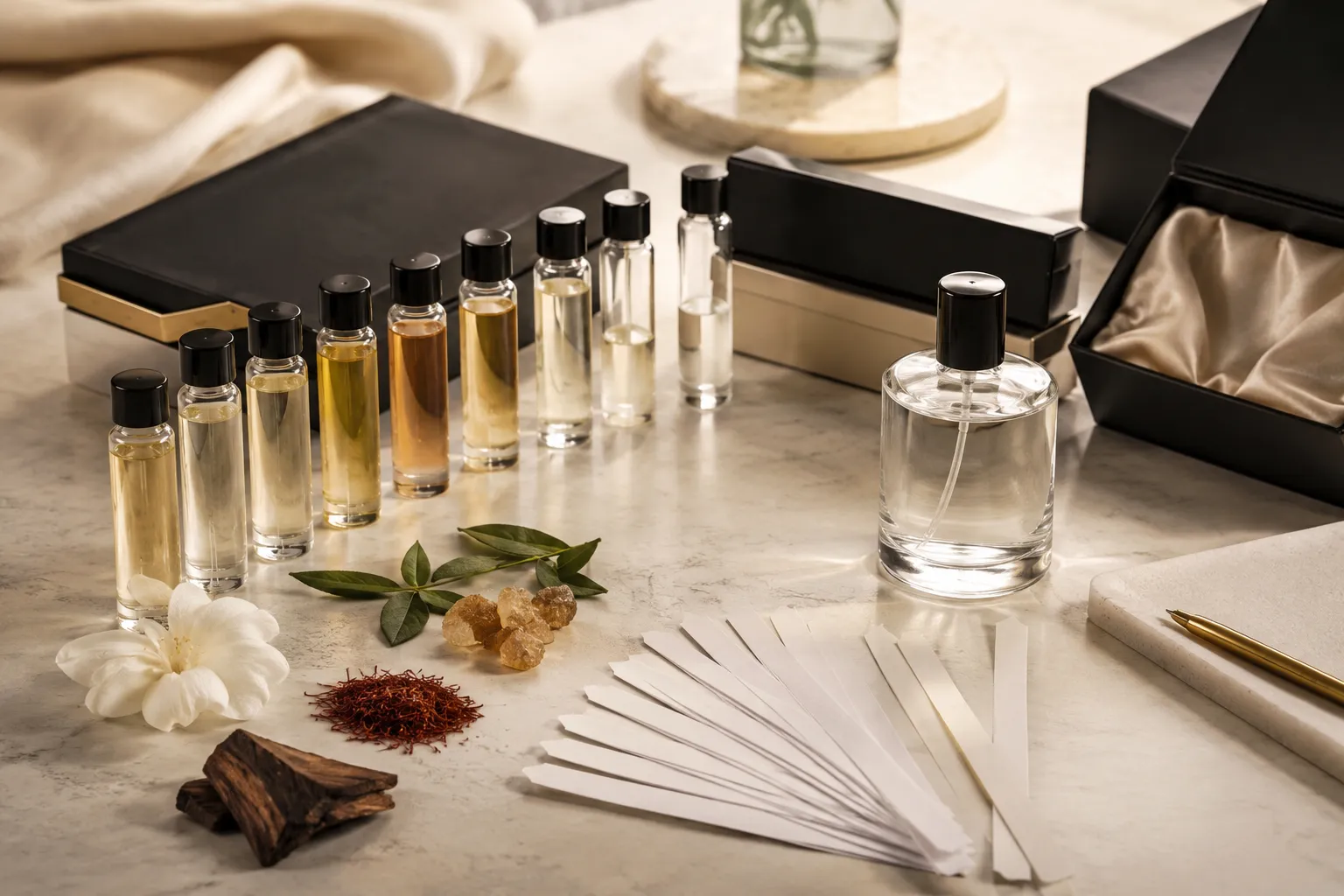
How Jasmine uses your brief to guide the next step
A clear brief helps Jasmine understand which pathway fits your project. Some trade buyers need catalog-based selection. Others need private label customization, wholesale supply, OEM/ODM-style development, or a broader manufacturing discussion that includes perfumes and air fresheners.
Your brief helps us review:
- Product format and application.
- Target country and sales channel.
- Buyer type and market positioning.
- Scent direction and must-avoid notes.
- Packaging, label language, and carton expectations.
- Document needs and export-readiness discussion.
- Sampling route and approval process.
Because Jasmine is based in Turkey with factory and office details listed in Istanbul, the brief should include the destination market from the beginning. This allows the conversation to cover product direction, sample expectations, packaging, documents, and export-oriented preparation before the buyer commits to a launch route.
Send us your product format, target country, scent direction, and packaging preferences through WhatsApp to start the right private label or wholesale discussion.
If you want to start from existing scent options before asking for custom work, use our Stock Fragrance Library approach to shortlist relevant directions before sampling.
FAQs about how to brief a perfumer
What should I include when I brief a perfumer?
Include your brand identity, target customer, product format, destination market, scent family, reference direction, packaging preference, and document needs. A clear fragrance brief helps the perfumer or manufacturer understand what to develop and how the scent will be used.
Do I need to know perfume notes before sending a brief?
No. You can describe the desired feeling, audience, product type, and examples of scents you like. Jasmine can help translate your direction into practical olfactive language during the sampling discussion.
Can I send reference perfumes in my brief?
Yes, but use references to explain direction, not to request a direct copy. Mention what you like about the reference, such as the fresh opening, amber base, soft musk, floral tone, oud character, or sweetness level.
Can a perfumer brief cover both perfumes and air fresheners?
Yes, if the keyword and article angle are about fragrance development or briefing. The brief should clearly separate the product formats because a fine perfume, body mist, reed diffuser, room spray, air freshener, and car freshener may need different testing, packaging, labeling, and performance expectations.
Can Jasmine help if my brief is not complete?
Yes. Buyers can start with the details they already have. For best results, send your product format, target market, scent direction, packaging preference, and any document requirements early so Jasmine can guide the next private label or wholesale step.