A healthcare facility can look clean, organized, and professional, yet still leave visitors with a poor first impression because the air feels stale, harsh, or inconsistent from one area to another. For hospitals, clinics, healthcare suppliers, and facility service providers, this is a sensitive issue: the space needs to feel fresh and comfortable without using fragrance in a way that disturbs patients, visitors, or staff.
This is where hospital scenting must be treated as a controlled B2B product decision, not a random air freshener purchase. At Jasmine, we support global buyers who want responsible fragrance and air-care product options for selected healthcare-adjacent areas, with careful attention to product format, scent intensity, packaging, documentation questions, and private label or wholesale routes.
This guide explains how to approach hospital scenting for global B2B markets without medical, healing, antibacterial, or guaranteed anxiety-reduction claims. You will learn where healthcare facility scenting can fit, which product formats may be discussed, which scent directions are safer to evaluate, what buyers should ask before ordering, and how Jasmine can support wholesale, private label, catalog-based supply, and distribution inquiries for healthcare facility air-care products.
What does hospital scenting mean in a healthcare facility?
Hospital scenting is the planned use of subtle fragrance products to support freshness, comfort, and professional atmosphere in selected healthcare facility areas. It is not a substitute for cleaning, ventilation, hygiene procedures, waste handling, or facility policy. In healthcare environments, scent must be low-intensity, carefully approved, and aligned with the people who use the space every day.
Healthcare facility scenting may be considered for reception zones, visitor waiting areas, administrative offices, corridors, restrooms, and other non-critical public-facing spaces. These are usually the areas where visitors form first impressions and where a gentle, clean atmosphere can support a more organized experience.
Hospital scenting should be handled more carefully than hotel, retail, or office scenting. Patients may be tired, worried, sensitive to smells, or affected by health conditions. Some facilities may also have scent-free or fragrance-restricted policies. For this reason, Jasmine positions hospital scenting products as freshness and atmosphere-support products for suitable areas, not as medical products or treatment solutions.
Why should global B2B buyers treat hospital scenting?
The target market for hospital scenting is global, but the decision is always local. A product that is acceptable for a healthcare supplier in one country may require different labeling, documentation, usage instructions, or facility approval in another destination market. Global importers, distributors, healthcare suppliers, facility service providers, and private label buyers should therefore start with a clear brief before requesting samples or larger orders.
The best hospital scenting strategy is built around caution. Buyers should define the facility type, intended area, product format, scent direction, packaging expectations, label language, and documentation needs before discussing wholesale or private label supply. This helps Jasmine guide the inquiry around the right product path rather than recommending a generic fragrance.
For example, a distributor supplying healthcare facilities may need a mild air freshener spray for restroom freshness, while a private label buyer may need a branded room spray for reception and administrative zones. These are different use cases, and they should not be treated as one product decision.
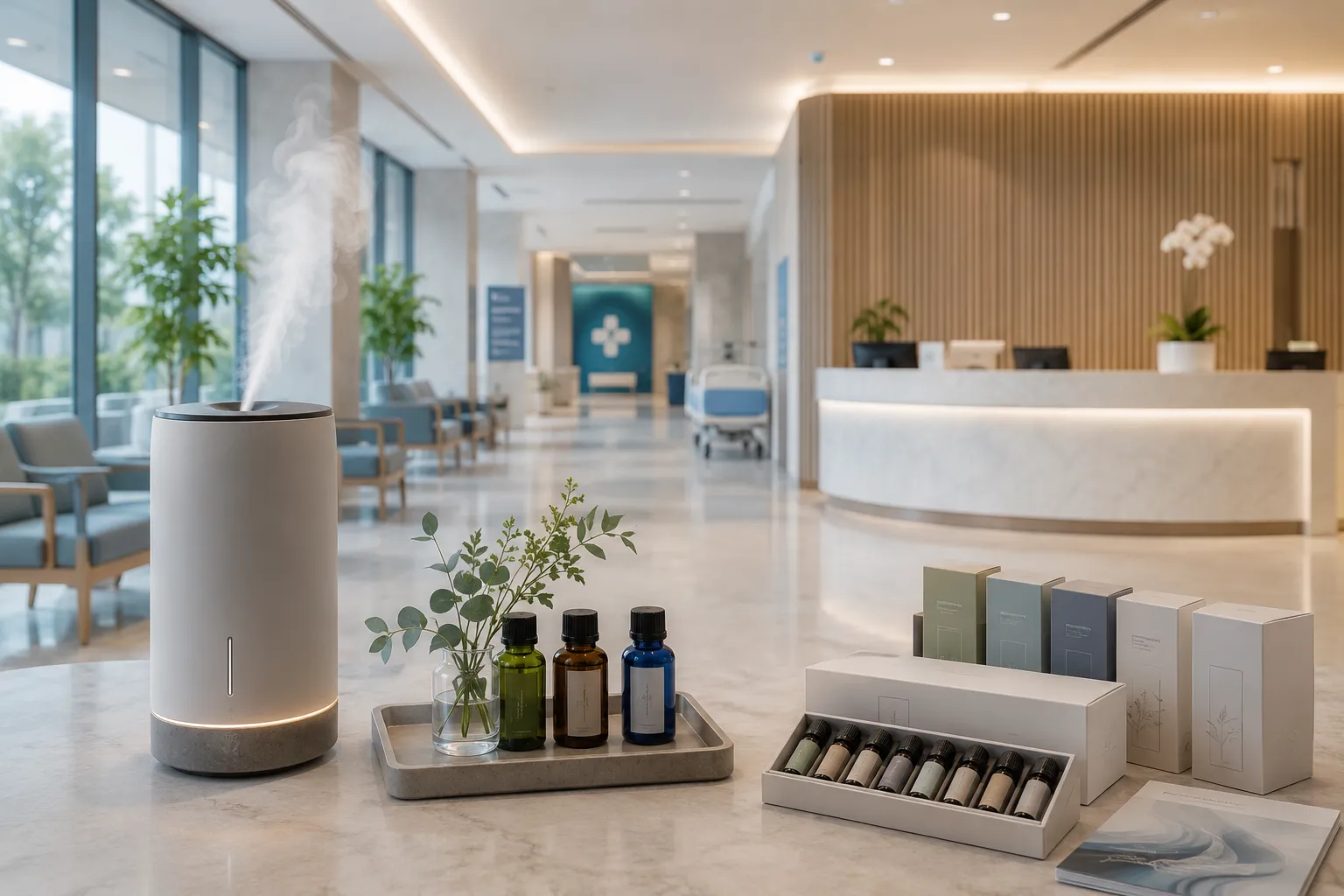
Hospital scenting vs general air freshening
General air freshening often focuses on quick scent coverage. Hospital scenting requires a more restrained, policy-aware, and professional approach. A strong fragrance that works in a hotel lobby or showroom may feel unsuitable in a healthcare waiting area.
A responsible healthcare air-care plan separates three ideas
- Odor source control through cleaning, ventilation, and waste procedures
- Freshness support through suitable products
- Subtle fragrance layering in approved areas only.
Fragrance should come after operational control, not before it.
For Jasmine clients, this distinction matters when comparing room sprays, reed diffusers, air freshener sprays, or private label product sets. The product format must match the facility zone, staff handling method, and destination-market requirements.
Where can hospital scenting fit in healthcare facilities?
Hospital scenting does not belong everywhere. Facility owners should first map the facility and identify suitable, non-critical areas. Avoid positioning fragrance products for intensive care units, operating rooms, high-risk treatment spaces, or fragrance-restricted zones unless the facility explicitly permits the use.
The safer starting point is public-facing and support areas where people arrive, wait, pass through, or interact with administration. Even there, scent should remain light, consistent, and easy to control.
Reception and entrance areas
Reception and entrance areas shape the first impression of a healthcare facility. A soft hospital fragrance in this zone may support a cleaner, calmer, and more organized arrival experience when the facility allows fragrance use. Suitable directions may include soft citrus, clean floral, powdery fresh, or watery fresh notes.
For global buyers, this area may support a branded reception room spray or a carefully selected diffuser format. The goal is not to create a luxury-hotel identity. The goal is a professional healthcare atmosphere that feels clean, light, and respectful.
Waiting rooms and visitor zones
Waiting rooms require extra sensitivity because patients and family members may stay for longer periods. A scent that seems gentle at first can become tiring over time. For this reason, samples should be tested before recurring use or larger distribution.
If a buyer is preparing hospital scenting products for waiting areas, the brief should define room size, ventilation, dwell time, staff handling, facility policy, and scent intensity expectations. Soft floral, gentle citrus, clean musk, or watery fresh directions may be considered, but final approval should come from the facility.
Administrative offices and corridors
Administrative offices and corridors are transitional spaces. These areas may support a consistent facility atmosphere when scenting is approved, but they should not compete with clinical zones or patient-facing care areas.
For staff areas, preference and exposure time matter. Employees spend longer hours in the space than visitors, so the scent should be subtle and easy to control. Clean, fresh, light woody, and neutral profiles are usually easier to evaluate than heavy perfume-like directions.
Restrooms and odor-prone support areas
Restrooms and support areas require a different mindset. Odor control in healthcare facilities should begin with cleaning, ventilation, waste handling, and facility procedures. A medical facility air freshener may support freshness after these controls, but it should not be used to hide poor hygiene or operational problems.
Buyers should ask about intended application areas, usage instructions, packaging durability, and product limitations before ordering. For clinic-specific reading, Jasmine buyers can review our related guide on air fresheners for clinics as a supporting reference, while keeping this article focused on broader hospital scenting decisions.
Also read: Best Air Fresheners for Clinics – Wholesale Guide.
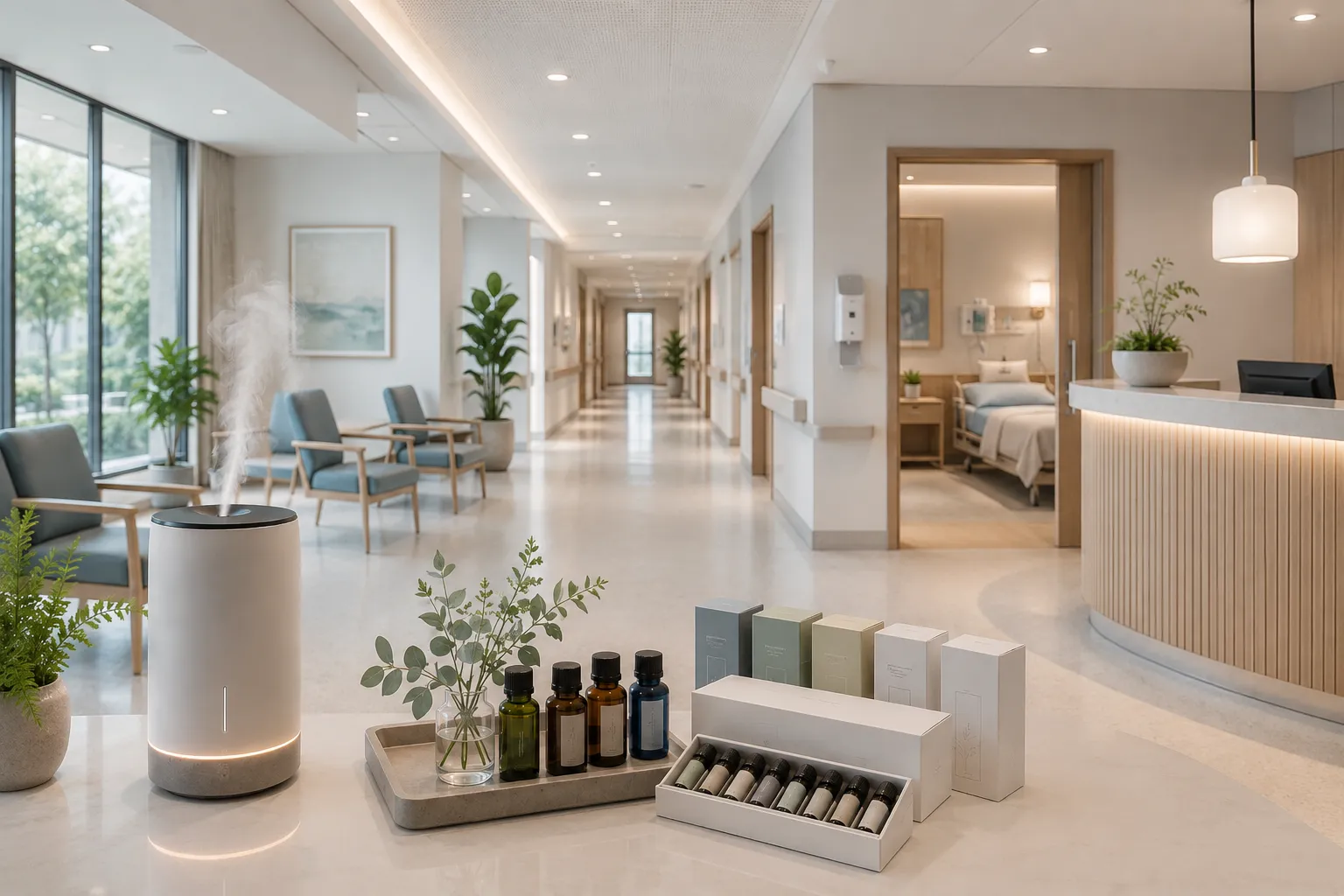
Hospital scenting product formats for B2B buyers
These formats should be selected according to facility size, policy, sensitivity, staff handling, packaging, and sales channel.
Jasmine-relevant options may include:
- Room sprays
- Reed diffusers
- Air freshener sprays
- Private label product sets for healthcare-adjacent use.
At Jasmine, we are positioned as a fragrance and air freshener manufacturer, not as a hospital HVAC scenting installation contractor unless a specific service is confirmed. The strongest B2B angle is product supply and manufacturing: wholesale products, catalog options, private label room sprays, reed diffusers, and air freshener formats.
For product-specific planning, review our resources for private label room spray manufacturing and private label reed diffuser manufacturing before finalizing your product mix.
Healthcare facility product format map
| Facility area | Buyer goal | Possible format | Scent direction | Buyer caution |
| Reception | Fresh first impression | Room spray or diffuser | Soft citrus, clean floral, powdery fresh | Avoid overpowering scent |
| Waiting room | Comfortable atmosphere | Controlled spray or diffuser | Light citrus, soft floral, gentle musk | Test intensity and dwell time |
| Administrative office | Pleasant workspace | Room spray | Clean, fresh, light woody | Consider staff exposure |
| Restroom support | Freshness after odor control | Air freshener spray | Fresh citrus, watery fresh, clean notes | Do not mask hygiene issues |
| Healthcare supplier resale | Branded product line | Room spray, diffuser, air freshener | Multiple low-intensity options | Confirm labels and documents |
Suitable scent directions for hospital scenting
Hospital fragrance selection should be subtle, practical, and broadly acceptable. Buyers should think in scent families first, then test samples according to the intended healthcare area and destination market. At Jasmine, we help B2B buyers compare catalog options and private label scent directions based on facility use, packaging route, and sales channel.
Scent directions to consider
- Clean citrus: supports a fresh impression without feeling heavy when used gently.
- Soft floral: can make reception or visitor zones feel more welcoming when the profile stays light.
- Powdery clean: may support a gentle hygiene association when it remains subtle and not cosmetic-heavy.
- Watery fresh: offers a neutral and low-decorative direction for public-facing areas.
- Mild herbal: may fit some markets, but should not smell medicinal or imply therapeutic effect.
Scent directions to avoid
Avoid heavy, polarizing, or hospitality-style fragrance profiles in patient-facing healthcare areas. Strong oud, smoky notes, intense gourmand scents, heavy sweetness, and room-filling perfume identities may work in other commercial categories, but they can feel unsuitable in sensitive healthcare environments.
Also avoid any product positioning that suggests treatment, healing, antibacterial performance, or guaranteed anxiety reduction unless those claims are legally supported for the exact product and market.
Odor control comes before hospital scenting
Odor control for hospitals must come before fragrance. Scenting should never replace cleaning, ventilation, laundry control, waste handling, or hygiene procedures. A responsible fragrance product can support the atmosphere only after the facility manages odor sources properly.
This point protects buyer trust. Many buyers request stronger scents because they want a fast odor solution. In healthcare environments, aggressive masking can make the experience worse, attract more attention to the problem, or conflict with facility policy.
A better process is: Identify the odor source, control it operationally, choose a subtle scent direction, test it in the intended area, review feedback, then approve use.
Trust signals healthcare buyers should check before ordering
Choosing a healthcare air freshener supplier requires more due diligence than choosing a general consumer fragrance product. Healthcare buyers need confidence in product consistency, packaging integrity, labeling, documentation, and export readiness.
Before placing larger orders, buyers should request product-specific information and confirm what is relevant for their destination market. Requirements may vary by country, product category, buyer type, and sales channel. If a hospital or healthcare group has internal policies, those policies should be reviewed before any product is selected.
- Product documentation available for the selected format.
- Labeling requirements for the destination market.
- Usage instructions for staff and facility teams.
- Packaging durability for shipping, storage, and handling.
- Batch consistency for repeat orders.
- Sample review before scaling to larger supply.
- Export-readiness discussion for the target country.
Our certificates and catalogs can support your review process, but you should still request product-specific documents before larger orders because certificate visibility and product requirements are not the same thing.
For broader manufacturing context, read our Air Freshener Manufacturer guide and use it as a starting point for product-format discussion.
Private label and wholesale hospital scenting products with Jasmine
Private label and wholesale hospital scenting products can serve buyers who want a healthcare-adjacent freshness and air-care product route. Jasmine can support discussions for room sprays, reed diffusers, air freshener sprays, catalog-based products, wholesale supply, and private label product development.
The key is responsible positioning. These products should be presented as freshness, atmosphere, and comfort-support products for suitable healthcare facility areas. They should not be presented as certified medical products, treatment products, hospital equipment, or infection-control solutions unless supported by product-specific evidence and local requirements.
Wholesale route
The wholesale route is suitable for buyers who need existing products or catalog-based supply. This may fit healthcare suppliers, hygiene distributors, facility service providers, or importers who want to test demand before developing a private label line. Wholesale buyers should review product formats, scent directions, packaging, labeling, and destination-market requirements before ordering.
Private label route
The private label path is suitable for importers and distributors who want to build a branded healthcare facility freshening line. This may include hospital room spray products, reed diffusers for reception areas, or a broader air freshener range for healthcare suppliers. A private label discussion should cover scent direction, product format, label design, packaging, sample review, production preparation, and export documentation.
For brand-owned development, start with our Private Label service and prepare a brief before requesting samples.
Agency or distribution route
The agency or distribution route is suitable for companies supplying hospitals, clinics, pharmacies, facility management companies, hygiene distributors, or healthcare service providers. These buyers may need a broader conversation about catalog options, product categories, market positioning, and recurring supply.
Send us your healthcare buyer brief with the facility type, destination country, desired product format, scent direction, packaging needs, and documentation expectations. This helps us guide you toward suitable wholesale, private label, or distribution-ready options.
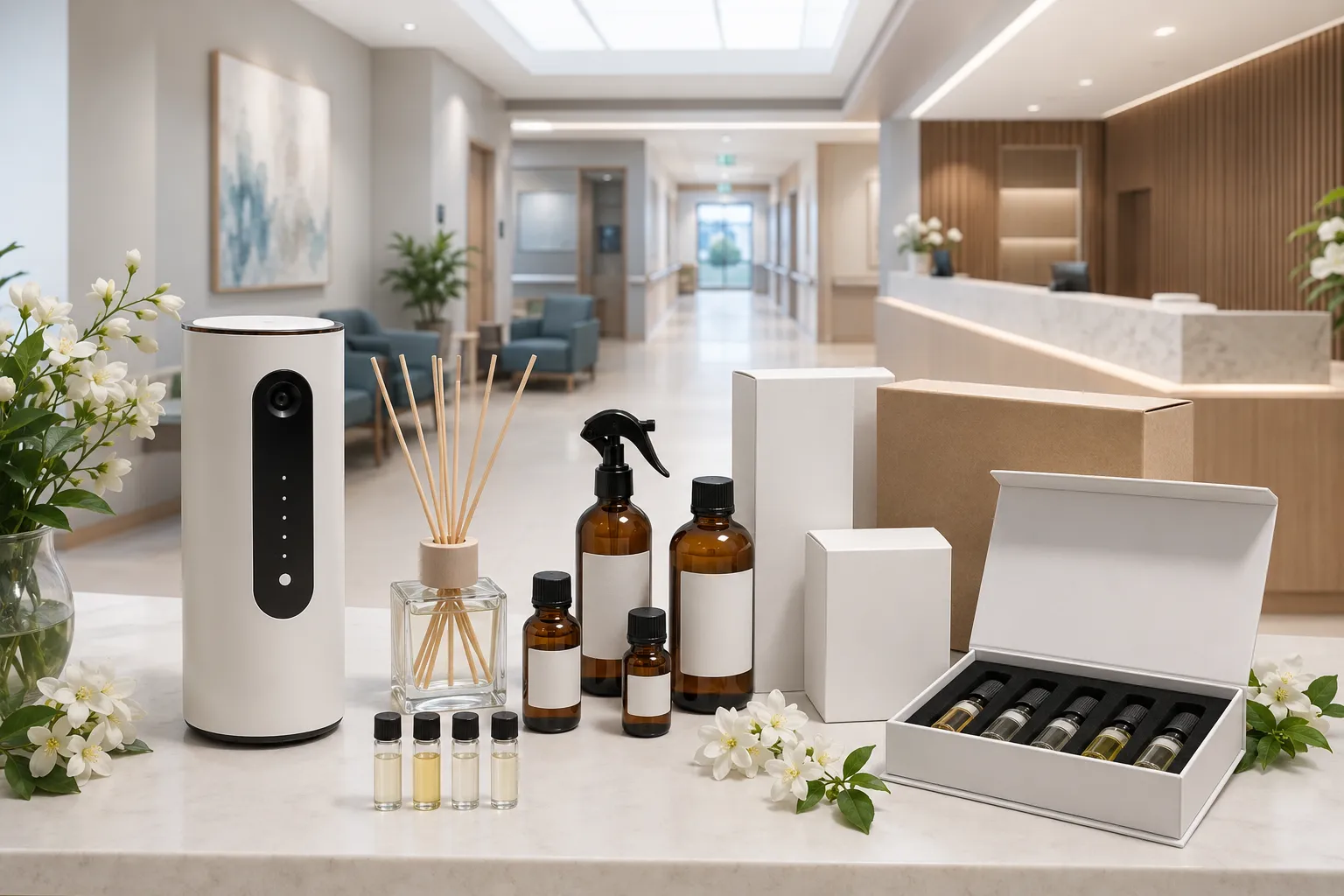
Hospital scenting buyer brief checklist for global markets
A clear hospital scenting checklist helps Jasmine respond faster and helps the buyer avoid vague recommendations. Before contacting a manufacturer, prepare the following details:
- Target market and destination country.
- Facility type: hospital, clinic group, dental center, nursing home, pharmacy chain, healthcare supplier, or facility service provider.
- Intended areas: reception, waiting rooms, visitor corridors, restrooms, administrative zones, or staff areas.
- Product format: room spray, reed diffuser, air freshener spray, sample kit, or private label set.
- Preferred scent direction: clean citrus, soft floral, powdery fresh, watery fresh, or mild herbal.
- Packaging requirements: bottle size, label language, carton, barcode, and private label design.
- Documentation required by the buyer, importer, or destination market.
- Expected order path: sample first, wholesale order, private label launch, distribution inquiry, or recurring supply.
- Sensitivity or policy restrictions from the healthcare facility.
- Shipping destination and timing expectations, without assuming fixed lead times before supplier review.
This brief also helps buyers compare suppliers professionally. Instead of asking only for price, compare product suitability, packaging practicality, documentation support, communication quality, and the sample review process.
Common mistakes in hospital scenting product selection
Hospital scenting can fail when buyers treat healthcare spaces like ordinary commercial spaces. The following mistakes should be avoided before samples or bulk orders are approved.
| Mistake | Better approach |
| Choosing a scent that is too strong | Start with subtle scent directions and test samples first |
| Using fragrance to hide cleaning or ventilation problems | Control the odor source before adding fragrance |
| Treating hospital scenting like hotel scent marketing | Keep healthcare scenting more restrained and policy-aware |
| Ignoring fragrance sensitivity or facility policy | Confirm internal restrictions before product selection |
| Ordering bulk products before sample testing | Review samples and facility feedback before scaling |
| Choosing impractical packaging | Consider staff handling, storage, labeling, and shipping needs |
How can a B2B hospital scenting inquiry work?
A B2B hospital scenting inquiry should move step by step. The final process depends on product type, customization level, packaging, order quantity, documentation needs, and destination market. Jasmine should not be expected to provide fixed timing or cost before understanding these variables.
Step 1: Share the facility and market brief
The buyer sends the facility type, target market, product format, scent direction, intended use area, packaging expectations, and whether the project is wholesale, private label, or distribution-focused.
Step 2: Review product and scent options
Jasmine can guide buyers through catalog products or private label possibilities. The buyer compares scent families, product formats, packaging routes, and sales channels before discussing larger orders.
Step 3: Confirm packaging and label requirements
Buyers review the bottle, cap, label, carton, barcode, language, brand presentation, and storage needs. For private label products, this also includes identity, artwork, and destination-market packaging expectations.
Step 4: Request samples or product direction
Sampling helps reduce risk before larger orders. For healthcare facility scenting, sample review is important because scent sensitivity and policy approval can affect acceptance.
Step 5: Prepare production and export discussion
After approval, the buyer and Jasmine can discuss order planning, packaging details, documentation, shipping destination, and reorder expectations according to the selected product and market route.
Why work with Jasmine for hospital scenting products from Turkey
Jasmine is a practical partner for B2B buyers who want healthcare facility air-care products from Turkey through wholesale, private label, catalog-based supply, or distribution discussions. The opportunity is strongest for buyers who need product guidance, packaging support, scent options, and a manufacturer-oriented conversation rather than a generic retail purchase.
At Jasmine, we can support discussions around room sprays, reed diffusers, air fresheners, fragrance directions, wholesale product options, private label routes, and distribution inquiries. Buyers can also review relevant Jasmine pages, request catalogs, and ask for product-specific information as part of their due diligence.
For importers and distributors, Turkey-based sourcing can be useful when the buyer needs export-minded communication, product variety, and branding flexibility. Final suitability still depends on product type, destination market, documentation needs, and commercial route.
Ask our team for catalog options, certificate guidance, and suitable product formats for your target market. A clear brief will help our team recommend the right path, whether you are exploring wholesale products, private label hospital scenting products, or distribution-ready healthcare facility freshening lines.
FAQs about hospital scenting
What Is hospital scenting?
Hospital scenting is the planned use of subtle fragrance products to support freshness, comfort, and atmosphere in selected healthcare facility areas. It should always respect facility policy, patient sensitivity, and hygiene requirements.
Can hospital scenting products be private label?
Yes. B2B buyers can discuss private label room sprays, reed diffusers, or air freshener products with Jasmine depending on the target market, packaging needs, scent direction, and documentation requirements.
Which areas are most suitable for hospital scenting?
Reception areas, waiting rooms, visitor zones, administrative offices, and some restrooms or support areas are usually more suitable than high-risk clinical spaces. Final approval should always come from the healthcare facility.
What should buyers send before requesting hospital scenting samples?
Buyers should send the facility type, target country, intended area, preferred product format, scent direction, packaging requirements, documentation needs, and whether they want wholesale or private label supply.