A hotel lobby can look luxurious, well-lit, and carefully designed, yet still feel forgettable if the scent is generic, too strong, or disconnected from the brand. For B2B importers, hospitality suppliers, hotel product buyers, and entrepreneurs, this creates a clear opportunity: hotels need refined lobby scent directions that match their positioning, guest profile, climate, and product plans.
This guide focuses on hotel lobby fragrance selection for luxury hotels. It explains what lobby fragrance means, why hotels use it, and how the Top 15 scent directions can help buyers compare clean, floral, woody, amber, oud, citrus, aquatic, and boutique scent profiles before sampling. For the wider strategy across rooms, spas, amenities, and full private label hotel fragrance systems, buyers can read our hotel scent marketing guide.
What is hotel lobby fragrance?
Hotel lobby fragrance is the controlled scent identity used in reception, entrance, and arrival areas to shape the guest’s first sensory impression. In luxury hospitality, the lobby is the first place where design, service, lighting, temperature, and scent work together to communicate the hotel’s positioning.
A luxury hotel lobby fragrance should feel subtle, refined, and consistent. It should not smell like a random spray or an overpowering perfume. The goal is to make the lobby feel polished, clean, calm, warm, or distinctive without making the fragrance the loudest element in the space.
For business owners, the opportunity is larger than scenting one reception area. A strong scent direction can become a private label hotel fragrance range for hotels, hospitality suppliers, distributors, boutique properties, and entrepreneurs.
Example: a distributor may build a 5-star hotel fragrance collection using one lobby fragrance oil, one room spray, one reed diffuser, and one mini spray. The commercial plan should be clear from the beginning: scent profile, packaging, label language, product format, target market, and reorder logic.
Ready to explore a hotel lobby fragrance idea under your own brand? Contact us and share your hotel style, target market, preferred product formats, and scent direction.
Why do luxury hotels use lobby fragrance?
Luxury hotels use lobby fragrance because scent adds an emotional layer to the guest journey. A well-designed fragrance can make the arrival feel cleaner, calmer, warmer, more premium, or more memorable, depending on the hotel concept.
Scent marketing in hotels is not about making every space smell strong. It is about matching scent to brand identity. A business hotel may prefer clean tea, citrus, musk, or cedar notes. A spa resort may choose lavender, green tea, marine notes, or soft white florals. A luxury boutique hotel may prefer amber, sandalwood, fig, oud, or leather accents.
Scent Marketing for Hotels works best when the fragrance supports the full environment. The scent should match the lobby materials, lighting, climate, guest profile, and service level. A profile that feels elegant in a marble city hotel may feel too formal for a coastal resort. A warm amber profile may suit a winter boutique hotel but feel heavy in a hot, high-traffic lobby.
The key rule is balance. A luxury hotel lobby fragrance should be noticeable enough to build recognition, but soft enough to respect guest comfort. Overpowering fragrance can make a reception area feel artificial and may reduce perceived quality.
Also read: Guide to Hotel Scent Marketing for Private Label Brands
Top 15 hotel lobby fragrance directions for luxury hotels
The Best hotel lobby fragrance is not the same for every property. The right choice depends on the hotel style, guest profile, climate, interior design, cultural expectations, and brand positioning. Use the following Top 15 list as a practical scent map, then connect the chosen direction to Jasmine portfolio references where they fit your market and product format.
For global businesses, the safest approach is to shortlist three to five scent families, test them in the right product format, and check how each direction feels in the target market. A fragrance that works in a luxury Gulf lobby may need a lighter structure for a European boutique hotel, while a citrus or ocean profile may need more warmth for colder markets.
Jasmine examples below are not a forced ranking; they are commercial scent references that help buyers move faster from idea to samples.
1. White tea
White tea is one of the safest directions for a 5-star hotel fragrance because it feels clean, calm, and polished. It suits business hotels, spa hotels, serviced residences, and premium hotel chains that want a fresh but understated atmosphere.
For private label business, white tea can work across diffuser oil, room spray, reed diffuser, and hotel-inspired retail products because it feels elegant without becoming too polarizing. It can be supported with soft musk, cedar, or light citrus depending on the target market.
Treat white tea as a custom clean-luxury brief, then compare it with portfolio directions that already communicate freshness and softness, such as Powder, Baby Powder, and Ice. This helps you decide whether the final hotel lobby fragrance should feel like fresh linen, spa cleanliness, or quiet premium comfort.
2. Bergamot and citrus
Bergamot and citrus notes create a fresh arrival effect. They work well in city hotels, resorts, and busy lobbies where the fragrance needs to feel bright and welcoming.
The luxury version should avoid sharp lemon or synthetic citrus profiles. Bergamot, mandarin, grapefruit, and soft orange notes feel more refined when balanced with musk, tea, light woods, or florals.
For citrus-led hotel projects, start from practical Jasmine references such as Lemon, Orange, Citrus, Lemon Freshness, and Lemon with Mint. These directions can support lobby room sprays, hotel-inspired reed diffusers, mini sprays, or wholesale air freshener lines for resorts and high-traffic receptions.
3. Jasmine and white florals
Jasmine and white florals can create a memorable luxury impression when used with control. They suit boutique hotels, wedding venues, premium suites, and hospitality brands that want a soft floral signature.
For a modern profile, jasmine can be blended with tea, musk, amber, or light woods. This prevents the scent from becoming too sweet or too heavy. For Jasmine, this direction also connects naturally to our brand identity and to floral private label hotel fragrance products.
Floral buyers can explore Jasmine, White Rose, Red Rose, Joury/Jury, and Flower-style directions, then adapt the final blend for a luxury hotel lobby fragrance, VIP room spray, or branded guest gift. This gives Jasmine a natural role in floral private label hotel fragrance development.
4. Lavender
Lavender is associated with calm, wellness, and relaxation. It is suitable for spa hotels, wellness resorts, treatment areas, and reception spaces that want a softer emotional tone.
A strong lavender scent can feel medicinal or too traditional. For a luxury hotel lobby fragrance, lavender works better when blended with green herbs, tea, soft woods, or white musk.
Lavender can be marketed through Lavender Flower and Lavender references across room spray or reed diffuser planning. For hotel lobbies, keep the formula softer and more elegant than a typical wellness spray so it supports comfort without feeling clinical.
5. Green tea
Green tea is a modern, clean, and serene fragrance direction. It works well for wellness hotels, spa resorts, minimalist interiors, and Asian-inspired luxury spaces.
Green tea pairs well with citrus, bamboo, white musk, fig, and soft florals. It can support diffuser oils, reed diffusers, room sprays, and gift products designed for calm premium environments.
When a buyer asks for a green tea mood, use Ocean, Ice, Lemon with Mint, and other clean-fresh Jasmine directions as comparison points before deciding whether to request a custom private label blend. This keeps the consultation grounded in sellable catalog logic while still allowing customization.
6. Cedarwood
Cedarwood adds structure and maturity to a hotel lobby fragrance oil. It is useful for business hotels, mountain resorts, executive residences, and premium interiors with wood, leather, stone, or darker materials.
Cedarwood is usually stronger as a supporting note than as the entire scent identity. It can make citrus feel more elegant, tea feel more grounded, and amber feel more refined. In small lobbies, heavy smoky woods should be controlled carefully.
Cedarwood is useful as a support note to make Citrus, Lemon, Royal Oud, Powder, or clean musk concepts feel more structured. It is especially valuable when the buyer wants a hotel lobby fragrance oil for business hotels, executive residences, or darker interior styles.
7. Sandalwood
Sandalwood is warm, creamy, and premium. It fits high-end hotels, boutique lobbies, VIP reception areas, and luxury hospitality products.
It blends well with amber, musk, violet, jasmine, and soft spices. For private label development, sandalwood is useful for reed diffusers, room sprays, and premium gift sets because it communicates comfort and sophistication.
Sandalwood can be positioned as a custom premium base with Jasmine, Royal Oud, Powder, White Rose, or warm perfume-style compositions. For B2B buyers, this is a strong route for reed diffusers, room sprays, and gift sets that need a luxury hotel feel.
8. Amber
Amber creates warmth, depth, and a polished luxury mood. It works well in hotels with rich interiors, evening lounges, boutique receptions, and high-end hospitality concepts.
The challenge is weight. Amber can become too heavy if used without freshness. For a balanced luxury hotel lobby fragrance, it should be supported with citrus, tea, cedar, musk, or soft florals.
Amber works as a warm base for Royal Oud, Jasmine, White Rose, Red Rose, Vanilla, and soft musk concepts. In private label hotel projects, it can make the scent feel richer without depending only on sweetness or heavy oud.
9. Musk
Musk is one of the most useful background notes in hotel fragrance design. It creates a clean, smooth, and soft impression without dominating the space.
A clean musk profile can support white tea, jasmine, citrus, aquatic notes, and woods. For hotel lobbies, soft musk is usually safer than dense or animalic profiles because it helps the scent feel stable and comfortable.
Musk is a bridge note for many Jasmine directions, especially Powder, Baby Powder, Ocean, Ice, Jasmine, Lemon, and soft florals. It is useful when the buyer wants the lobby to feel clean and comfortable rather than loud or perfume-heavy.
10. Oud
Oud is rich, prestigious, and memorable. It can be powerful for premium hotels, Middle Eastern hospitality concepts, luxury boutiques, and private label brands targeting markets where oud is culturally familiar.
The key is control. Oud should feel elegant, polished, and balanced, not heavy or smoky. It works well with amber, rose, warm spice, musk, or soft woods. For global buyers, oud can be used as a luxury accent rather than the whole scent body.
Royal Oud is a strong Jasmine portfolio direction for premium hotel concepts, especially for buyers targeting markets that appreciate oriental and regional luxury. Present oud as a refined accent for lobbies, reed diffusers, perfumes, and gift sets, not as an overpowering smoke note.
11. Neroli and Orange Blossom
Neroli and orange blossom create a refined floral-citrus profile. They fit Mediterranean hotels, resorts, boutique properties, and hospitality brands that want freshness with elegance.
This direction can feel clean and sunny without becoming too sweet. It is especially suitable for room sprays, mini guest gifts, and reed diffusers for hotel boutiques or retail corners.
To sell this citrus-floral family, connect it with Orange, Lemon, Citrus, Lemon Freshness, Red Rose, White Rose, and Jasmine-style directions. It can work well for Mediterranean hotels, resorts, boutique properties, and guest-gift SKUs.
12. Marine and Aquatic Notes
Marine and aquatic notes suit coastal resorts, spa hotels, summer hospitality concepts, and modern lobbies that want a fresh-air impression.
The risk is making the scent smell like detergent or bathroom cleaner. For a more premium 5-star hotel fragrance direction, aquatic notes should be blended with jasmine, musk, citrus, tea, or soft woods.
Ocean is a clear portfolio direction and can be compared with Ice, Lemon with Mint, Citrus, and Jasmine for a fresher marine profile. This is useful for coastal resorts, summer hotel collections, and clean reception-area products.
13. Fig
Fig is a modern niche direction for boutique hotels and lifestyle hospitality brands. It can feel green, creamy, Mediterranean, and distinctive.
Fig works well with cedar, musk, soft florals, coconut nuances, or green leaves. For private label brands, it offers differentiation because it is less common than standard citrus, vanilla, or lavender profiles.
Fig can be developed as a niche private label brief, while fruit-led references such as Mango, Peach, Blueberry, Cherry, Melon, and Strawberry can help buyers understand how commercial fruity directions behave before choosing a more boutique hotel profile.
14. Vanilla and Tonka
Vanilla and tonka can create a warm, cozy, and comfortable hotel atmosphere. They work best for winter hotels, boutique guest experiences, lounge areas, and hospitality products designed around softness.
The main risk is sweetness. A formal luxury hotel lobby fragrance should not smell like a bakery. Vanilla and tonka should be balanced with woods, amber, musk, or soft spice to keep the result elegant.
Sweet directions such as Vanilla/Tonka, Cherry, Melon, Strawberry, Gum, and Mango should be handled carefully in hotels. For a luxury lobby, balance them with musk, amber, woods, or powdery notes so the final fragrance feels premium rather than candy-like.
15. Leather, Tobacco, or Suede Accents
Leather, tobacco, and suede accents create a deep lounge-style atmosphere. They can fit cigar lounges, boutique hotels, VIP reception areas, luxury residences, and premium hospitality products.
These notes are best used as accents. If they dominate the whole scent, they may feel too strong for a lobby. Blending them with amber, cedar, musk, or soft spice creates a more polished result.
Treat leather, tobacco, and suede as custom VIP accents rather than ready-made mass directions. They can be paired with Royal Oud, amber, musk, cedar-style woods, or darker perfume inspirations for boutique hotel lounges, VIP receptions, and premium gift products.
Want to compare these directions for your market? Request our catalogs, then shortlist scent families that fit your hotel concept, buyer profile, and product format.
To make the consultation more useful, send us three preferred scent references from the list above and mention whether you want a ready catalog direction, a private label adaptation, or a more customized hotel lobby fragrance concept.
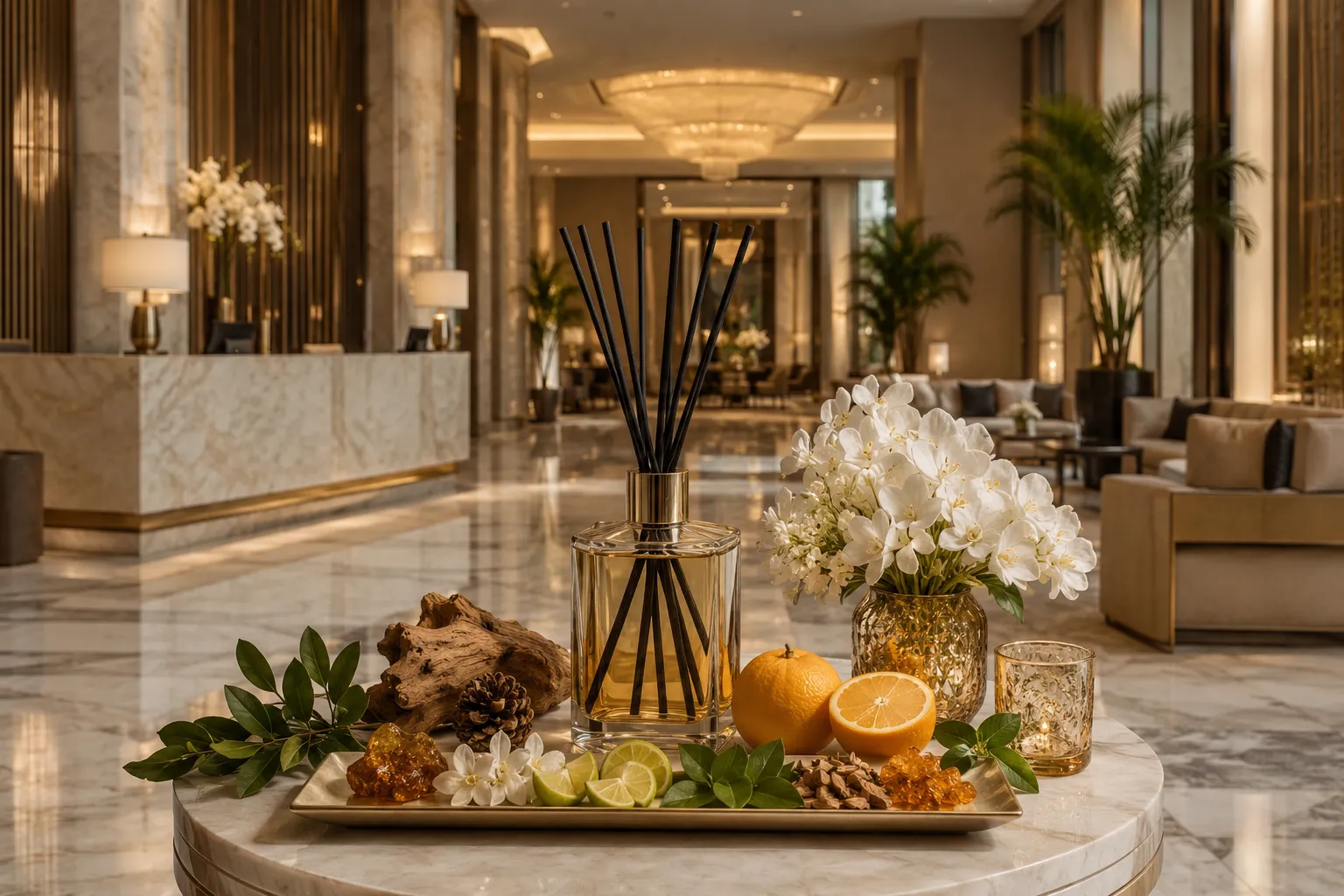
Hotel lobby fragrance oil, diffusers, and product formats
Hotel lobby fragrance oil is one part of the scenting system. It refers to the aromatic formula used in a diffuser product, scenting device, reed diffuser, or other fragrance format. The final commercial solution may include several products, depending on the buyer’s goal.
A Hotel lobby scent diffuser is the delivery method that spreads the fragrance in the space. Large lobbies may require a different scenting approach from small reception corners, suites, or boutique spaces. Small hotel diffusers may be useful for limited areas, while reed diffusers or room sprays can support suites, counters, VIP rooms, and retail displays.
For business and brand owners, the important question is not only “Which oil smells best?” The better questions are:
- What hotel area will use the fragrance?
- How strong should the scent feel in that area?
- Will the product be used by the hotel team, sold to guests, or distributed wholesale?
- Does the buyer need private label packaging?
- What label language and documentation does the destination market require?
- Will the scent become part of a wider hotel product line?
Our strongest relevance here is in private label fragrance products such as room sprays, reed diffusers, air fresheners, perfumes, and branded gift items. A hotel lobby fragrance idea can become the starting point for a complete product range.
| Format | Best Use | B2B Buyer Fit | Private Label Potential |
| Fragrance Oil | Diffuser-based scenting | Hotel suppliers / scent service companies | High |
| Reed Diffuser | Boutique lobbies, suites, reception corners | Hotels / distributors / gift suppliers | High |
| Room Spray | Guest rooms, housekeeping, VIP amenities | Hotels / retailers / entrepreneurs | High |
| Mini Spray | Guest gifts, retail shelf, VIP boxes | Entrepreneurs / hotel boutiques | High |
| Air Freshener | Public areas and practical freshness | Wholesalers / distributors | Medium to High |
| Gift Set | Retail boutique, loyalty gift, VIP welcome | Hospitality brands / entrepreneurs | Very High |
For format planning, review our private label reed diffuser guide and private label room spray guide before finalizing your SKU plan.
How does lobby fragrance fit scent marketing in hotels
Hotel lobby fragrance is the first scent anchor in the hotel experience. It shapes the arrival moment before the guest reaches the room, spa, elevator, restaurant, or retail corner. For this reason, the lobby scent should be selected carefully before it is adapted into other product formats.
The lobby scent can later guide softer room sprays, reed diffusers, VIP gifts, mini sprays, air fresheners, or hotel boutique products. However, this article focuses on the lobby direction itself: what the scent should communicate, how it should feel in the first impression, and which fragrance families may fit different luxury hotel styles.
For the complete guest-journey strategy across hotel spaces and private label product systems, buyers can read our hotel scent marketing guide. Buyers who are already comparing bulk products for reception areas can also review our wholesale hotel lobby air fresheners guide
Which hotel smells the best in the world?
There is no objective answer to the question: Which hotel smells the best in the world? Scent preference depends on culture, climate, guest profile, brand identity, interior design, and personal memory. A fragrance that feels luxurious in one market may feel too heavy, too sweet, or too light in another.
Famous luxury hotels often become memorable because their fragrance fits the full experience. The scent matches the architecture, service style, location, visual identity, and guest expectations. Copying a famous hotel scent is usually weaker than creating a signature scent that belongs to your own brand.
The better question is: What should my hotel lobby fragrance communicate?
- Clean and calm
- Premium and warm
- Fresh and international
- Regional and luxurious
- Spa-like and relaxing
- Boutique and distinctive
- Minimalist and modern
- Rich and memorable
A private label brand should not imitate a hotel blindly. It should translate the desired impression into a scent direction, then validate it through samples, packaging review, and buyer feedback.
How to use Jasmine brands and product directions intelligently
For a hotel-inspired fragrance project, Jasmine’s brand portfolio can help buyers compare ready scent directions, product formats, and packaging references before deciding whether to choose wholesale, private label, or a custom route.
Useful Jasmine references may include JASMINE for perfumes and reed diffusers, LUVEAL, Cavayelo, MAROTA, PURE PASSION, JASMINE NICHE, and VILARA. These brands can help buyers study different approaches to reed diffusers, room sprays, air fresheners, car fresheners, and perfume-inspired scent profiles.
For hotel lobby fragrance planning, buyers can start with practical Jasmine scent references such as Lavender Flower, Powder, Baby Powder, Lemon, Orange, Citrus, Lemon Freshness, Lemon with Mint, Ocean, Ice, Jasmine, White Rose, Red Rose, Joury/Jury, Flower, Royal Oud, Mango, Peach, Blueberry, Cherry, Melon, Strawberry, Gum, Crystal, Galaxy, and Istanbul. These examples should be used for discussion and sampling, not as a claim that every scent direction will fit every hotel or every target market.
The strongest private label projects usually combine one clear positioning idea with a focused product structure. A clean-luxury lobby concept may use Powder, Baby Powder, Ice, white tea, and musk references. A fresh international concept may start from Lemon, Orange, Citrus, Lemon Freshness, Lemon with Mint, or Ocean. A floral luxury concept can explore Jasmine, White Rose, Red Rose, Joury/Jury, or Flower. A regional luxury concept may use Royal Oud, amber, musk, and soft woods as the premium base.
From hotel lobby scent to private label hotel fragrance line
A hotel lobby fragrance can also become the starting point for a private label hotel fragrance line. The selected lobby direction may be adapted into related products such as reed diffusers, room sprays, mini sprays, air fresheners, car fresheners, or gift sets.
The important point is not to copy the lobby scent into every format without adjustment. A diffuser oil may need stronger diffusion. A room spray usually needs a softer and cleaner feel. A mini spray should feel convenient and gift-ready. A reed diffuser needs gradual scent release and packaging that fits suites, reception corners, or hotel boutiques.
Private label decisions may include fragrance direction, bottle, cap, label, box, carton, product name, language, and shipment preparation. For importers and entrepreneurs, these decisions affect buyer perception, retail readiness, repeat orders, and brand differentiation.
At Jasmine, our private label services can support buyers who want to turn a hotel lobby fragrance idea into a branded product range. For broader product-system planning beyond the lobby, read our hotel scent marketing guide or our private label home fragrance manufacturing guide.
Hotel lobby fragrance brief checklist for global buyers
Before contacting a manufacturer, prepare a structured brief. This helps the supplier understand your market, your product plan, and the type of support you need. It also reduces confusion around MOQ, packaging, documentation, and product format.
Because this article targets global buyers, the destination market should be part of the brief from the start. Label language, carton requirements, documentation, scent preferences, and climate can vary between regions.
What to prepare before contacting Jasmine
- Target market and destination country
- Buyer type: importer, distributor, hotel supplier, entrepreneur, retailer, or hotel group
- Hotel style: luxury, boutique, resort, wellness, business, or 5-star
- ·Preferred scent direction from the Top 15 list, plus any Jasmine portfolio references you want to compare
- Product formats: hotel lobby fragrance oil, reed diffuser, room spray, mini spray, air freshener, or gift set
- Packaging direction: minimalist, premium, local, boutique, luxury, or gift-ready
- Expected SKU count
- Reorder plan or launch plan
- Label language and branding assets
- Required documents or certificates for your destination market
- Preferred path: private label, wholesale, or agency/franchise inquiry
- Any market restrictions or importer requirements
MOQ should be discussed early, but it should not be guessed. It may depend on fragrance type, bottle choice, packaging, printing, component availability, SKU count, and production route. Instead of asking only “What is your MOQ?”, ask what affects MOQ for your specific hotel fragrance plan.
Useful questions to ask the manufacturer include:
- Which product format is best for my hotel fragrance concept?
- Can this scent direction work across diffuser, room spray, and reed diffuser formats?
- What packaging options fit a luxury hotel fragrance line?
- What label information should I prepare for my target country?
- What documents should I confirm before production?
- How should I approve samples before moving forward?
- What factors affect MOQ for my selected packaging and SKU count?
- What should I prepare for future reorders?
- Can I start with catalogs before developing a custom private label product?
To make your inquiry faster, contact us with your target market, scent direction, product format, and packaging idea.
Common mistakes when choosing a hotel Lobby fragrance
Choosing a hotel lobby fragrance may look simple, but B2B buyers often make avoidable mistakes. These mistakes can affect guest comfort, product perception, and private label launch quality.
- Choosing a fragrance that is too strong: Luxury scenting should feel subtle. A powerful fragrance may attract attention at first, but it can become uncomfortable in an enclosed lobby. The better decision is to choose a refined profile and test intensity carefully.
- Copying a famous hotel scent without brand fit: A famous hotel scent may not match your market, climate, interior, or target buyer. Instead of imitation, build a scent identity around your own brand position.
- Using sweet notes without balance: Vanilla, tonka, fruits, and sweet florals can feel warm and welcoming, but they may become childish or heavy if not balanced with woods, musk, tea, or amber.
- Treating diffuser oil as the whole strategy: Hotel lobby fragrance oil is only one part of the system. A full B2B plan may also include reed diffusers, room sprays, mini sprays, gift sets, and retail packaging.
- Ignoring airflow, lobby size, and guest sensitivity: A fragrance that works in a small boutique lobby may not work in a large entrance hall. Airflow, temperature, traffic, and guest sensitivity all affect the final experience.
- Launching private label products without sample approval: Sampling is essential. Buyers should approve scent, packaging, label, and presentation before moving toward production.
- Forgetting export documents and label requirements: A beautiful fragrance can still face delays if documentation, label language, or market requirements are not reviewed early. Discuss these points before production planning.
For deeper planning around scent choices, review our guide to Top 10 Scents for Air Freshener Sprays and use it as a starting point for comparing broad fragrance families.
How Jasmine can support hotel lobby fragrance projects
At Jasmine Factory in turkey, we support B2B buyers who want to turn a hotel lobby fragrance idea into a commercial product line. This can include private label manufacturing, wholesale product selection, catalog-based buying, and agency or franchise inquiries.
Relevant product directions may include perfumes, reed diffusers, room sprays, air fresheners, car fresheners, mini sprays, and branded gift products. This gives importers, distributors, entrepreneurs, and hospitality suppliers several ways to build a hotel-inspired fragrance offer.
You can start with catalogs to explore existing scent and product options. Then, depending on the business model, the buyer may choose wholesale products, private label customization, or a more developed brand direction. For a private label hotel fragrance project, the main steps usually include scent direction, sample discussion, packaging direction, label planning, production approval, and shipment preparation.
We are positioned as a practical manufacturing partner, not as a claim-based shortcut. The strongest B2B path is to start with a clear brief, compare scent directions, confirm packaging expectations, and discuss documentation for the destination market.
Contact Jasmine via WhatsApp to share your hotel fragrance concept, request catalogs, and discuss whether private label, wholesale, or agency options fit your business plan.
Build a lobby scent guests remember
A successful hotel lobby fragrance should be subtle, brand-fit, and commercially planned. The buyer should not only ask which scent smells best, but which scent can become a repeatable product story across room spray, reed diffuser, mini spray, air freshener, gift set, or hotel retail item. Jasmine’s portfolio gives buyers many starting points, from clean Powder and Baby Powder to bright Lemon, Orange, and Citrus; from Ocean and Ice freshness to Jasmine, White Rose, Red Rose, Lavender, Royal Oud, Mango, Peach, Cherry, and other marketable directions.
The Top 15 list in this guide should help you define your direction, but it should not replace sampling. B2B buyers should test scent profiles, review packaging, confirm documentation needs, and think beyond the lobby. A luxury hotel lobby fragrance can become a private label line that includes diffuser oil, reed diffusers, room sprays, mini sprays, air fresheners, car fresheners, and gift sets.
If you want to create a 5-star hotel fragrance concept for your market, contact Jasmine to discuss your hotel lobby fragrance brief, catalogs, packaging options, and private label route.
FAQs about hotel lobby fragrance
What is the best hotel lobby fragrance for luxury hotels?
There is no single best hotel lobby fragrance for every luxury hotel. Strong options often include white tea, bergamot, jasmine, sandalwood, amber, musk, and oud, depending on the hotel’s brand identity, guest profile, climate, and market.
Can Jasmine create a private label hotel lobby fragrance?
Yes. B2B buyers can discuss private label fragrance products such as reed diffusers, room sprays, mini sprays, air fresheners, car fresheners, perfumes, and gift products with Jasmine. The process should start with a scent brief, product format, packaging direction, and target market.
What is the difference between hotel lobby fragrance oil and a Hotel lobby scent diffuser?
Hotel lobby fragrance oil is the aromatic formula used inside a scenting product or device. A Hotel lobby scent diffuser is the delivery method that spreads the scent in the space. The oil, device, room size, airflow, and intensity settings all affect the final result.
Are small hotel diffusers suitable for luxury lobbies?
Small hotel diffusers can work for reception corners, boutique lobbies, suites, spa desks, and retail displays. Larger or high-traffic lobbies may need a different scenting setup, while reed diffusers and room sprays can support smaller touchpoints.
Do B2B buyers need MOQ details before starting a hotel fragrance project?
Yes, MOQ should be discussed early because it may depend on fragrance, bottle, packaging, printing, component availability, and SKU count. Buyers should prepare their target market, product formats, and launch plan before requesting final production guidance.
How does Scent Marketing for Hotel Lobbies support private label growth?
Scent Marketing for Hotel Lobbies gives buyers a clear scent story that can be converted into products. A lobby scent can become a room spray, reed diffuser, mini spray, air freshener, car freshener, or gift set for hotels, retail shelves, hospitality suppliers, and distributors.