Owning a private label perfume line is the fastest way to move from “price competition” to “brand loyalty.” If you want to launch a store-brand fragrance that scales, you need more than a scent—you need a manufacturing partner that guarantees compliance and export-ready quality.
In this guide, we cut through the noise to show you how to navigate the private label perfume process. From scent sampling to custom packaging and global export documentation, this is your practical roadmap to turning a fragrance concept into a high-margin business asset with Jasmine Factory.
What is private label perfume and who is it for?
Private label perfume is a business model where a manufacturer produces the fragrance, and you sell it under your own brand with your positioning, packaging direction, and market strategy. In other words: you’re not just reselling a generic item; you’re building an asset that can grow into a repeatable line.
In Jasmine’s own private label approach, the goal is to translate your brand identity into a luxury fragrance line, so the finished product looks, feels, and performs like your brand in the market.
Who benefits most from private-label perfumes?
Here are three common B2B profiles that typically win with private label:
- Importers & distributors: You want stable supply, consistent quality, and a product that helps you negotiate better shelf placement and margins versus “me-too” brands.
- Retail chains & store owners: You want a signature product line that customers can’t price-compare easily—and that keeps them coming back to your store.
- New brand founders (online or offline): You want a clear path from concept to market without building a factory, while still keeping control over your brand story and differentiation.
For example, if you are a retailer launching a simple 3-SKU line—Fresh / Amber / Oud-inspired—under one brand story, then expand based on what sells fastest.
Want to move from idea to sampling faster? Send your concept and target market on WhatsApp via Jasmine’s Contact page. And if you’re already comparing partners, you can also review Jasmine’s Private Label service overview to understand what the factory can handle end-to-end.
Also read: White Label vs. Private Label Perfume: Key Differences
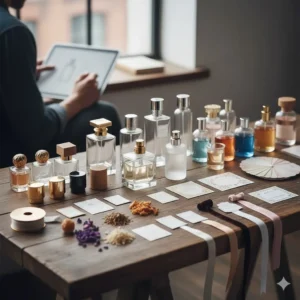
Private label vs white label vs OEM/contract manufacturing
These terms get mixed up constantly, and confusion here leads to expensive mistakes, leading to a wrong model, wrong timelines, or wrong expectations.
- White label is typically ready-made and sold by multiple sellers with different branding.
- Private label is developed for your brand direction (scent + packaging direction), with stronger differentiation.
- OEM/contract manufacturing is often used as an umbrella term for producing to a buyer’s requirements; it may include private label-style customization depending on scope.
Also read: OEM Perfume Manufacturer: Your Guide to OEM Perfume
Private Label vs White Label vs OEM/Contract: Which Fits Your Business?
| Model | Best for | Customization | Differentiation | Time-to-market | Typical documentation | Risk level |
| White Label | Testing demand fast; quick assortment expansion | Low–Medium (often packaging-led) | Low (others may sell similar products) | Fast | Basic export/packing docs + what your market requires | Medium (competition + price pressure) |
| Private Label | Building a brand asset; exclusivity; better loyalty | Medium–High (scent direction + packaging direction) | High (brand-specific identity) | Medium (sampling + approvals add time) | Export docs + product/quality documents your market requests | Lower (if process & QC are strong) |
| OEM/Contract | Buyers with defined specs and operational maturity | Medium–High (depends on contract scope) | Medium–High | Medium | Similar to private label, varies by market | Medium (depends on spec clarity + controls) |
If you want a deeper breakdown focused specifically on private label vs white label, we publish a dedicated comparison guide that you can use it as a quick decision shortcut.
What should full-service perfume manufacturing include?
When buyers say full-service perfume manufacturing, they usually mean: I want one partner who can take this from concept → shelf-ready product → shipment, without me chasing five vendors.
A strong private label perfume manufacturer should be able to support most or all of these workstreams:
Core capabilities to expect in a full-service setup
- Scent direction support (briefing + options + refinement)
- Packaging pathway (bottle, cap, label, box direction)
- Filling + production execution
- Quality checkpoints (batch consistency mindset)
- Export readiness support (packing standards + documentation coordination)
At Jasmine, we frame perfume manufacturing as a journey that goes from formula to bottle, including packaging and the requirements needed for safe market entry—exactly the kind of end-to-end clarity B2B you and all buyers need.
Also read: Private Label Manufacturing Agreement for Perfume Brands
What you handle vs what the factory handles
full-service perfume manufacturing Between You and the Factory
To reduce delays, align roles early:
You typically handle:
- Target market and channel (retail, ecom, distribution)
- Positioning and price point direction
- Brand assets (logo files, label language needs, barcode plan)
- Final approvals at key gates (scent + packaging + pre-production)
The manufacturer typically handles:
- Translating your brief into feasible options
- Sampling workflow and revisions
- Production planning and execution
- Packaging sourcing/assembly guidance (within offered options)
- Packing + shipment coordination support (depending on scope)
If you want a clearer what’s included scope for your project, review our Private Label service page and then message your requirements, so our team can recommend the fastest path.
Also read: Relabel Perfume Service for B2B Importers: Rebranding & Packaging
Custom perfume manufacturing process
A predictable process is what turns a “maybe” into a purchase order.
Here’s a procurement-friendly view of custom perfume manufacturing with approval gates that reduce risk.
Step 1: Brand brief
Your brief should include:
- Target customer and sales channel
- Scent direction (fresh, floral, woody, oriental, gourmand, etc.)
- Competitive positioning (mass, premium, niche-inspired)
- Target market requirements (label language, registration expectations)
Step 2: Sampling & iterations
Sampling is where smart buyers slow down just enough to avoid costly rework later:
- Review scent direction options
- Collect structured feedback (what to intensify, reduce, or shift)
- Lock the scent direction before printing packaging at scale
Jasmine’s private label manufacturing content emphasizes that private label is about crafting something aligned to your brand story—rather than buying an off-the-shelf scent.
Also read: Private-Label Perfume Manufacturing in Turkey for Brand Customization
Step 3: Packaging selection
Packaging choices should match:
- Your price point and channel (retail shelf vs wholesale cartons)
- Your brand identity (minimal, luxury, bold, heritage, modern)
- Shipping durability (to reduce breakage and returns)
Step 4: Production + batch QC mindset
A serious manufacturer plans for:
- Repeatability (your best-seller should smell and look the same batch to batch)
- Packaging integrity checks (leaks, closure fit, print alignment)
- Pre-shipment inspection mindset (what gets checked before cartons close)
Step 5: Packing + shipping + export docs coordination
Export success is less about “finding a freight quote” and more about having the right paperwork and packing standards lined up before goods move.
Jasmine’s contact-to-shipment narrative is built around supporting buyers from first message through container loading—useful framing for importers managing timelines and seasonality.
Also read: A Trader’s Journey with a Turkish Perfume Manufacturer

How to choose the right private label perfume manufacturer?
Choosing the right partner is less about a pretty website and more about systems: quality, communication, packaging capability, and export readiness.
If you’re shortlisting a label fragrance manufacturer, use this buyer-side checklist to compare factories consistently.
-
Quality & consistency
- Evidence of a quality system and standards mindset
- Clear batch consistency approach (repeatability)
- Defined QC checkpoints (before filling, after filling, before packing)
Jasmine publicly highlights certificates on its Certificates page (including ISO 9001 and ISO GMP visuals). For many buyers, this is a useful first trust filter—then you verify which documents apply to your market.
-
Packaging capability
- Multiple packaging routes (bottle/cap/box/label options)
- Print quality and finishing options that match your positioning
- Durability focus for export shipments (to reduce damage claims)
-
Compliance & documentation readiness
- Ability to support SDS/MSDS-style documentation requests (when required)
- Ingredient/allergen declarations if your market demands them
- Label guidance aligned to your target market language/format expectations
-
Export experience
- Familiarity with export packing standards and shipment coordination
- Comfort working with importers/distributors (not only local retail)
- Willingness to align timelines to peak season planning
Communication & project control
- One clear point of contact
- Defined sampling feedback loop
- Written approvals at key gates (scent, packaging, pre-production)
If you’re building a shortlist, request Jasmine’s certificates and a clear manufacturing roadmap so your team can evaluate fit quickly.
Also read: Private Label vs White Label Perfume: Retailer & Distributor’s Roadmap
Product and line strategy for private label perfumes
Most buyers don’t need 20 SKUs to start. They need a lineup that sells, is easy to explain, and is scalable.
A simple starter range for many B2B launches
A practical “starter architecture” is:
- SKU 1: Fresh / daily wear (broad appeal, repeat purchases)
- SKU 2: Signature / brand anchor (the one customers remember)
- SKU 3: Premium / seasonal (higher perceived value, gifting, limited drops)
This is especially relevant if you’re acting as a private label fragrance supplier to retailers: you want a range that covers mainstream demand while still offering a clear hero product.
Concentration choices
Instead of overloading your launch with technical complexity, decide based on:
- Customer expectation in your market (longevity vs lightness)
- Climate and usage occasions (daytime vs evening)
- Channel realities (mass retail vs specialty vs gifting)
Market positioning notes
- GCC/MENA: often strong demand for deeper profiles (amber, woods, oriental, oud-inspired directions), plus premium packaging expectations.
- EU mass-market: often higher velocity on fresh/clean profiles and clear value positioning.
To speed up selection, ask for catalogs and available directions that you can align to your target audience. Jasmine provides downloadable catalogs that help you visualize range and positioning.
Packaging & branding for Perfume Retailers
Packaging is not decoration; it’s a profit lever. It impacts:
- Shelf conversion (first impression)
- Returns (leaks/breakage)
- Repeat purchases (premium feel and trust)
A full-service partner should help you choose packaging that is manufacturable, durable, and aligned with your price point.
The retail-ready packaging stack includes:
- Bottle: shape, glass feel, stability, label area
- Cap/sprayer: fit, finish, durability (don’t ignore this)
- Label: material choice, adhesion, print clarity
- Box: print quality, structure, protection for shipment
- Compliance basics: barcode placement, required label elements for your market
Our manufacturing content discusses the behind-the-scenes journey that includes bottles and luxury boxes—useful for buyers who want to understand what’s feasible before committing.
Shipping durability note
If you’re shipping across borders, packaging must survive:
- carton stacking pressure
- temperature changes
- handling across multiple touchpoints
That’s where custom perfume manufacturing becomes practical: you’re not only choosing a scent—you’re building a product engineered to arrive in sellable condition.
Have packaging inspiration screenshots or competitor shelf photos? Send them with your target price point. We can advise which options are manufacturable and export-friendly.
Also read: Turnkey Private Label Perfume Manufacturing for B2B

What are Trust signals Perfume Retailers Look for?
B2B buyers don’t buy perfume. They buy repeatability and fewer problems.
What trust looks like in real procurement terms
- You can audit the process logically (sampling gates, approvals, QC points)
- Documentation is clear (or at least the manufacturer can explain what they can provide)
- Packaging doesn’t create after-sales pain (leaks, breakage, fading print)
Jasmine publishes a Certificates page that showcases quality-related credentials (including ISO 9001 and ISO GMP visuals). Treat this as a starting point—then request the specific documents your market requires.
what buyers commonly ask for
Depending on your country and channel, you may request items such as:
- Product documentation (often SDS/MSDS-style requests in some markets)
- Batch or quality paperwork (COA-style requests where applicable)
- Packing list, invoice, or export documentation basics
- Label guidance aligned to your market requirements
Note: requirements vary, so position this as a verify for your market checklist, not a one-size-fits-all promise.
If you sell into Europe, we also publishe import-focused guidance that references EU-oriented documentation needs (for example, mentioning PIF documentation in an importing context).
Also read: Importing Fragrances to the Netherlands from Turkey
Logistics & export considerations for Perfumes importers/distributors
Export is where good projects either scale smoothly—or get stuck.
What you should prepare on your side
- Your target market requirements: label language, registration expectations, restricted claims
- A customs broker or clearance plan: don’t wait until goods are ready
- Warehousing plan: how you’ll receive, store, and distribute
- Seasonality planning: build backward from peak selling periods
Jasmine’s contact-to-shipment framing is helpful here because it matches how importers actually work: first message → approvals → production → loading/shipment planning.
Also read: A Trader’s Journey with a Turkish Perfume Manufacturer
Questions to ask your manufacturer before shipping
- What are the approval gates before production starts?
- How will cartons be packed to reduce damage in transit?
- What documentation can you provide for export, and what must I prepare locally?
- How should labeling be handled for my target country (language, barcode, required info)?
- Who is responsible for freight booking vs delivery to a port/forwarder (scope clarity)?
- What is the best way to plan production around peak season (capacity planning)?
If your target market includes Saudi Arabia (or broader GCC), Jasmine also publishes importing-focused content for regional buyers—use it as supporting reading for compliance and cost variables.
Also read: 6 Best Tips for Importing Perfumes from Turkey
Start your private label perfume project with Jasmine
If you want a fast, accurate path to sampling and quotation, the first message matters. Jasmine’s Contact page explicitly invites inquiries for manufacturing your own brand, wholesale orders, and agency/franchise discussions, so you can route your request correctly from day one.
What to send in your first message to our team?
- Target country/market (and whether you sell retail, wholesale, or both)
- Brand concept + positioning (mass, premium, niche-inspired)
- Desired scent direction (3 references or a mood description)
- Packaging direction (bottle/box inspiration images if possible)
- Expected order scale (you can share a range without committing to a number)
- Any must-have requirements (label language, channel constraints, documentation expectations)
Helpful resources to request us right away
- Catalogs to review product directions and packaging styles
- Certificates for trust and compliance screening
- Private Label service overview to align on scope and workflow
If you’re ready to build a differentiated private label perfume line with a clear concept-to-shipment roadmap, contact our team on WhatsApp and share your brief, then align on sampling, packaging approvals, and export planning in one structured flow.
FAQs about private label perfume
What is the difference between private label perfume and white label perfume?
Private label is developed for your brand direction (scent + packaging identity), while white label is typically ready-made and may be sold by multiple brands. For a deeper comparison, see Jasmine’s guide.
Can I customize the fragrance and the packaging together?
Yes. Full-service projects usually combine scent direction work with packaging components (bottle, cap, label, box). The fastest route is to send brand references and target-market requirements before sampling.
What documents should I request when importing private-label perfumes?
Request documentation that fits your country and channel (examples buyers often ask about include SDS/MSDS-style files, packing lists, and quality paperwork where applicable). A good manufacturer helps you plan these early to avoid customs delays.
How do I start a private label perfume project with Jasmine?
Send your concept and requirements, then align on scent direction, packaging, and approvals before production. Start via Jasmine’s WhatsApp to route your brief correctly.