If you’re planning to launch your own perfume line, you’re likely facing the same question every retailer asks:
“Do I start with white label or private label — and which one makes more sense for my business?”
Between cost, MOQ, customization, and profit margins, the choice isn’t always clear.
This guide breaks down the real differences so you can quickly understand what each model offers and decide which one fits your store’s goals and resources. By the end, you’ll know exactly how to start your perfume line with confidence.
What is White Label Perfume?
If you run a perfume store, you’ve probably considered selling ready-made fragrances under your store name. That’s exactly what white label perfume offers: pre-developed, pre-formulated scents that you can brand quickly without going through the long process of creating a fragrance from scratch.
In simple terms, white label perfume is:
- Ready-made scent
- Ready-made bottle
- Ready-made packaging
- You only add your logo and brand name
It’s the fastest and most affordable way to launch a perfume line, especially if you want to test demand or expand your product range quickly.
But here’s the limitation most retailers eventually face:
White label perfumes are not exclusive. The same fragrance might be sold by other stores, and you have very little control over the scent profile, bottle design, concentration, or overall identity. This means your brand may struggle to stand out—especially in competitive fragrance markets.
If you want a quick, low-risk start, white label can be a useful first step. But if your goal is greater profit margins, uniqueness, and brand loyalty, you’ll eventually need more customization than white label can provide.
Curious whether white label fits your business stage? Reach out to Jasmine Perfume Factory. We’ll help you evaluate the best model for your goals.
Pros and Cons of White Label Perfume
White label perfume can be a great starting point if you want to launch products quickly, but it also comes with limitations that every retailer should understand before committing.
Below is a transparent, practical breakdown to help you see exactly where white label shines… and where it may restrict your growth.
Pros of White Label Perfume
- Fast Market Entry: You get ready-made fragrances that can be branded immediately—perfect if you want to fill your shelves or test new categories without waiting weeks or months.
- Low Upfront Investment: Because formulas, bottles, and packaging already exist, production costs are lower. This makes it ideal for beginners or stores with limited budgets.
- Zero Development Work: No need to create a formula, select raw oils, or design a bottle. Everything is pre-built, saving you time, effort, and decision fatigue.
- Lower Risk: Since you’re not creating a custom formula, you avoid the costs and uncertainties of product development.
Cons of White Label Perfume
- No Exclusivity: Other shops can sell the same scent, bottle, or concept. This makes it harder to build a brand identity or charge premium prices.
- Limited Customization: You can’t adjust the scent concentration, modify the formula, or redesign the packaging. Your brand becomes dependent on a fixed template.
- Lower Profit Margins: Because many sellers use the same products, competition increases—and prices typically drop.
- Harder to Build Long-Term Brand Loyalty: Customers quickly realize when a product isn’t unique. This makes it difficult to differentiate your store from competitors.
White label perfume is a smart, low-risk entry point, but it limits your ability to grow, stand out, and build a profitable signature line over time.
If your goal is long-term profit, exclusivity, and a brand identity customers remember, private label becomes the natural next step.
Not sure which model fits your store? Send a message to our experts. We’ll guide you based on your goals and budget.
Also read: White-Label Perfume Manufacturer (Complete Guide)
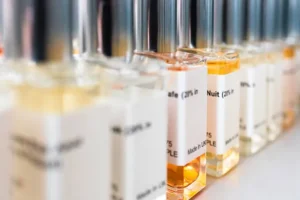
What is Private Label Perfume?
Private label perfume is the model that gives you your own exclusive fragrance line—a scent, bottle, and identity that belong only to your brand.
Unlike white label options, private label perfumes are developed specifically for your store, giving you full control over the formula, the design, and the final customer experience.
In simple terms, private label perfume means:
- A fragrance created for your brand
- A bottle and packaging designed to match your identity
- Full exclusivity—no other store can sell it
- Freedom to choose concentration, notes, style, and pricing
If white label helps you “enter the market quickly, Private label helps you build a brand that lasts.
For many perfume retailers, private label becomes the turning point. It’s the model for store owners who want:
- Higher profit margins
- A signature perfume line customers remember
- Long-term customer loyalty
- A brand that cannot be copied
- Greater control over quality and presentation
With private label, you’re not just selling a fragrance; you’re building an asset your competitors cannot touch.
If you’re ready to create a perfume line that is truly yours, Jasmine Perfume Factory can help you build it step by step, from scent development to packaging.
Pros and Cons of Private Label Perfume
Private label perfume gives you the power to build your own exclusive fragrance line, but it also requires planning, investment, and a clear brand vision.
Below is a balanced breakdown to help you decide if private label is the right step for your perfume business.
Pros of Private Label Perfume
- Full Exclusivity for Your Brand: Your scent, your bottle, your packaging—fully owned by your business. No competitor can copy or sell the same fragrance, giving you a strong edge in a crowded market.
- Higher Profit Margins: Exclusive products allow you to price confidently.
You’re not competing with shops selling the exact same scent, so your margins are protected and often significantly higher. - Complete Creative Control: You choose the fragrance direction, concentration, bottle design, packaging, and overall brand identity. This lets you craft a line that reflects your standards and your customers’ preferences.
- Strong Customer Loyalty: When clients fall in love with a fragrance they can only buy from you, they return specifically for your brand—not for a generic scent available everywhere.
- Long-Term Business Growth: Private label turns your perfume line into a real asset—one that grows with your store, increases brand value, and strengthens your market position.
Cons of Private Label Perfume
- Higher Initial Investment: Customization and exclusivity come with a higher starting cost compared to white label.
However, the long-term profit potential is significantly greater. - Longer Development Timeline: Creating your own scent, bottle, and packaging requires more time—sampling, refining, and approving each detail before production.
- Requires Clear Brand Direction: To get the best results, you need a clear understanding of your target customers and the fragrance identity you want to build.
If you want fast, low-risk products, white label may be enough. But if your goal is:
- higher margins,
- a signature fragrance line,
- loyal customers,
- and a brand competitors cannot replicate…
then private label is the strategic choice for your business.
Ready to build a fragrance line that is truly yours?
Jasmine Perfume Factory can guide you through every step—from concept to finished product.
Also read: Private-Label Perfume Manufacturing in Turkey for Brand Customization

Key Differences Between Private Label Perfume & White Label Perfume
Below is a direct, side-by-side comparison to help you quickly understand how both models work and which one delivers stronger long-term value for your perfume business.
| Criteria | White Label Perfume | Private Label Perfume |
| Product Ownership | Shared — same scents sold by many stores | Exclusive — created only for your brand |
| Customization Level | Very limited (logo only) | Full customization: scent, bottle, packaging |
| Time to Market | Very fast (ready-made) | Longer (development + sampling) |
| Minimum Order Quantity (MOQ) | Usually lower | Typically higher due to customization |
| Profit Margins | Standard and highly competitive | High — no direct product competition |
| Brand Identity | Weak (common products) | Strong (signature scent + unique design) |
| Risk Level | Low upfront risk | Higher upfront investment, higher reward |
| Customer Loyalty | Moderate | Strong — customers return for your exclusive scent |
| Ideal For | Testing market / quick stock filling | Building a long-term, differentiated perfume brand |
What This Means for Your Business
White label is perfect if you need speed and low investment, but private label is the only model that builds:
- a memorable brand,
- a loyal customer base,
- and a product competitors cannot copy.
It’s the path chosen by retailers who want to move from “selling perfumes” to owning their own fragrance line.
If you’re considering building your exclusive perfume collection, Jasmine Perfume Factory can develop it with you, from custom formula to bottle design.
White Label vs. Private Label Perfume Based on Cost
Cost is one of the biggest deciding factors for perfume retailers choosing between white label and private label production. While both models can be profitable, each requires a different type of investment and delivers a different return.
Here’s what you need to know:
White Label Perfume: Lower Upfront Cost
White label perfumes are pre-formulated and ready to brand, which means:
- No fragrance development cost
- No custom bottle or packaging design fees
- Lower minimum order quantities (MOQ)
- Faster production with fewer setup costs
Ideal if you want to enter the market quickly with minimal financial risk.
However, because these products are shared among many retailers, your selling price — and therefore your profit margin — is more limited.
Private Label Perfume: Higher Initial Investment, Higher Long-Term Return
Private label requires more budget upfront because you are creating a unique product:
- Custom fragrance formulation
- Custom bottle selection or design
- Custom packaging and branding
- Higher MOQ
- Longer development timeline
But this investment gives you something white label cannot:
- Exclusive ownership of your fragrance
- Premium pricing power
- Higher profit margins
- No direct competition on the same product
You invest more at the start, but you earn significantly more per bottle in the long run.
Which Option Makes More Financial Sense for you?
Choose White Label if you want:
- A low-cost entry
- Fast production
- A simple, low-risk launch
Choose Private Label if you want:
- A truly unique product
- Higher margins and long-term profitability
- A brand identity customers will remember
- A product competitors cannot replicate
If your goal is long-term brand growth and higher revenue, private label becomes the stronger financial choice.
For accurate cost estimates and MOQ details tailored to your store, contact Jasmine Perfume Factory—we’ll guide you based on your budget and goals.
Also read: Discover the Cost of Private Label Wet Wipes Manufacturing
How White Label and Private Label Perfume Work Behind the Scenes
Most retailers only see the final bottle on the shelf, but the real difference between white label and private label happens behind the scenes.
Understanding how each model works helps you choose the option that truly fits your business goals.
White Label Perfume
White label follows a fast, streamlined process because everything is already developed:
- Pre-made fragrances are ready to select: You choose from existing scent formulas tested and approved by the manufacturer.
- Bottles and packaging are pre-designed: No development time — only simple branding adjustments like adding your logo or label.
- Production begins immediately: Once the scent and packaging are chosen, manufacturing starts with minimal waiting time.
- Lower MOQ and shorter lead times: Ideal for quick restocking, seasonal offers, or testing new fragrance ideas.
Speed and simplicity, but no exclusivity or deep customization.
Also read: White Label Perfume Manufacturer for Fast Market Entry
Private Label Perfume
Private label is a more collaborative, creative, and strategic process.
Here’s what happens step by step:
- Fragrance Concept & Brand Identity: You share your vision: the type of scent, audience, scent story, intensity, positioning…
The perfumer begins crafting a custom formula based on that vision. - Formula Development & Sampling: Multiple scent samples are created and refined until you approve the final blend.
- Bottle & Packaging Selection (or Custom Design: You choose a bottle style, cap, packaging layout, and branding elements — all aligned with your store identity.
- Production Setup: Raw materials, oils, bottles, and packaging are sourced specifically for your perfume line
- Manufacturing & Quality Testing: Because the product is exclusive, each batch goes through strict stability and performance testing.
- Brand-Ready Delivery: Your perfume line arrives fully branded, premium, and unique — ready to launch.
A signature fragrance that elevates your brand and cannot be sold by anyone else.
White label is built for speed and simplicity. Private label is built for identity, exclusivity, and long-term profit.
When you understand what happens behind the scenes, the decision becomes easier:
- If you want quick inventory, choose White Label.
- If you want a brand customers remember, choose Private Label.
If you’d like to explore how each process would work specifically for your store, Jasmine Perfume Factory can walk you through every stage step-by-step.
White Label vs. Private Label Perfume: Which Model Fits Your Business?
Choosing between white label and private label isn’t about which model is “better”—it’s about which model fits your store’s stage, goals, and resources.
Each option serves a different type of perfume retailer, and understanding where you currently stand will help you make the smarter investment.
Choose White Label If You Want:
- If your goal is to fill shelves quickly or test market demand without financial risk, white label gives you a ready-made solution.
- You don’t need to make decisions about formulas, bottles, or packaging—just pick a scent and label it.
- If you are launching a new store, experimenting with categories, or adding perfumes to an existing product range.
White label fits you if: You need inventory fast, cost-efficient, and with zero development work.
Choose Private Label If You Want:
- Private label gives you exclusivity—your scent becomes your identity.
- Exclusive products allow you to price differently, sell at premium levels, and protect your margins from competition.
- Recognizable perfume line, private label is the model that creates real brand value—not just product stock.
- Nothing is generic. You create a fragrance that reflects your store’s personality and customer preferences.
Private label fits you if: You want to grow beyond selling “what everyone else sells” and establish your own signature collection.
So… Which One Is Right for You?
Here is the honest answer:
- If your priority is speed + low cost = White Label works.
- If your priority is exclusivity + higher profit + brand identity = Private Label is the smart choice.
Most successful retailers begin with white label to understand demand and move to private label once they want to stand out and build a brand customers return for.
Whether you’re starting small or planning a full private label line, we can evaluate your goals, budget, and target audience, then recommend the best model for your business.
Why Choose Jasmine Perfume Factory for White Label & Private Label Production?
If you’re considering launching your own fragrance line, whether through white label or private label—you need more than a supplier.
You need a partner who understands your business, your market, and the challenges perfume retailers face every day.
That’s exactly why retailers across the region choose our Factory.
Here’s what sets us apart:
1. We Understand Retail Profitability, Not Just Manufacturing
Many factories sell products.
We help you build a business.
Our team works with B2B clients every day—perfume shops, boutique owners, wholesalers—so we know how to guide you toward the model that protects your profit margin and elevates your brand identity.
2. Ready-Made White Label Collections Built for Fast Sales
If you need quick, low-risk products, our white label lines are:
- pre-formulated
- high-quality
- market-tested
- ready to brand immediately
3. Fully Custom Private Label Development for Serious Brand Builders
If your goal is long-term brand identity and higher margins, our private label service gives you:
- custom scent formulation
- bottle and packaging customization
- exclusive fragrance ownership
- premium-quality ingredients
- full control over concentration and positioning
4. Transparent MOQ, Clear Pricing, and Honest Guidance
We don’t push you into private label if your current business stage isn’t ready for it.
We help you choose the model that fits your goals, budget, and timeline—so you build a fragrance line that succeeds, not one that drains your resources.
5. Full Production Support From Idea to Launch
We handle:
- scent creation
- bottle sourcing
- packaging design
- labeling
- production
- quality control
- final delivery
6. Consistent Quality You Can Trust
Our products are crafted with high-grade aromatic materials, stable formulas, and industry-standard production processes—ensuring your perfumes look premium, smell premium, and perform premium.
7. A Long-Term Partner, Not a One-Time Supplier
We help you grow your fragrance business year after year, whether you:
- Expand your private label collection
- Launch seasonal lines
- Add new concentrations or notes
- Develop signature bestsellers
Whether you want to start fast with white label or build an exclusive brand with private label… Jasmine Perfume Factory is here to guide you every step of the way. Contact us today to get samples, pricing, or start your custom fragrance development
Also read: Leading Private Label Perfume Manufacturer in Turkey
FAQs about Differences between White Label vs. Private Label Perfume:
What is a private label perfume?
It’s a fragrance created exclusively for your brand. You choose the scent, bottle, and packaging, and no other store can sell it. Private label gives you higher margins, stronger identity, and loyal customers who return specifically for your signature perfumes.
What is white labelling?
White labelling means taking a ready-made perfume and adding your logo. It’s fast, affordable, and low-risk—but you cannot customize the formula or design, and other stores may sell the same scent.
Is white label or private label better?
White label is better if you need quick products with low cost.
Private label is better if you want exclusivity, premium pricing, and a unique brand customers remember. Your goals decide the best model.
Is white labelling and private labelling the same?
No. White label uses existing products; private label creates a custom one for your brand. White label is about speed, while private label is about uniqueness and long-term value.
Is white labeling illegal?
Not at all. It’s a fully legal and common business model—just make sure you work with a reputable manufacturer and follow proper branding agreements.